
Messers and Langmessers
a look at my collection so far

While I consider myself to be a person mainly interested in sideswords and rapiers, I also like other types of swords. One of the most appealing types for me is the messer. My messer collection so far contains two pieces from Tod Cutler and three from Landsknecht Emporium. I’ll showcase these beautiful pieces here, but first, some relevant information about the makers.
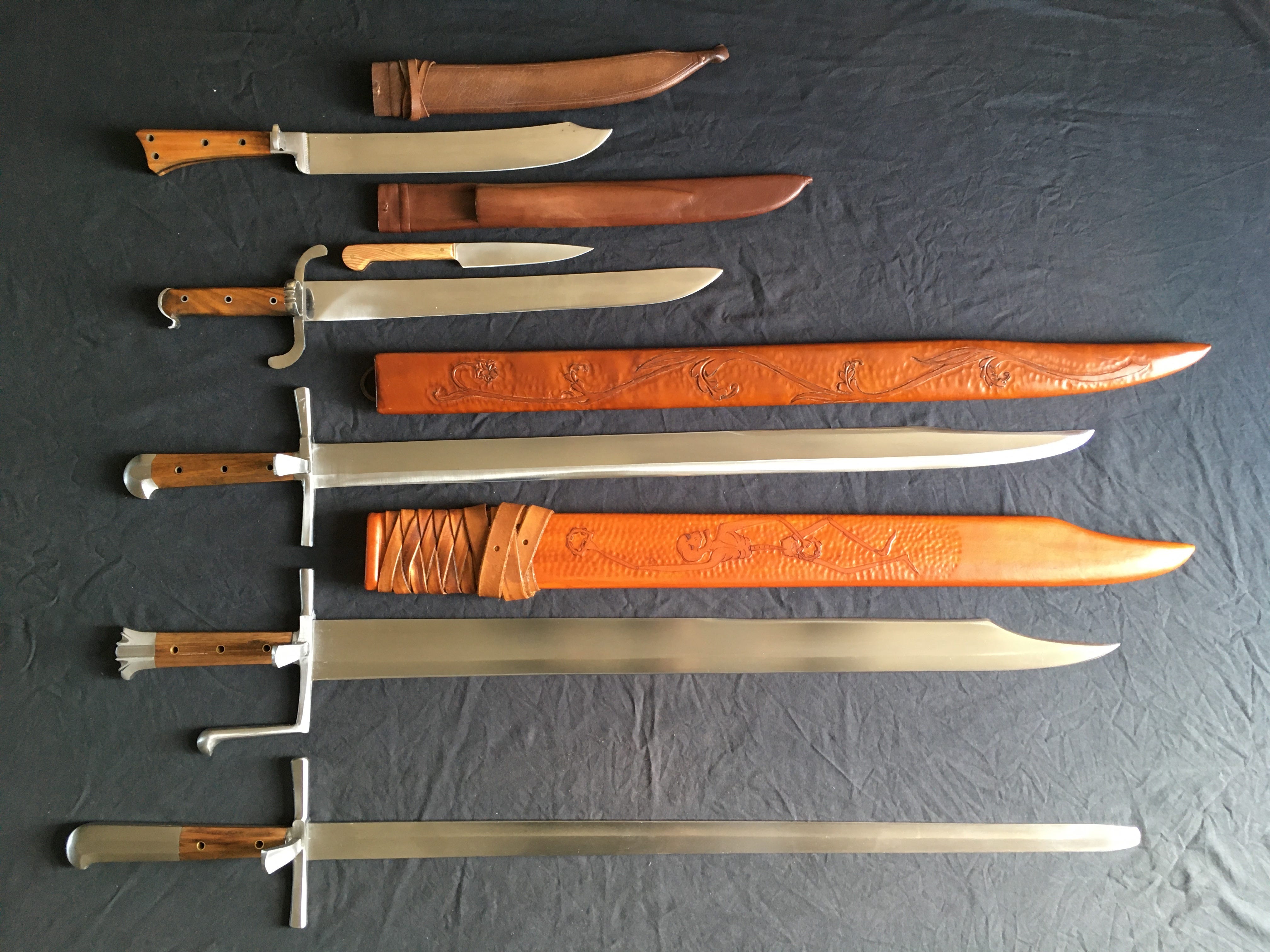
Tod Cutler
This is a UK brand established by Tod Todeschini to complement his Tod’s Workshop line of products that focuses on crafting historic weaponry and artefacts to the highest standards (at a cost that will confirm that you paid for the highest standard). Tod’s goal for Tod Cutler is to use his know-how in the field, but keep prices affordable, by off-sourcing blades from makers outside Europe. I find this to be acceptable since, most of the time, makers in Asian countries lack the fine insight accumulated from years of handling original museum-quality pieces when it comes to European swords. Tod also has an interesting YouTube channel, but I draw the line at buying a catapult - and yes, he was selling one.
Landsknecht Emporium
This is a workshop established in Hungary that offers a good line of messers (langmessers, kriegsmessers, grossmessers and more). Their main sword-maker is Adam Bodorics, an incredibly talented person who, after a full day working for Landsknecht Emporium, “relaxes” by spending a half-day on his own line of bespoke blades. Beyond his skills, Adam gets messers and their historical context.
Landsknecht Emporium philosophy is to offer items that look made by a workshop from bygone years. There are slight asymmetries in the hilt and quillon facets, there may be some imperfections in the fitting of the wooden grip where the glue is visible, or the nagel (side-nail) is not fitted flushed to the hilt. But all these imperfections make their messers look authentic. On an Italian sidesword, no, I wouldn't like this level of imperfections (even though I do spot them on museum pieces), but on a messer, it enhances its look. There is another aspect that makes me accept a functional hilt philosophy, and that is the blade. They deliver their blades scary sharp and ready to go. If I was a Landsknecht, I couldn’t ask for a better off-the-shelf product. Besides, I am ok with using a metal file to fix small imperfections.
While they used to do bespoke pieces and more elaborate personalisations, in the later years they decided to focus on a set of standard products with a series of grips, fittings and scabbard options. Since there is still a good amount of personalisation possible, I am ok with this switch. Last, while they state on their website that they use a 6mm stock blade, all the blades I have are just 5mm thick (measured at the base of the spine). However, this doesn’t affect the feel or rigidity of the blades in the slightest. I’ll start looking at the products I have from them next.
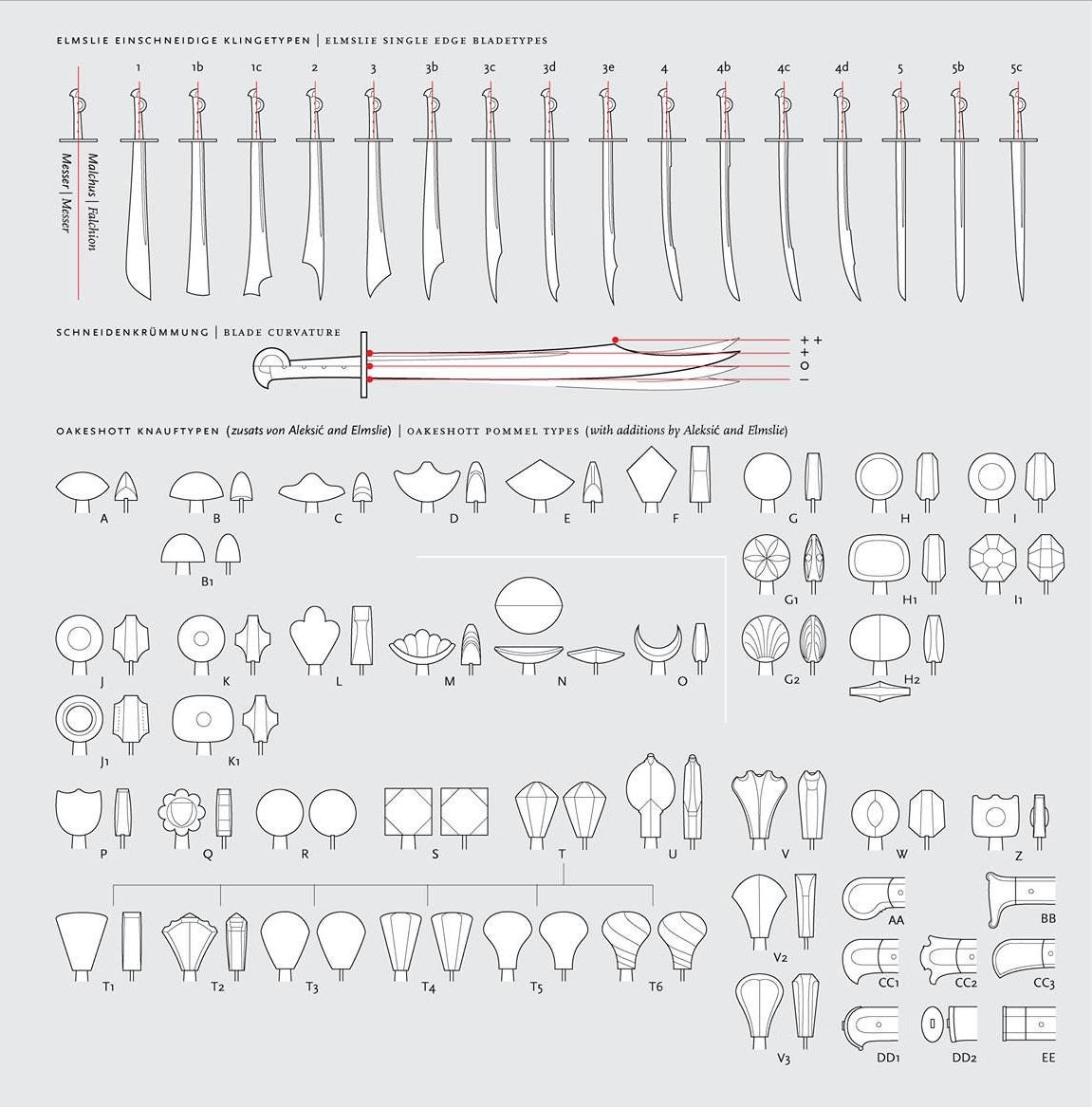
Abbreviations:
TL: Total Length, BL: Blade Length, BW: Blade Width, GL: Grip Length, W: Weight
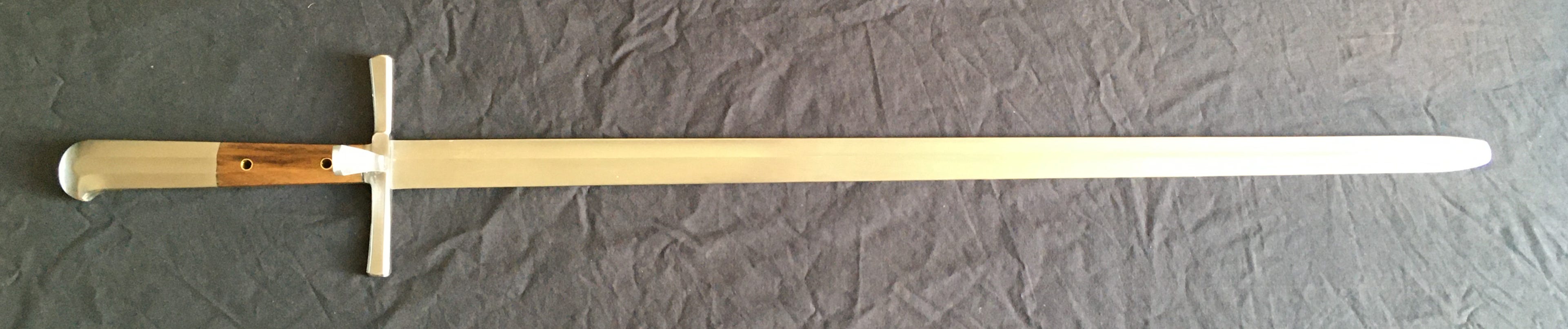
Karl Messer
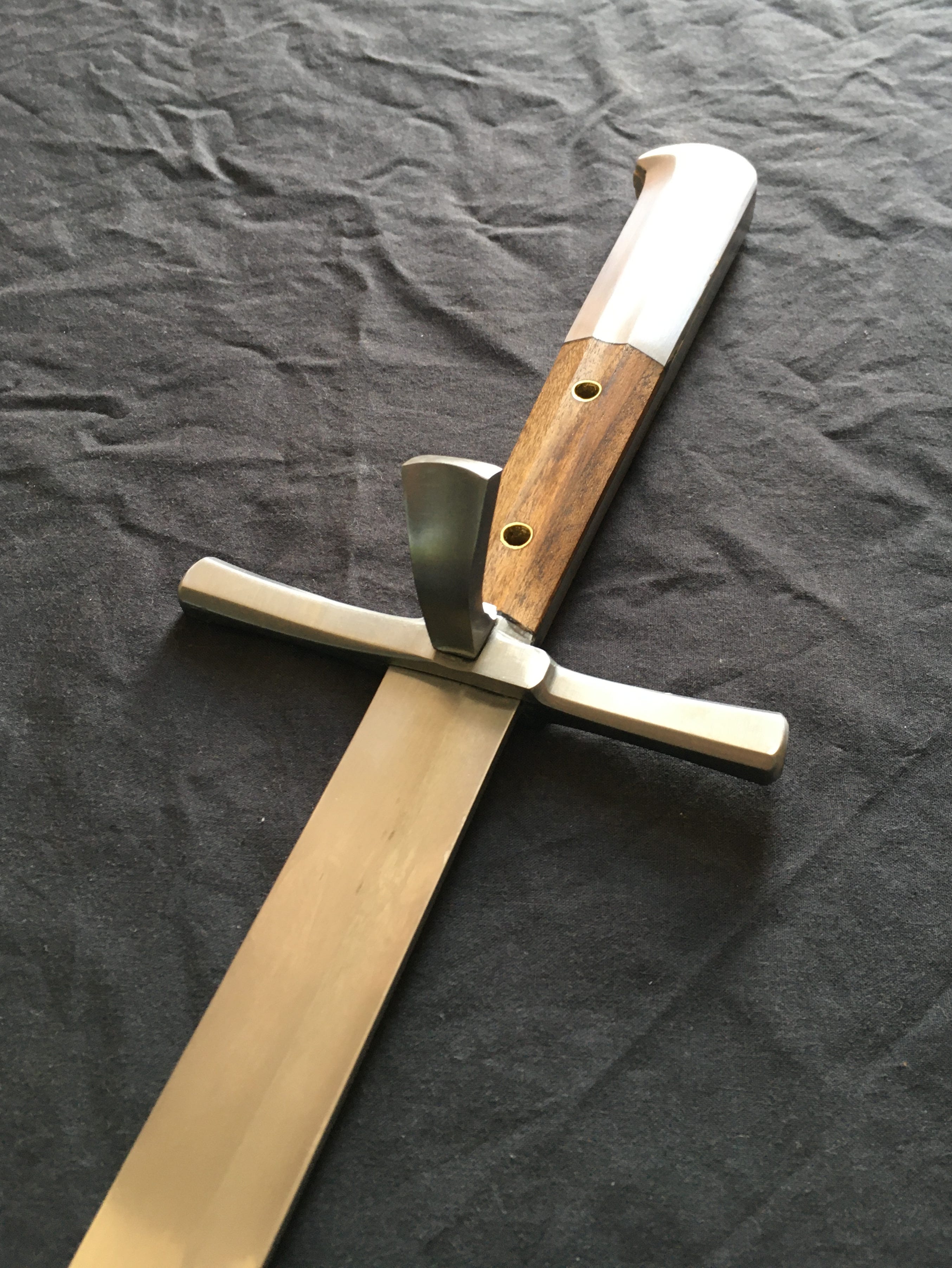
Unostentatious Langes Messer with a type M5B blade, based on an amalgam of antique Messers and depictions from 15th and 16th century.
TL: 89cm, BL: 72cm, BW: 3.2cm, Weight: 813g, PoB: 11.5cm
I have ordered a blunt Karl, with the intent to use it for training and light sparing. The flex is quite rigid (and I got 14kg on the bathroom scale), so I would not recommend full-power thrusts. In all honestly, since messes tend to have short blades (at times even 50cm on training blades), they are not safe to trust, and people need to learn to use restraint and hold back. As a result of a round and thickened tip, the blade is just a bit shorter than listed on the store's page.
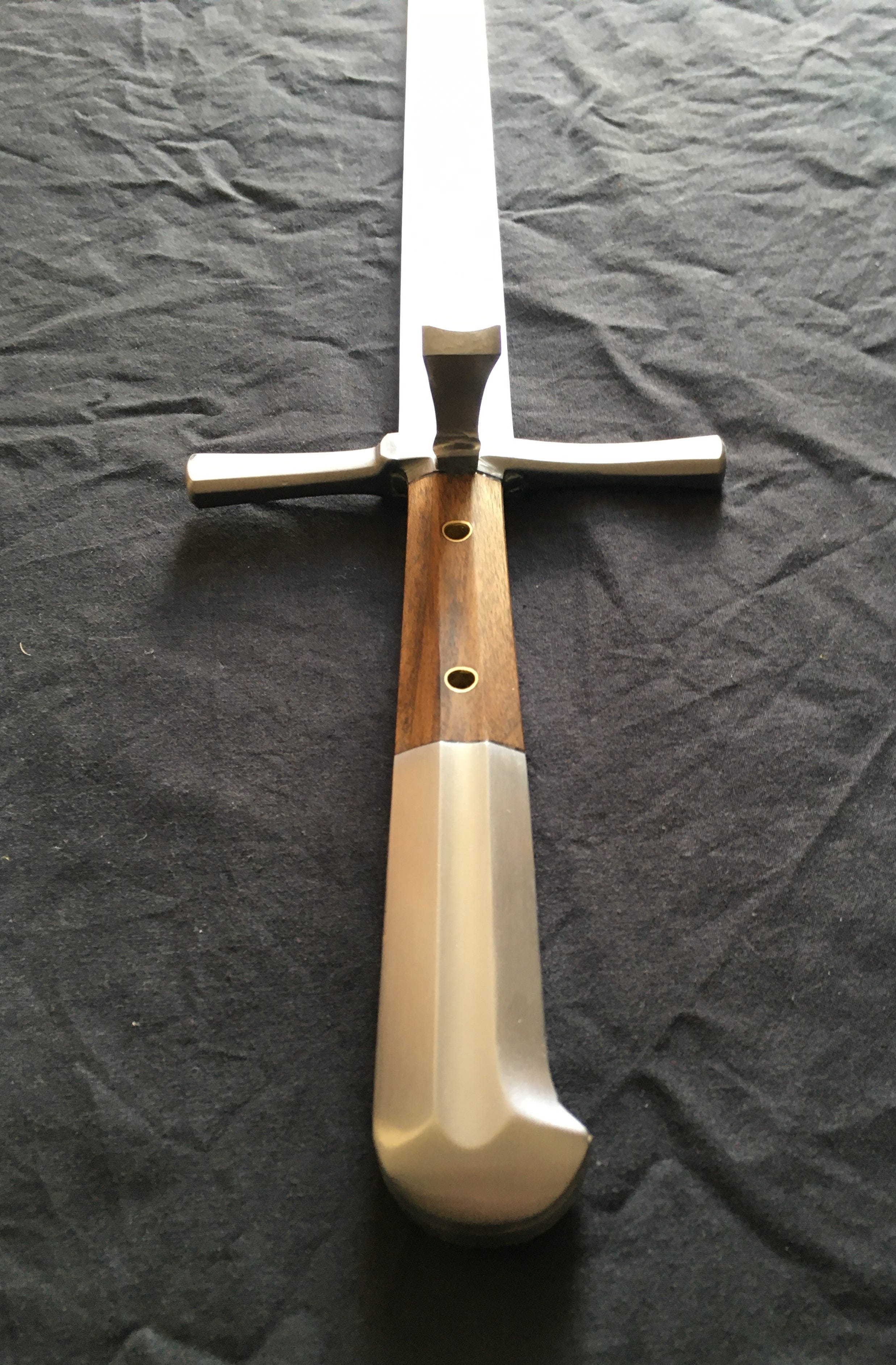
I ordered a walnut grip and I asked for a hollow CC1 pommel as an extra option. I wanted to retain the long grip for hooking actions in messer fencing, and this pommel cap option allows for that. Overall, it’s a beautiful piece with a good balance that has a blade presence, allowing it to fall quickly onto the target from above when the grip is relaxed. This is useful for some false-edged techniques, as far as I understand. The actual stats for my piece are:
TL: 89cm, BL: 69.3cm, BW: 3.1cm, GL: 18.8cm, Weight: 803g, PoB: 11cm


Günther Messer
Günther, a wide-bladed Langes Messer based on an amalgam of antique knives and period depictions. This blade form was most popular in the mid-to-late 15th century.
TL: 87cm, BL: 68cm, BW: 5.2cm, Weight: 870g, PoB: 15cm
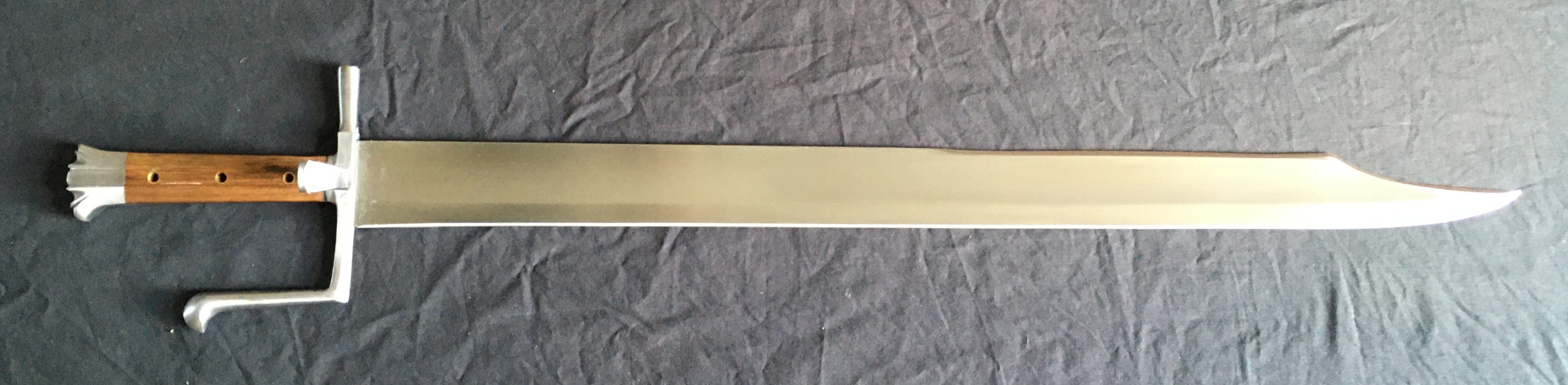
This is a (scary) sharp messer. I ordered this piece to get that cut-centric wide blade. Since I don’t see this as a fine-hand technique-focused piece, but as a chopper, I opted for a knuckle-bow. The grip is walnut and I opted for a (solid) CC2 pommel cap. For these types of solid pommels, the grip is shortened to keep a good balance. Still, the PoB is quite smaller, resulting in a fast-moving blade. I expect this would still cut beautifully, something that I didn’t have the chance to test at this point. The stats for my piece are:
TL: 85cm, BL: 68.6cm, BW: 5.1cm, GL: 15.5cm, Weight: 867g, PoB: 9.5cm
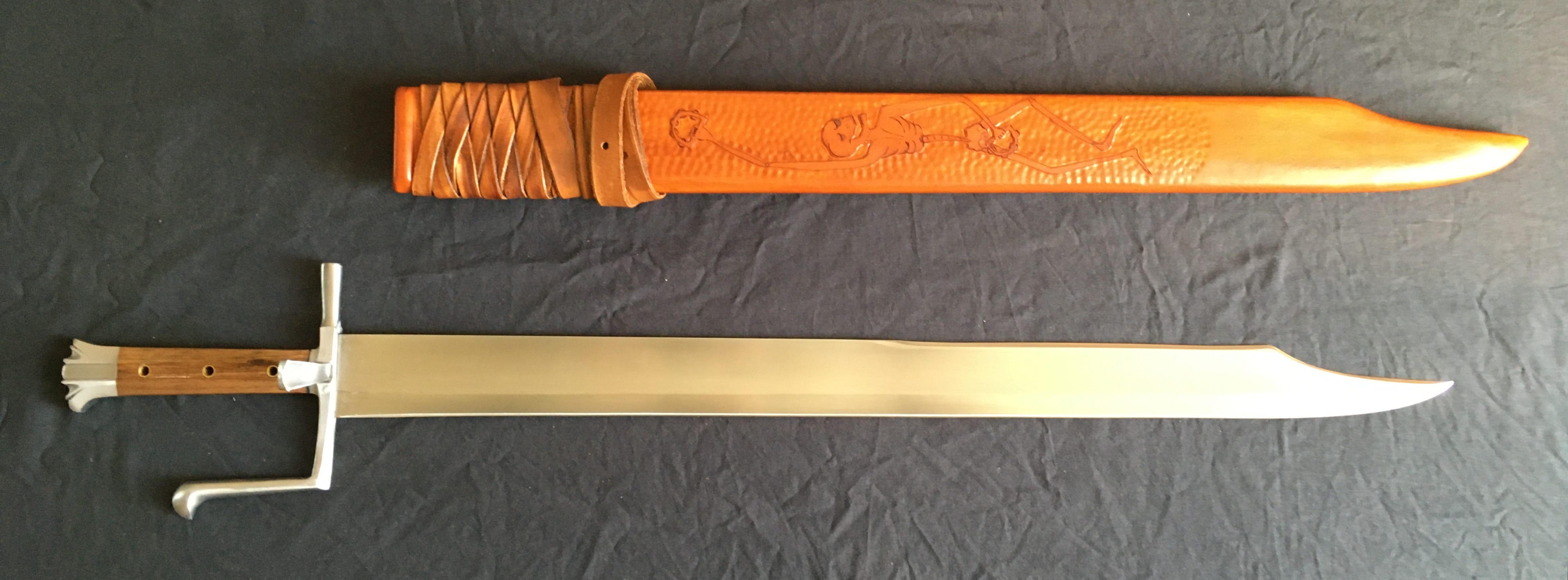
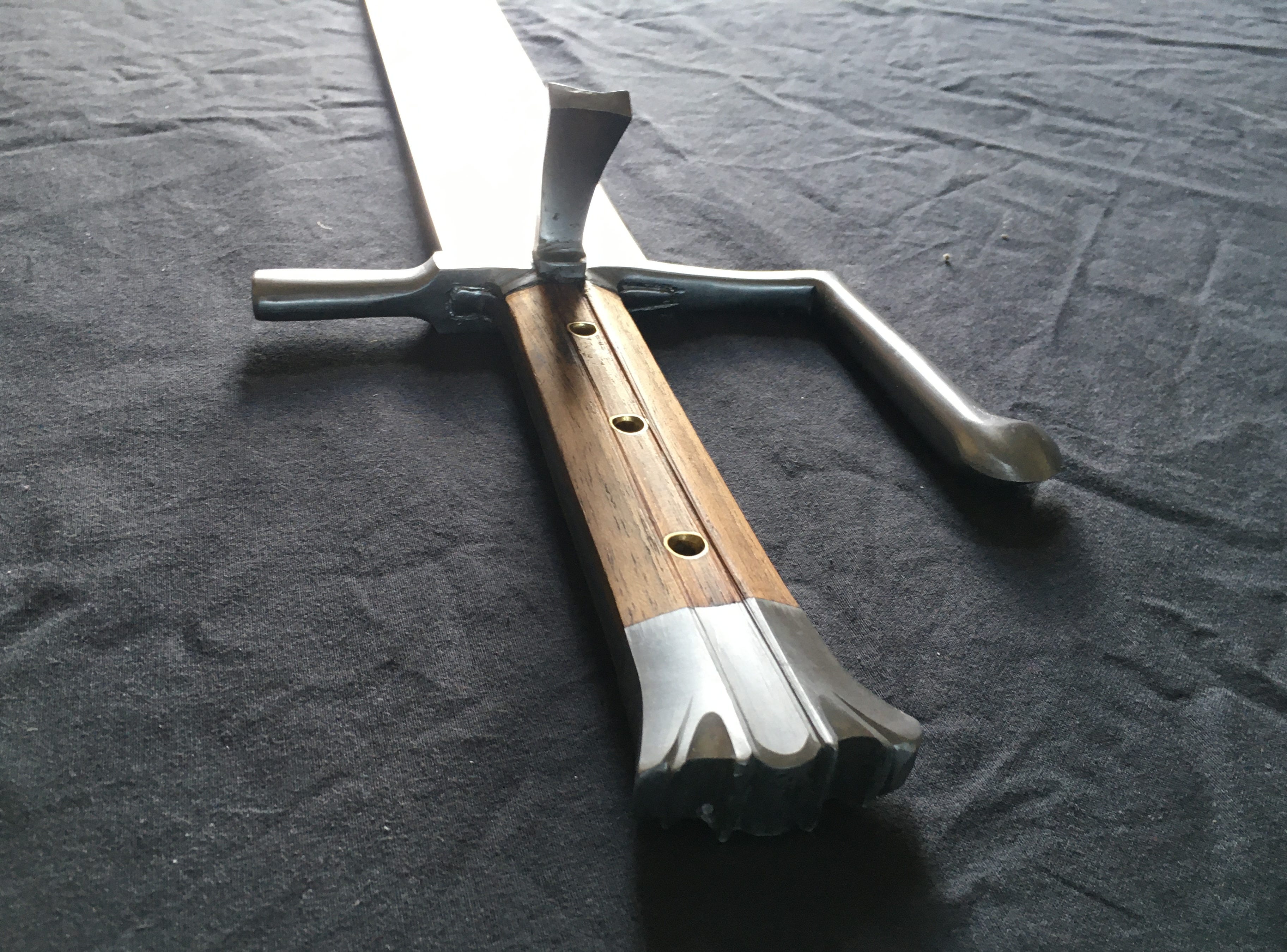


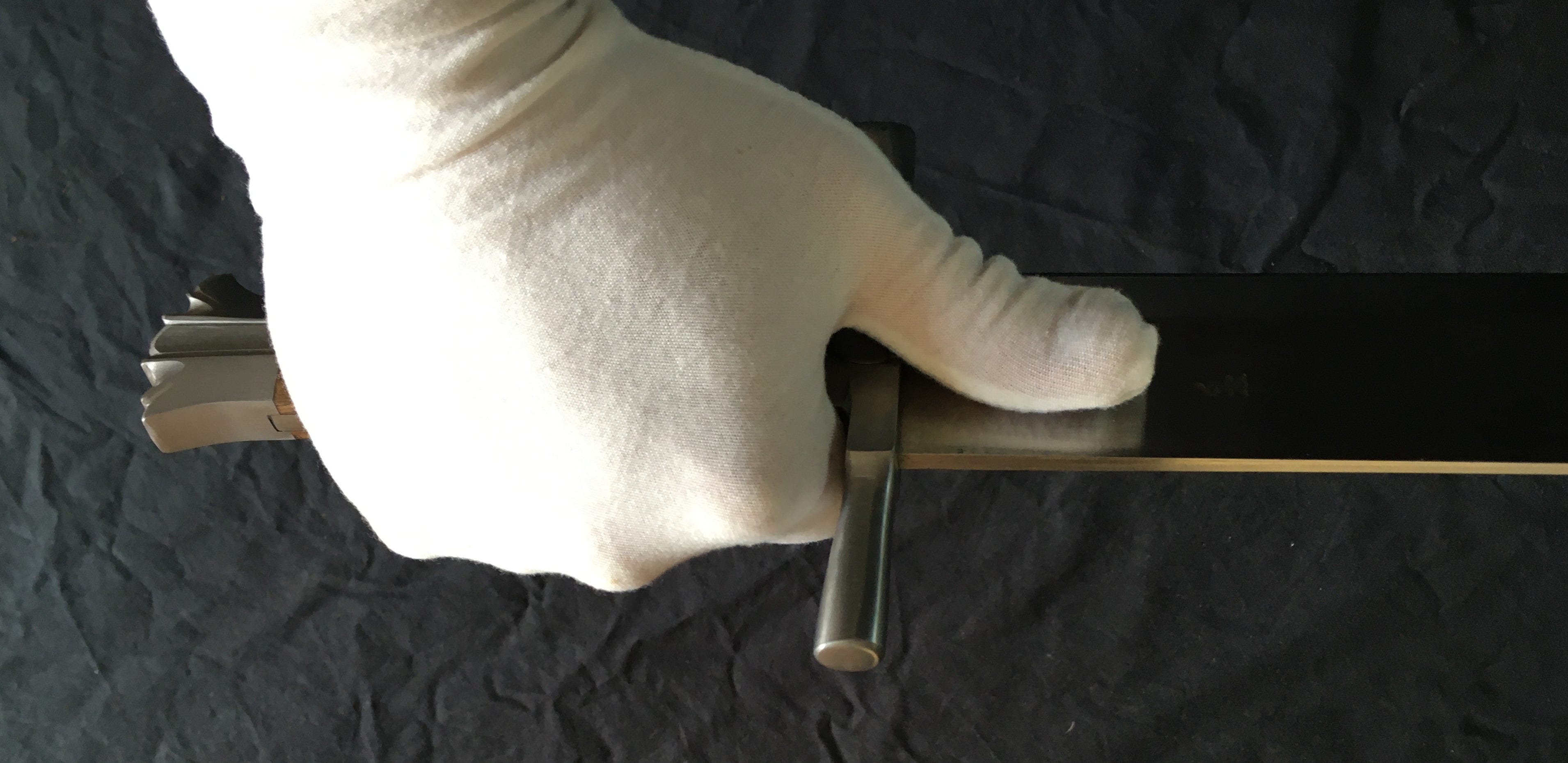


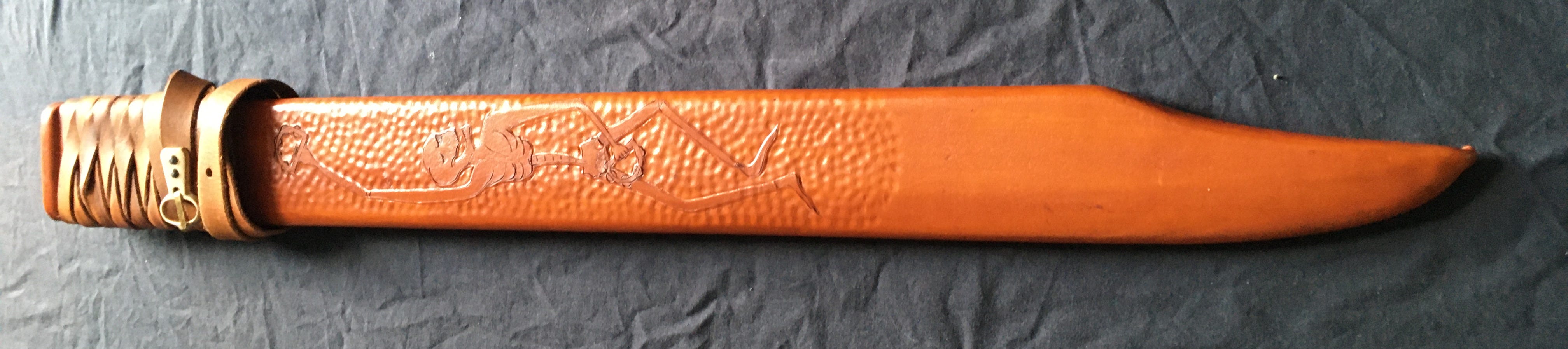
Since I wanted a cut-centric piece that a Landsknecht may choose as a side-arm, I opted for landsknecht knots on the oiled-leader scabbard, and a simple totentanz depiction to complete the look. This scabbard comes with belts and has the mouth fabric padded on the inside to help secure the blade.


Gottfried Messer
A standard M3C Messer with a clip point, based on an amalgam of antique knives and period depictions. This blade form was most popular in the mid-to-late 15th century.
TL: 87cm, BL: 68cm, BW: 4.1cm, Weight: 755g, PoB: 12cm
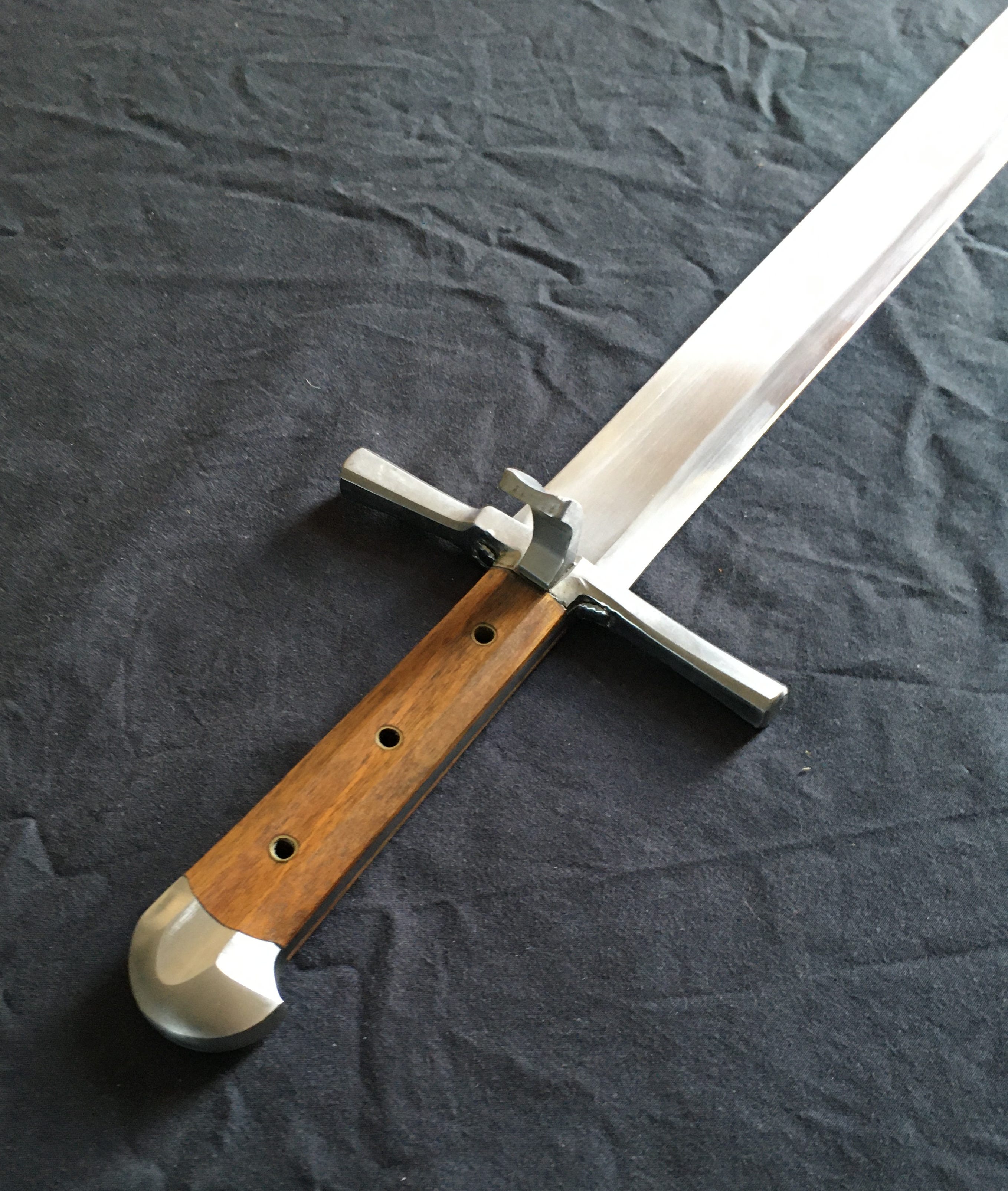
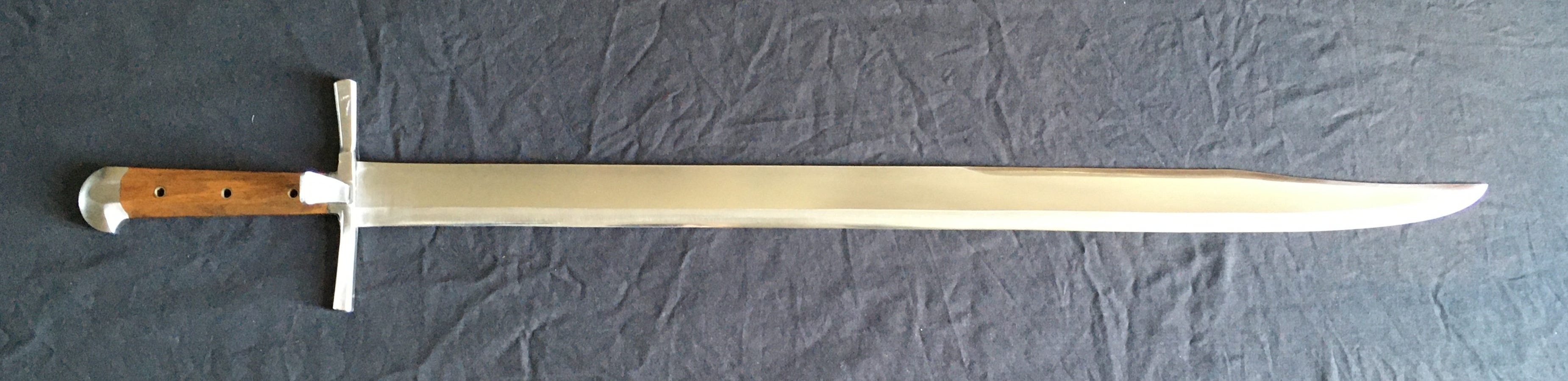
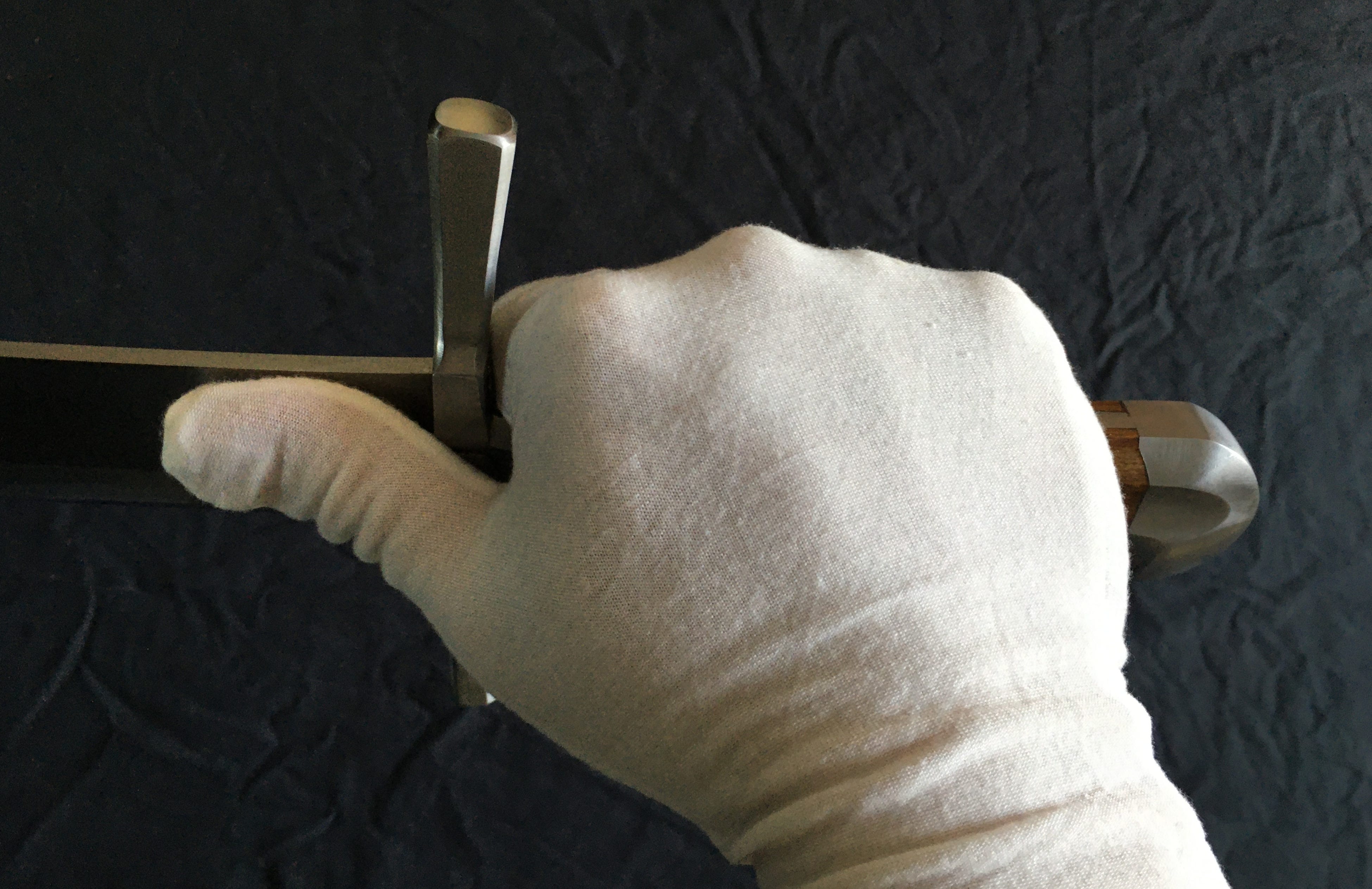
This was the first (scary) sharp piece that I ordered from Landsknecht Emporium a few years ago. The grip is walnut (you may see a preference on my part) and has a solid CC1 pommel cap. This is a quick, well-balanced messer that would work well as a technical focused piece. The stats for my piece are:
TL: 83.5cm, BL: 67.7cm, BW: 4cm, GL: 15.3cm, Weight: 750g, PoB: 12.5cm
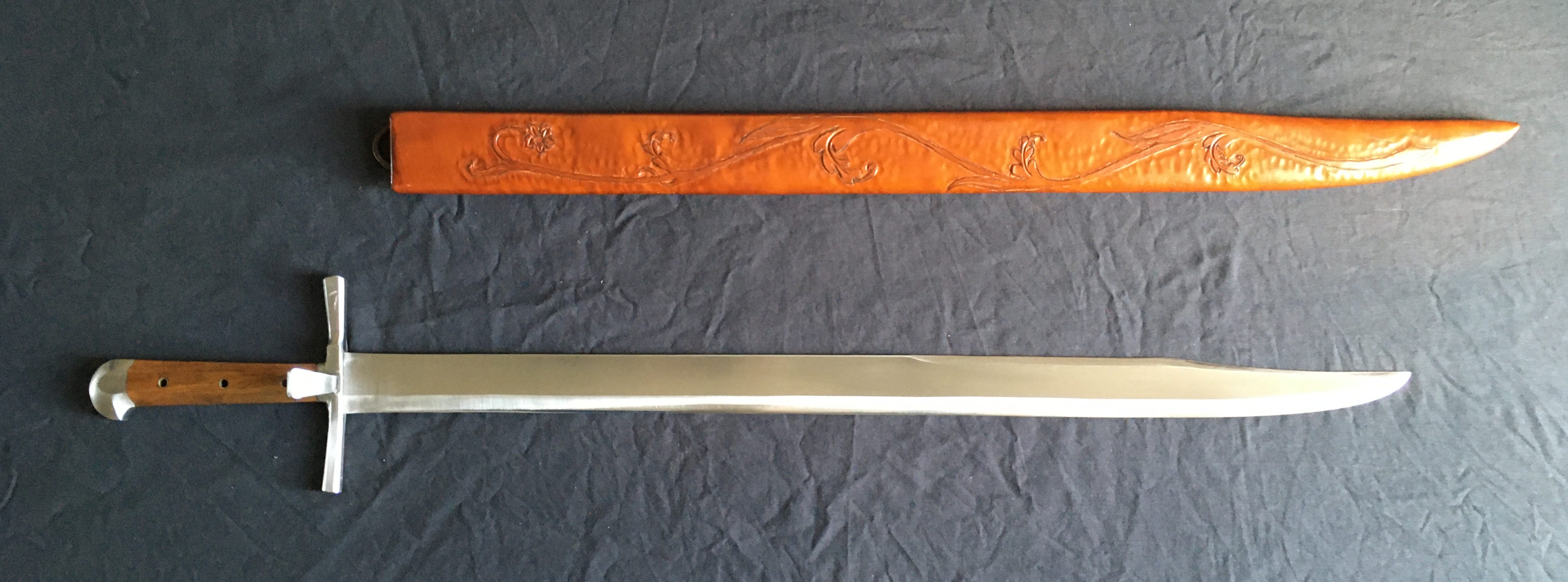




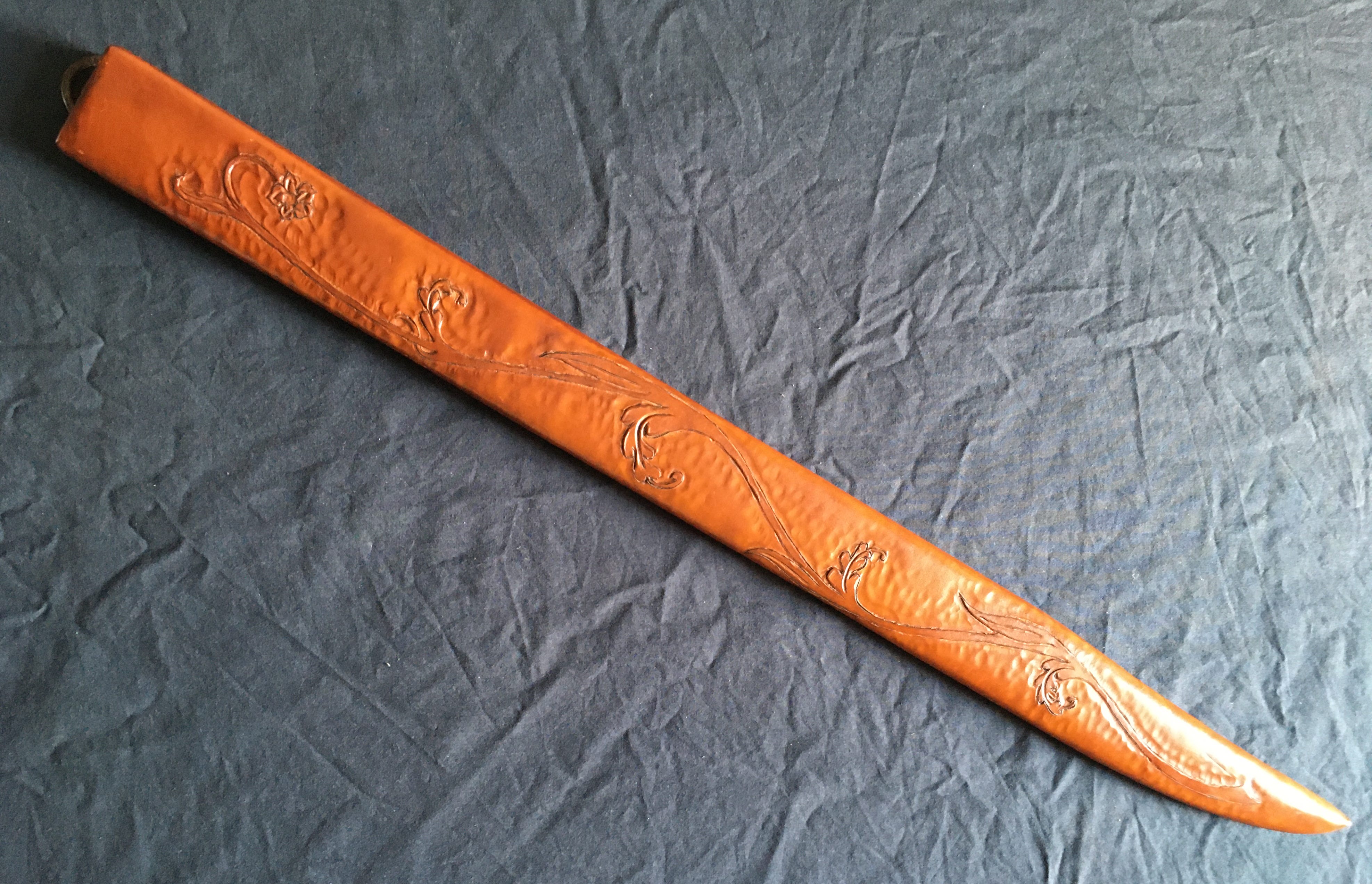
For the oiled-leather scabbard with loop-suspension, I choose a simple floral design. I wanted mainly something to protect the blade. Do not order a sharp blade from Landsknecht Emporium and skimp on the scabbard. Their blades are just too sharp to move around bare.


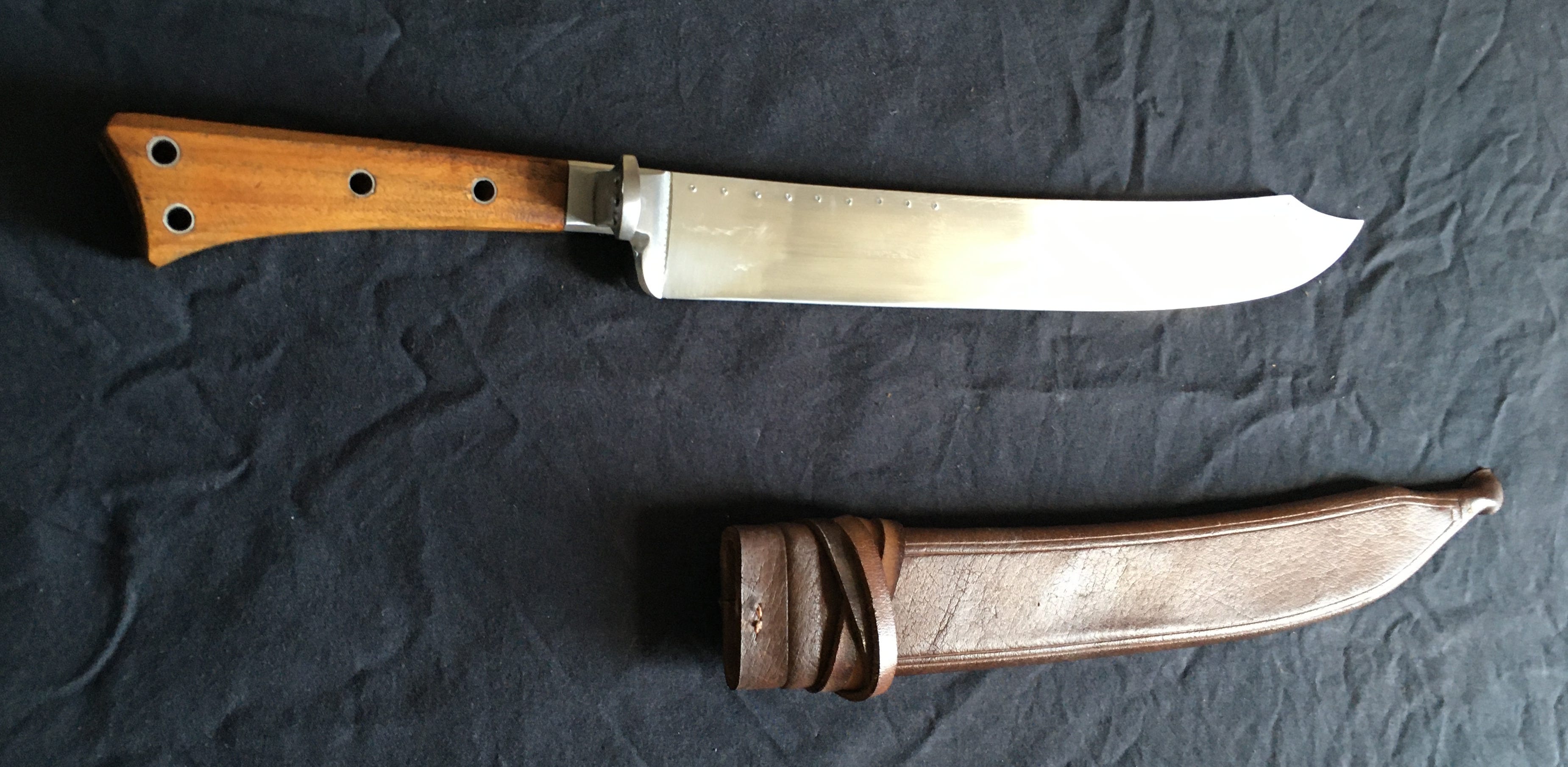
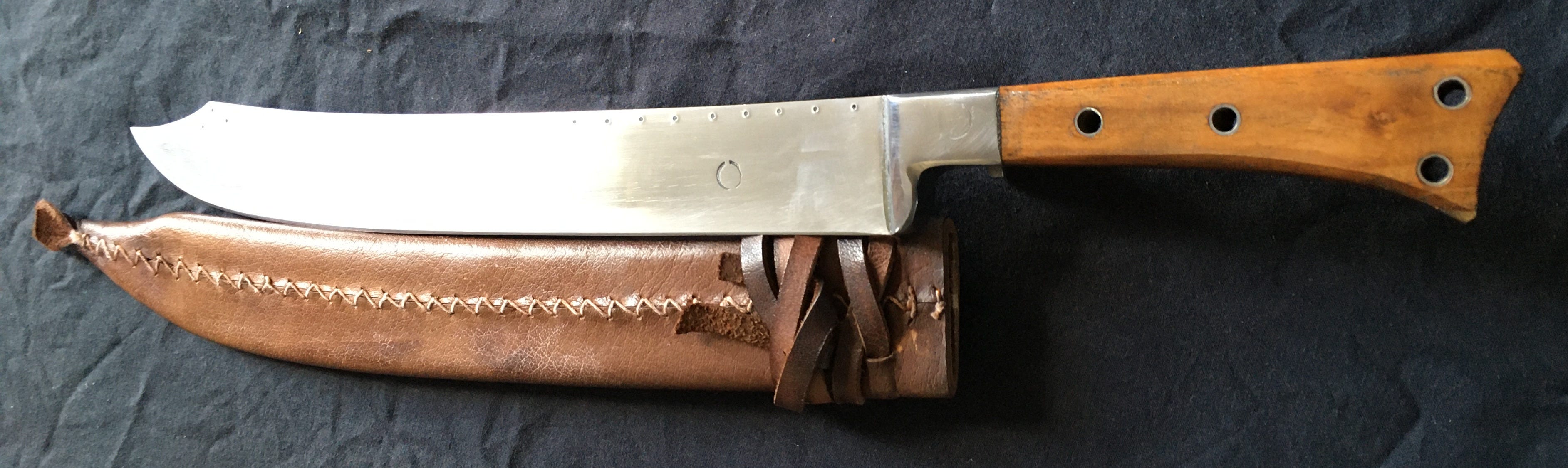
Brueghel Messer with By Knife
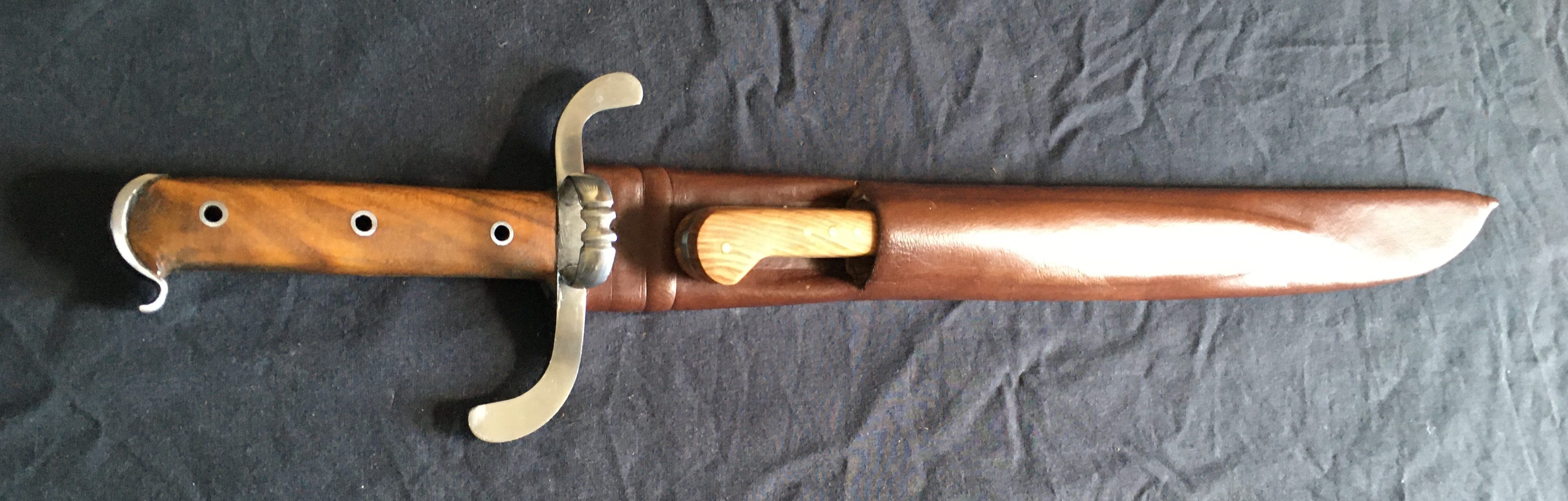
In many of Brueghel's paintings you see fairly low status men carrying short messers (bauernwehr), often with a side ring and a knuckle bow and this is of that form. Featuring a stout blade of appleseed grind with a distinct distal taper. This form of short sword was popular throughout the 16thC.
I opted for a 13th-15thC Low Status Eating Knife, and a veg tan leather sheath. I also like the side-ring for a nagel. In part, I wanted a sheath with a by-knife and a DD1 plate cap on a messer, so this piece offered me the excuse to buy it. Besides, Tod Cutler offered a 15% discount a few months ago, meaning that I saved 15% on the price, which I used to offset more of the price and get 30% off on the cost - that’s how this works, right? Sword-guy maths; it’s just girl maths but used for things that matter and not silly bags and shoes ;). Stats, even if PoB on an eating knife, is meaningless:
Messer
TL: 49cm, BL: 36.5cm, BW: 3.5cm, GL: 12cm, Weight: 531g, PoB: 6.5cm
By Knife
TL: 22cm, BL: 12.1cm, BW: 2.1cm, GL: 9.8cm, Weight: 88g, PoB: -2.5cm


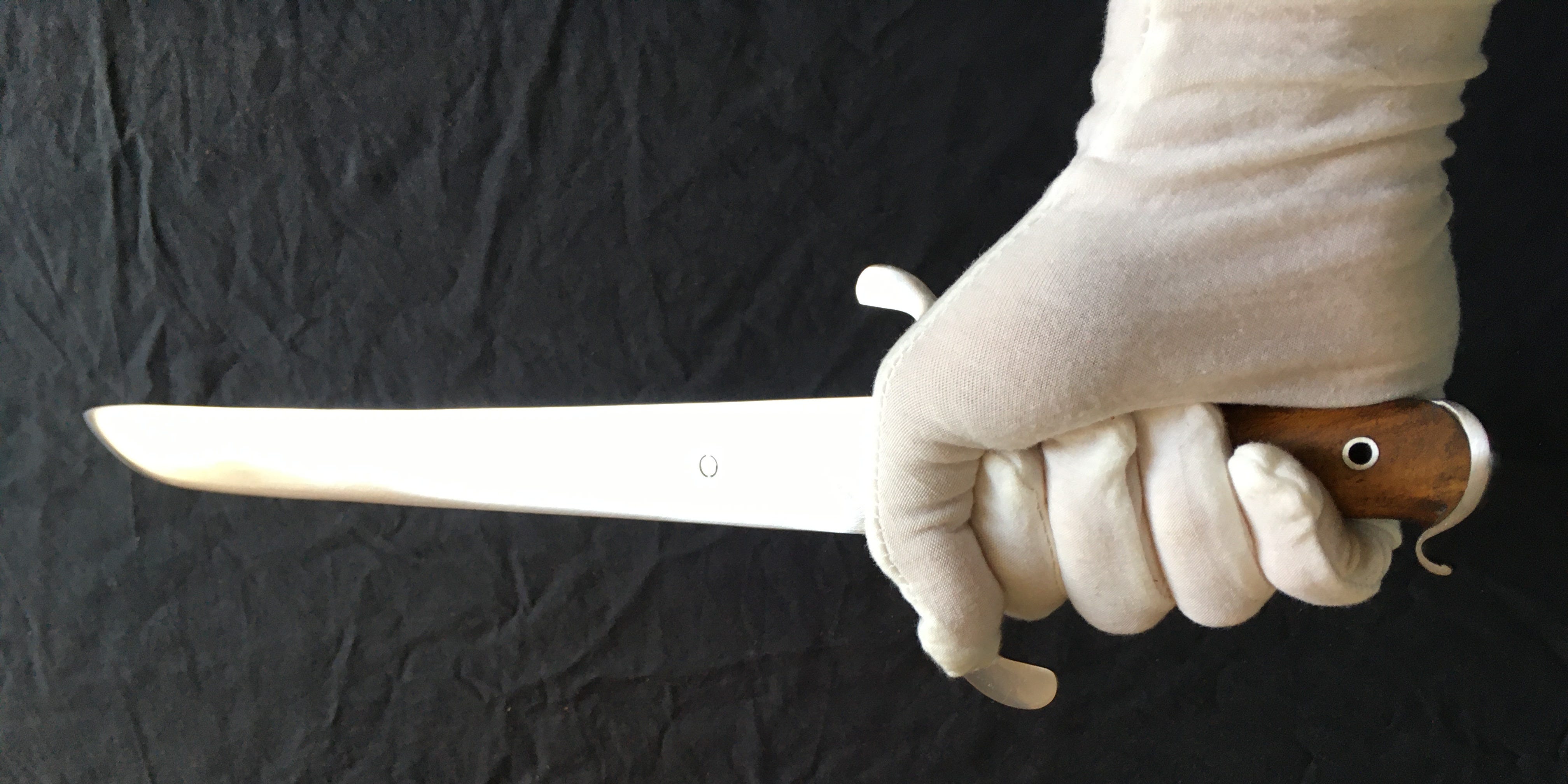
Bauernwehr 14th-16thC
This bauernwehr also some call Hauswehr style of medieval hunting and working knife was popular from the late 14thC to the early to mid 16thC, especially in Germany and Switzerland.
Very similar knives are found in quantity in museums, but also in artwork by Gaston Phoebus and Breughel.
They are always of stout construction and have the knuckle pin or nagel has a very characteristic feature, meaning that their intention was also for fighting.
I bought this from Tod Cutler a few years ago. I wanted a simple knife, and the presence of a flat plate nagel completed the look. The grip has a squared cross-section. Stats:
TL: 41cm, BL: 26.7cm, BW: 3.5cm, GL: 11.3cm, Weight: 492g, PoB: 4cm


Thoughts
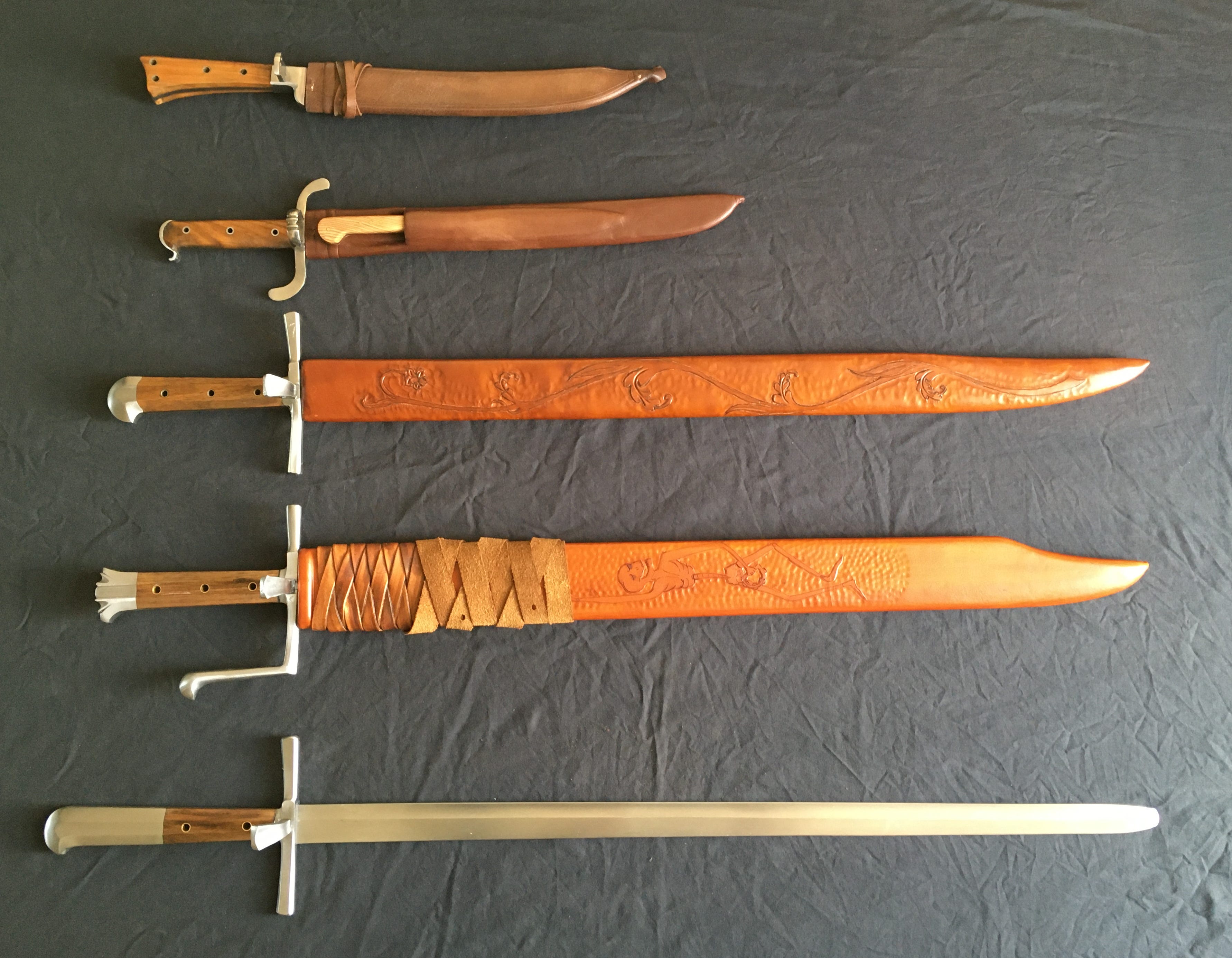
I have my messers (Karl in particular) and I have my Talhoffer book (one of many he wrote). All I need now is to learn how to fence using the messer system. Since in my opinion, a messer involves a lot of grappling, it’s not just a case of doing sidesword with a shorter blade. Recently, I was made aware that depending on the length of the messer used to learn the system, one may get a completely different impression of it.


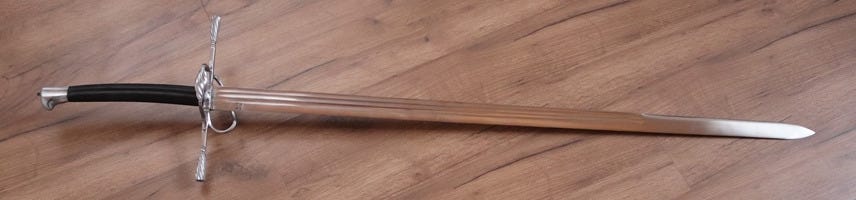
I should also buy more cutting mediums to enjoy the sharps, but short of getting a two-hand kriegsmesser, I am going to stop here with my messer hoarding. Well, unless this piece from Nielo Sword already counts as a langemesser to satisfy my two-hand craving, but I’ll talk about this piece at a different time.
Bonus
Two old videos from Nova Aetas on the use of langmesser that I simply adore. Sometimes, fencing looks like dancing with blades. Play the music!