
Shells on Swept Hilts
an interesting choice

If we think of the development of rapier hilts linearly, which is not always the best idea, we would start with swept hilts and end up with cup hilts. But how would we imagine the transition? How did people move towards the full cup-hilt design?
First, the obvious choice would be to close the side-ring port with a metal plate.
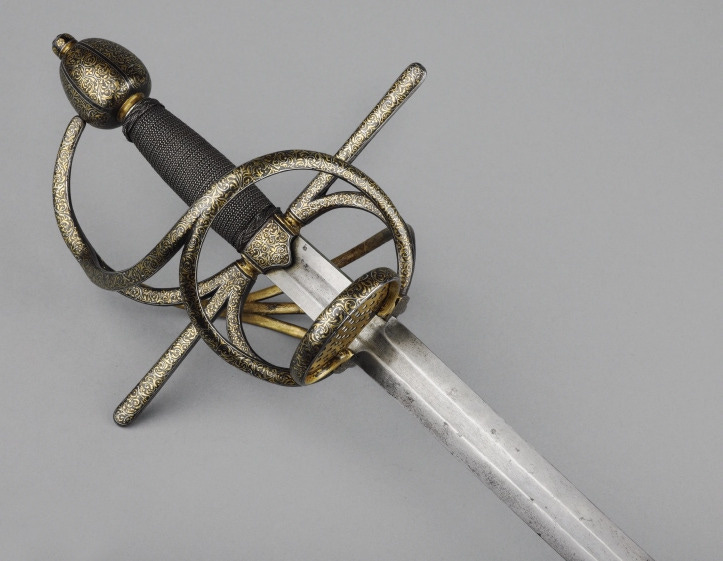
Second, we would think about closing the space between the inner sweeps, more and more like on the mid-1600s German rapier below.
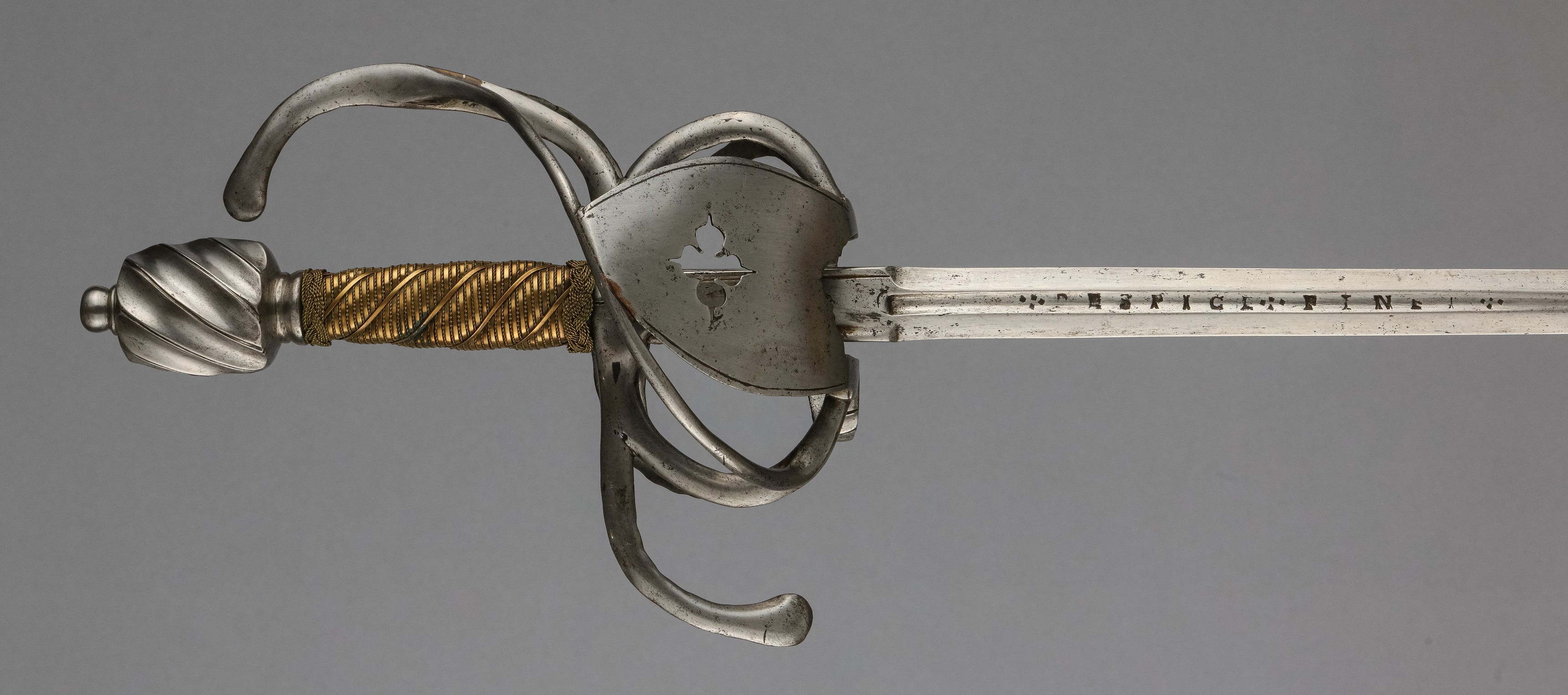


Or we would start from a symmetric three-ring hilt and just add inner shells, like on these Spanish and later Italian examples.


At this point, we can just add more rings (4, 5, 6, 7) to reduce the gaps and close the most outer ports to obtain the so-called seven-ring rapiers.
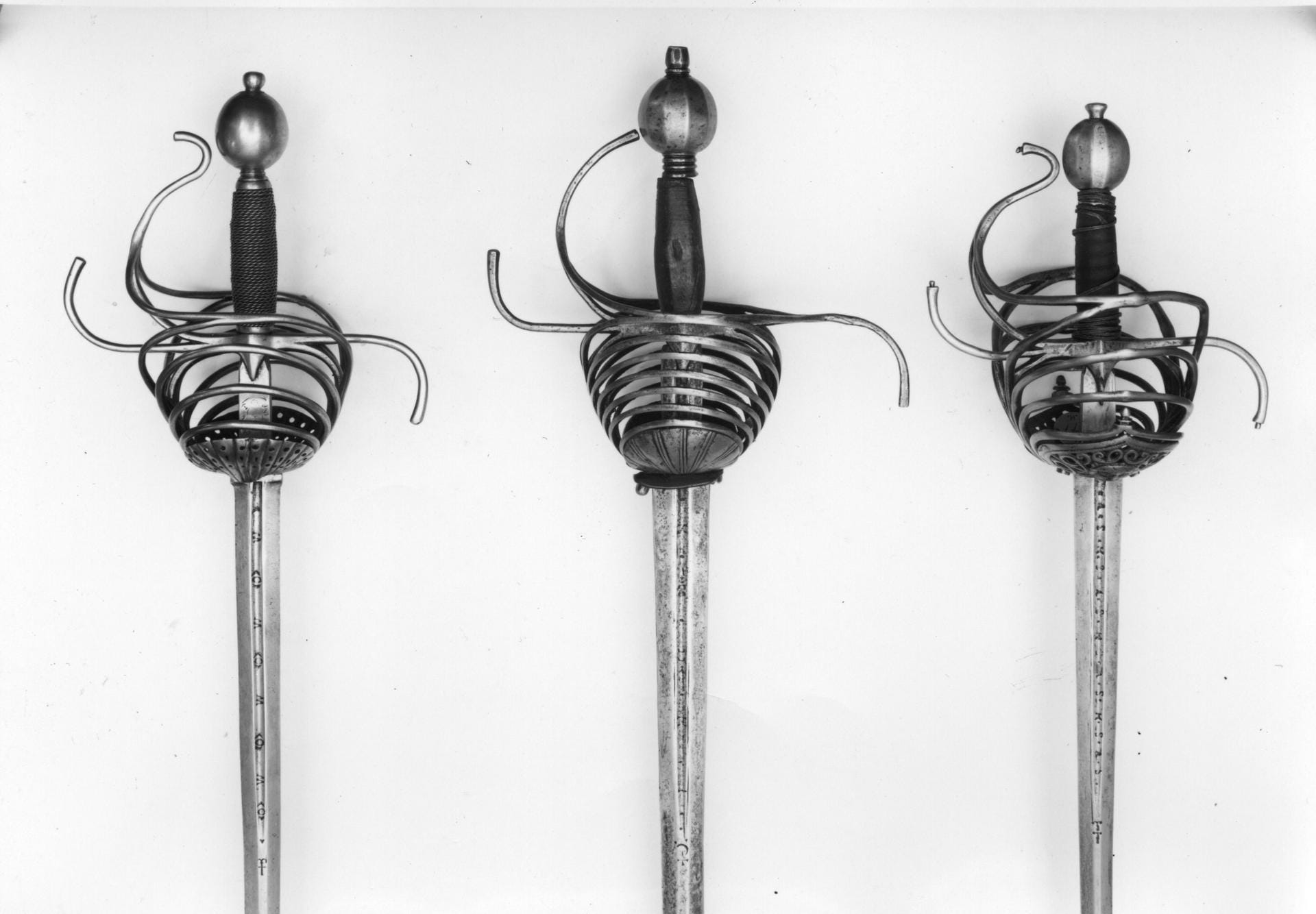
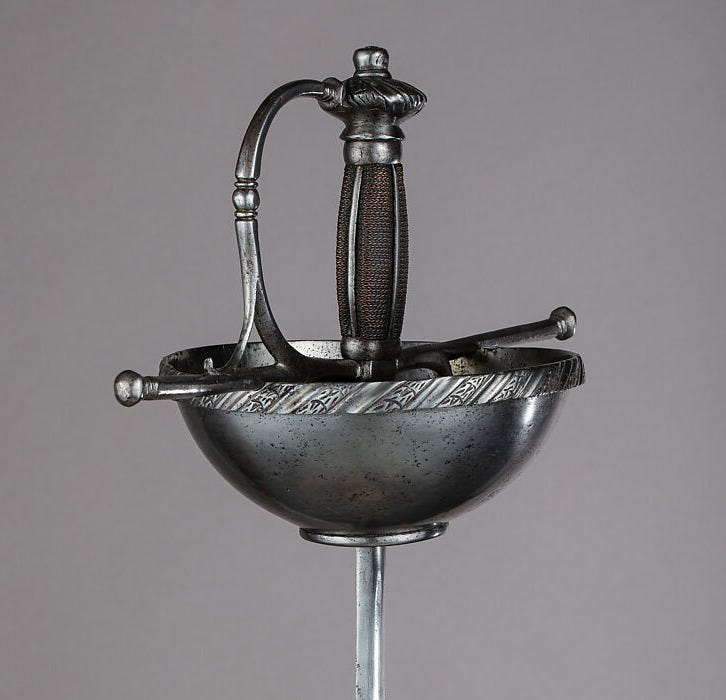
From this stage, we either make the shells larger and obtain the German Pappenheim-hilts or Spanish shell-hilts, or simplify everything as full cup-hilts.


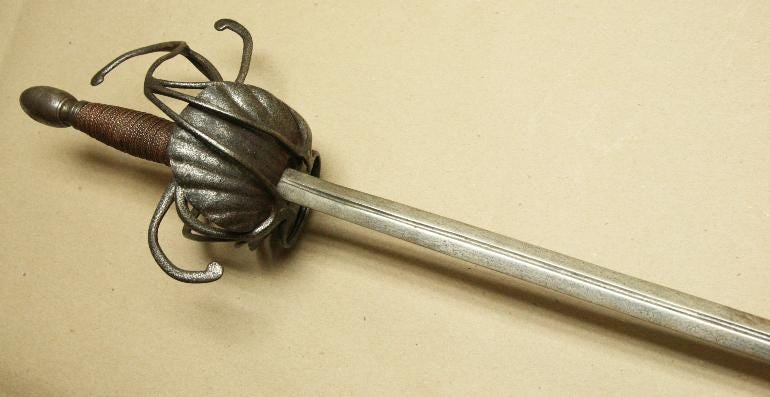
Or so I would have thought before I saw the earliest attempts to close the gaps in swept hilts. They just took a classic three-ring swept-hilt rapier and added shell plates on the inside. Next, I am looking at some examples.
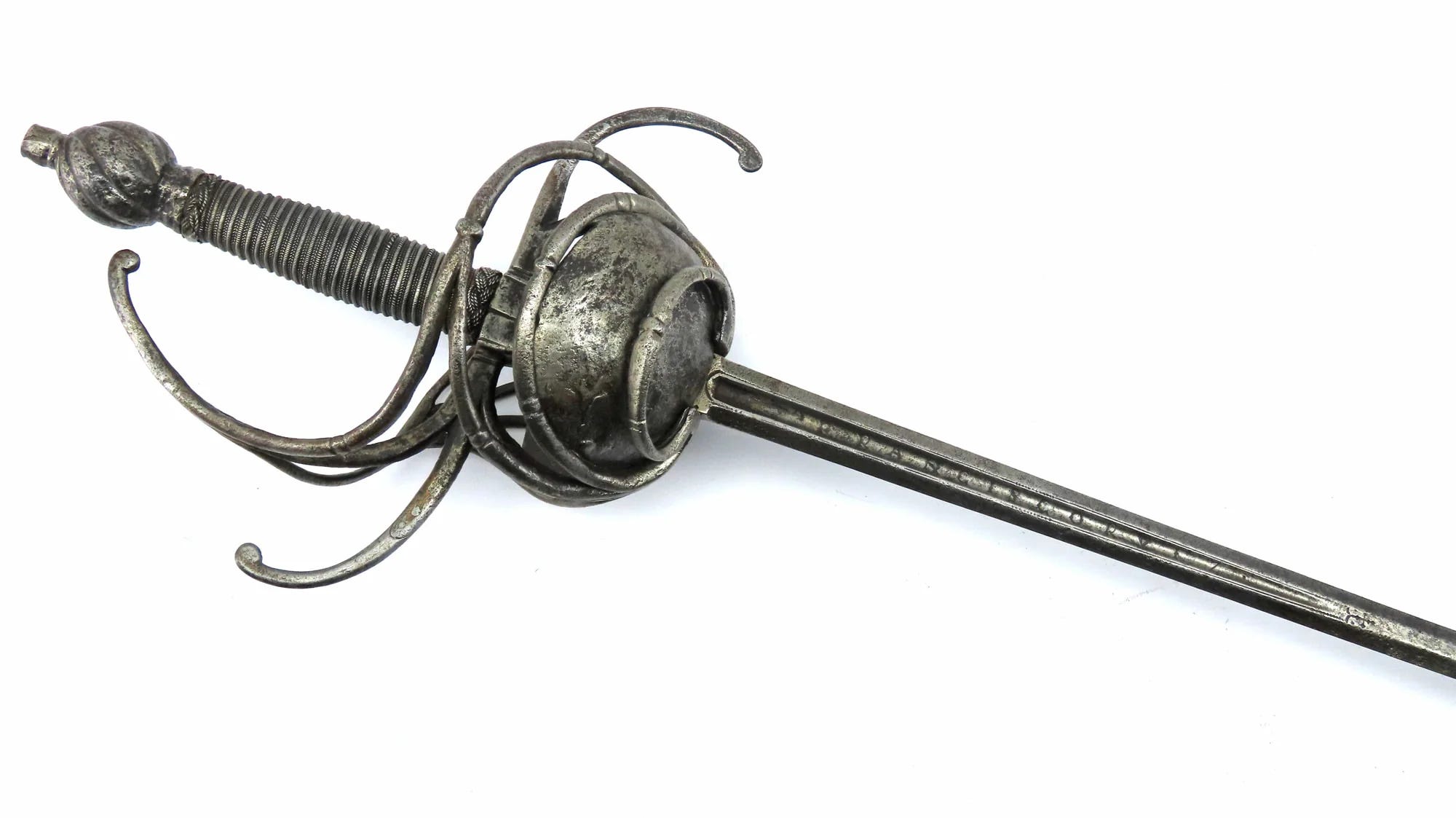
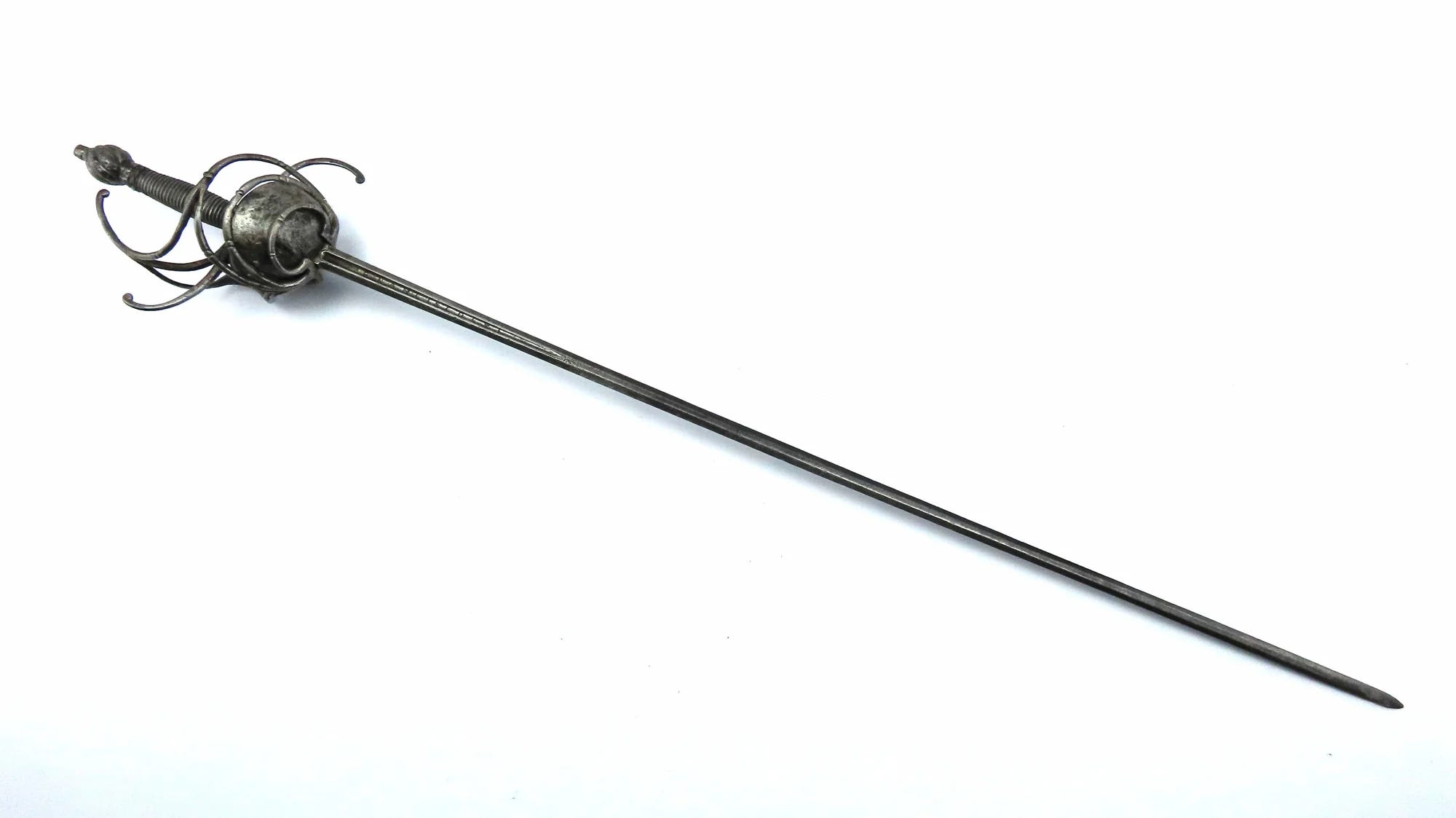
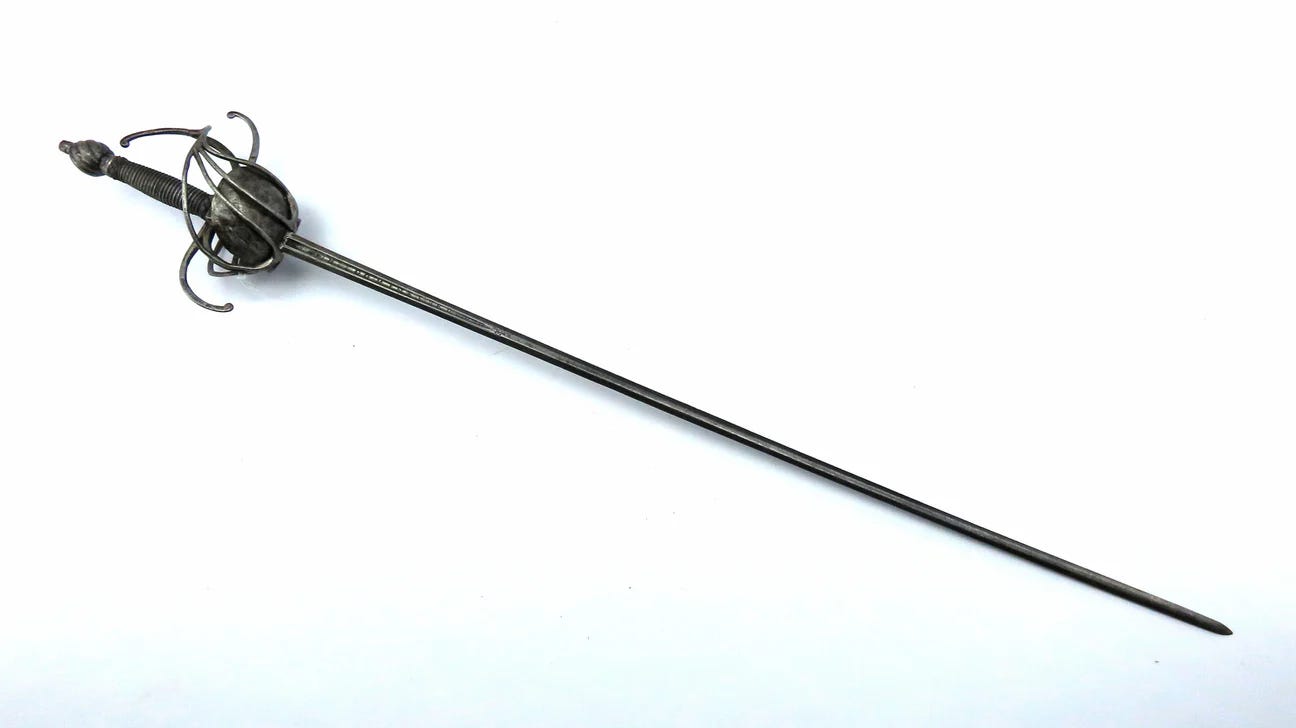
Italian Swept Hilt Rapier, c.1580-1620
This is a piece on sale by West Street Antiques for £3,795. In the past, I bought a British 1788 Light Cavalry Officers Sabre from them, which I like a lot. What caught my eye was the earliest year (c. 1580-1620) for this type that the seller attributes to Francisco Ruiz the Elder (Spanish, Toledo, died after 1617), or his son, Francisco Ruiz the Younger (Spanish, Toledo, active first half of 17th century).
An Italian Swept Hilt Rapier. 46” overall, 37 ½” slender Toledo made blade of stiff diamond section stamped 'Francisco Ruiz' in the single fuller at the forte and ‘IN TE DOMINE SPERAVI’ [In thee, O Lord I Have Placed MY Hope]. Swept hilt comprising a pair of round stell shell guards, with outer guard of three rings, inner guard formed of four swept round bars, ‘S’ shaped diagonally curved long quillons & joined to the knuckle guard by an additional bar. Spirally fluted ovoid pommel, fine wire bound spirally fluted grip with Turk's heads.




Swept Hilt Rapier with Shell Guard, c.1620
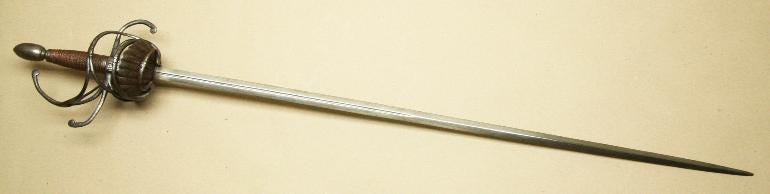
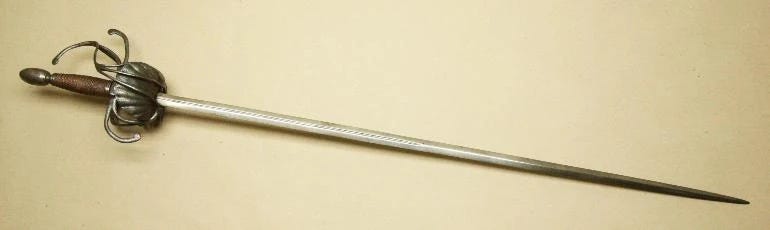
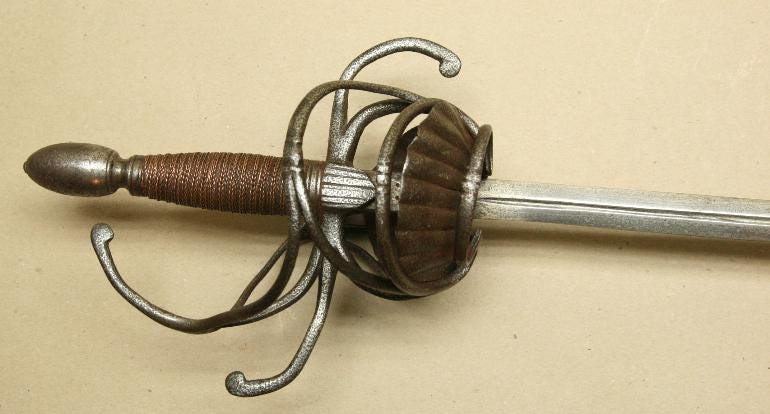
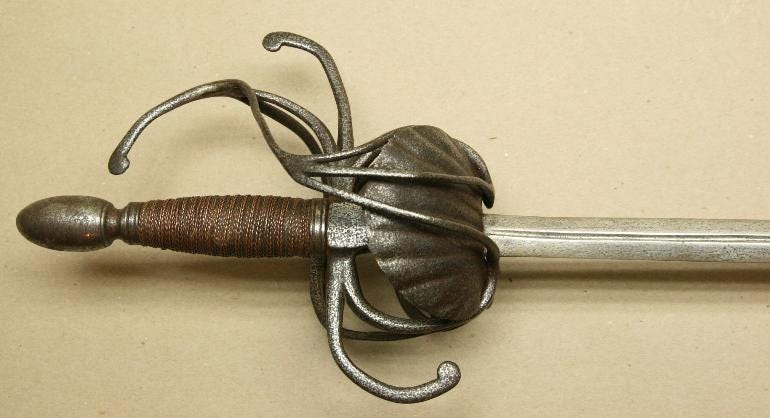
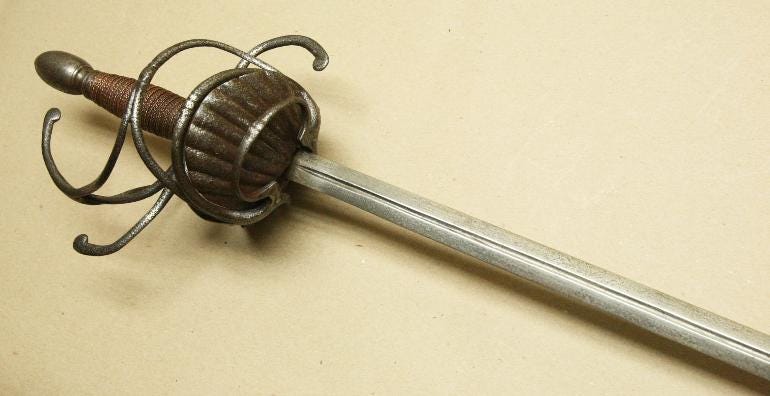
Another example that I found, c.1620, has a scalloped shell guard inset inside the swept guard. The shell is secured to the side-rings with two rivets. The blade is 90cm long, and the total length of the rapier is 110cm.




Some Thoughts
Now, I’ll be honest, this is not a type of rapier that I particularly like. The overlap of sweeps and shells creates a strange aesthetic for me. This is not the case for closed ports, or the seven-ring hilt styles, where sweeps and shells complement each other.
However, this hilt is prefered by people that fence rapier a lot. I see these types of hilt creations in HEMA (e.g. Balefire Blades’s The Finisterra Rapier), since having a blade hit your fingers during a thrust is not fun. And not only that but in Fabris’s Scienza d’Arme, I see what looks like shells being present inside sweep-hilts. So this is a design adopted by the old masters.

I do have an unanswered question. Were these existing three-ring rapiers that were repurposed, or were these designed to be this way from the start? So was this a retrofit out of necessity, or a design choice? Regardless, they represent an interesting choice that is worth highlighting.
Having examined a lot of swords from this period, there are a few that could have been retrofitted with shells after the initial hilt was made but for the vast majority the shell is a part of the overall hilt design. Hilts without plates continue to coexist with shell hilts though, so it isn't really a matter of "progression", but rather different design pressures.