
Style Is Not Function
a quick look at the Schiavonesca style

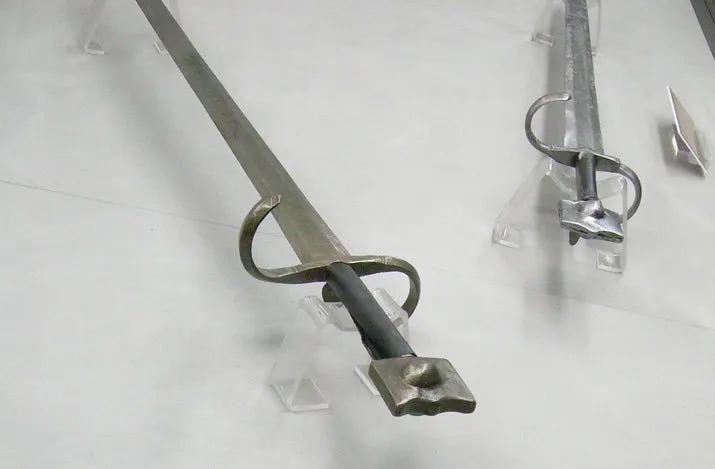
I was chatting with some people about sword typologies and how Oakeshott didn’t look at swords in the (then) Eastern Bloc. I found some academic papers on swords in South East Europe, and I found some info on swords found in Romania, Hungary, Serbia, Bulgaria. I should look at them properly at some point, but for now, I just want to note how incredibly basic and even ugly (in an endearing way) the fittings are. Just look at this sword found in Romania. You would struggle to make it simpler than this.
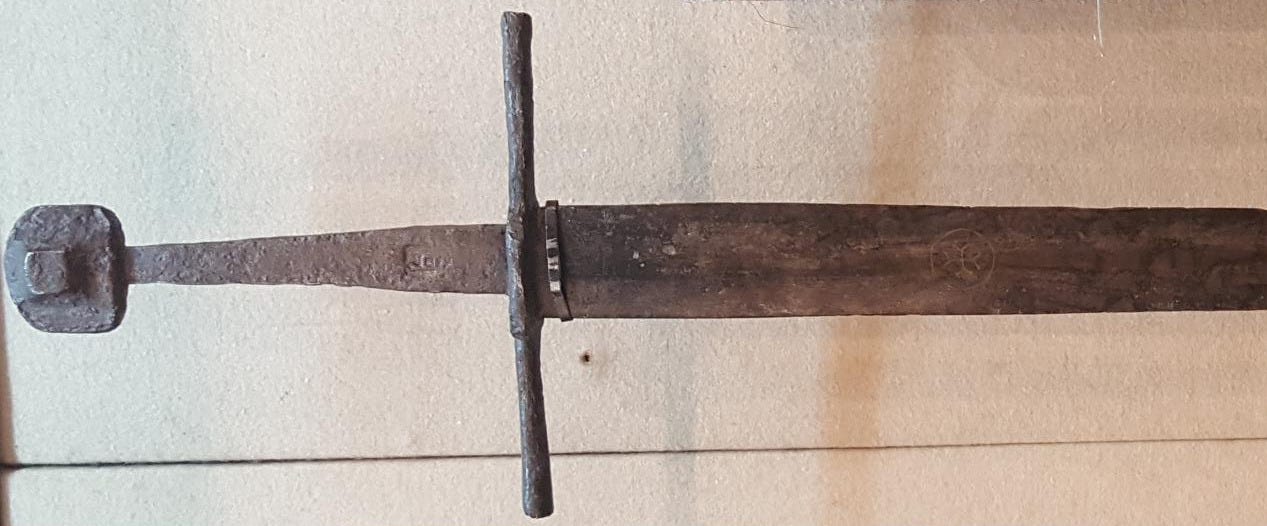
It’s like they were not even trying. The pommel is basically a lump of flattened iron. And we can say the same about swords found in Serbia. This is relevant since the style we call Schiavonesca simply implies Slavic swords (in this context).
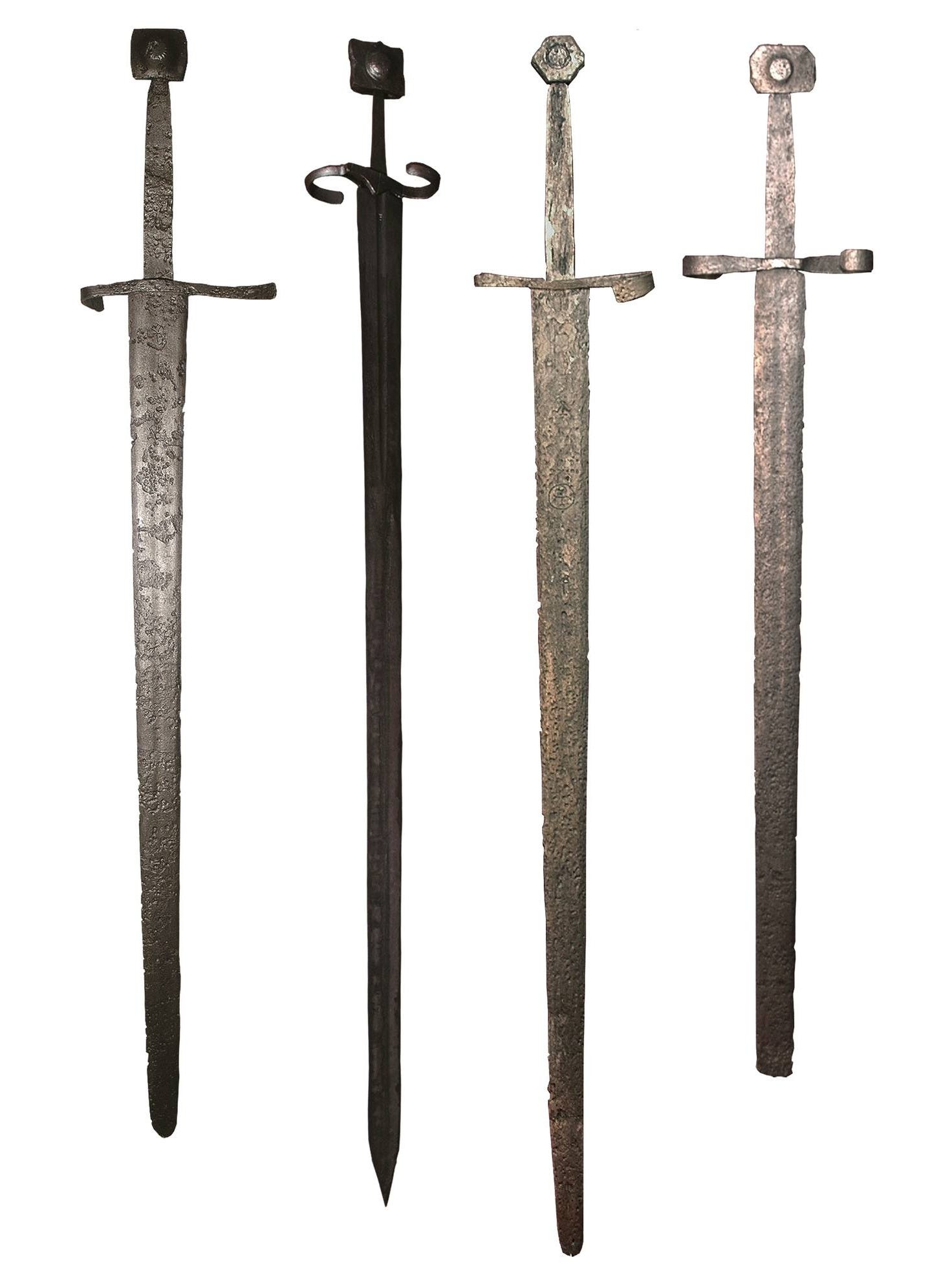
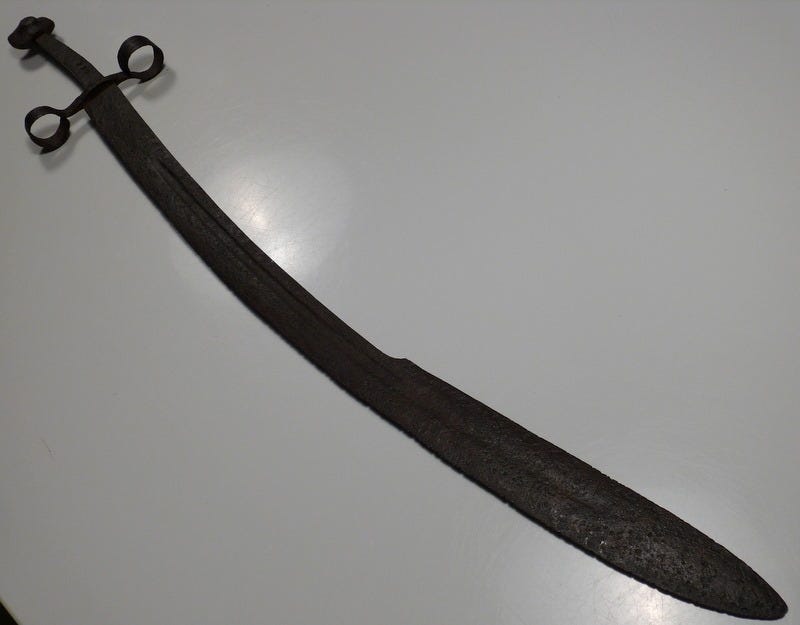
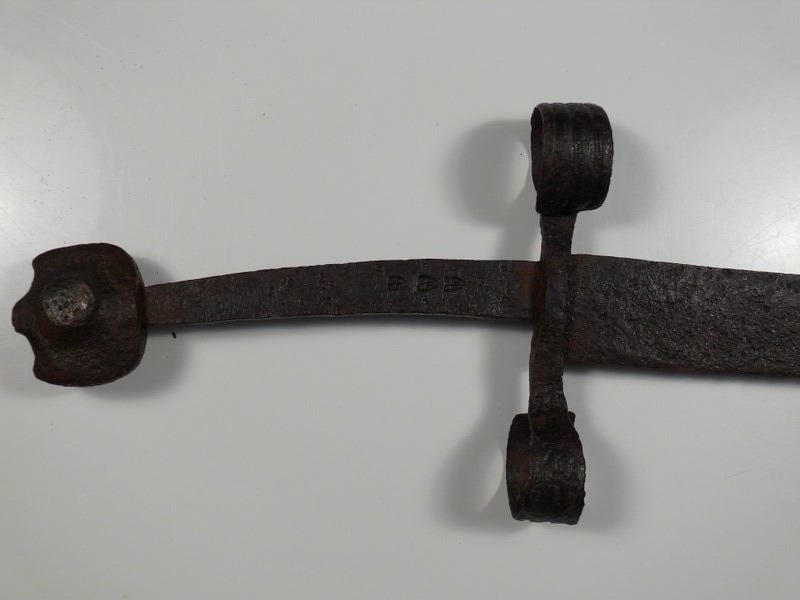
We say Slavic, but this style was used in places like Romania and Hungary, and may have been Cuman in origin, and used on some of the earlier two-handed Hungarian sabres (this one is later, end of the 15th century).
One thing is for sure: Venetians loved this style, and after they got introduced to it by Croatian-Dalmatian mercenaries, they adopted the Schiavonesca style of all types of swords. And this is what I want to make this post about. Not so much a history, but a presentation of all the different sword types that made use of this style. I would even say that these swords have nothing else in common, except this style.
Longswords
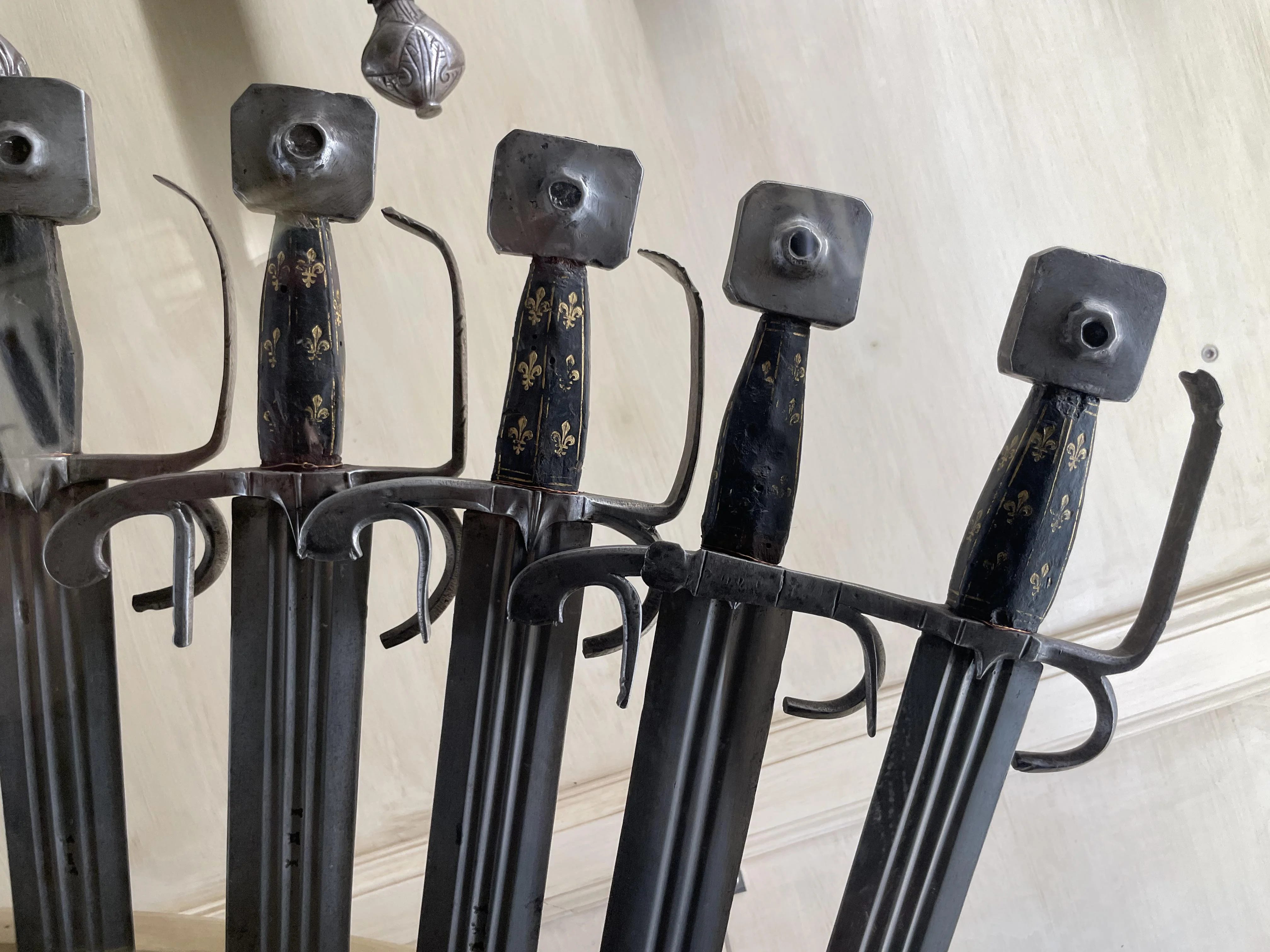
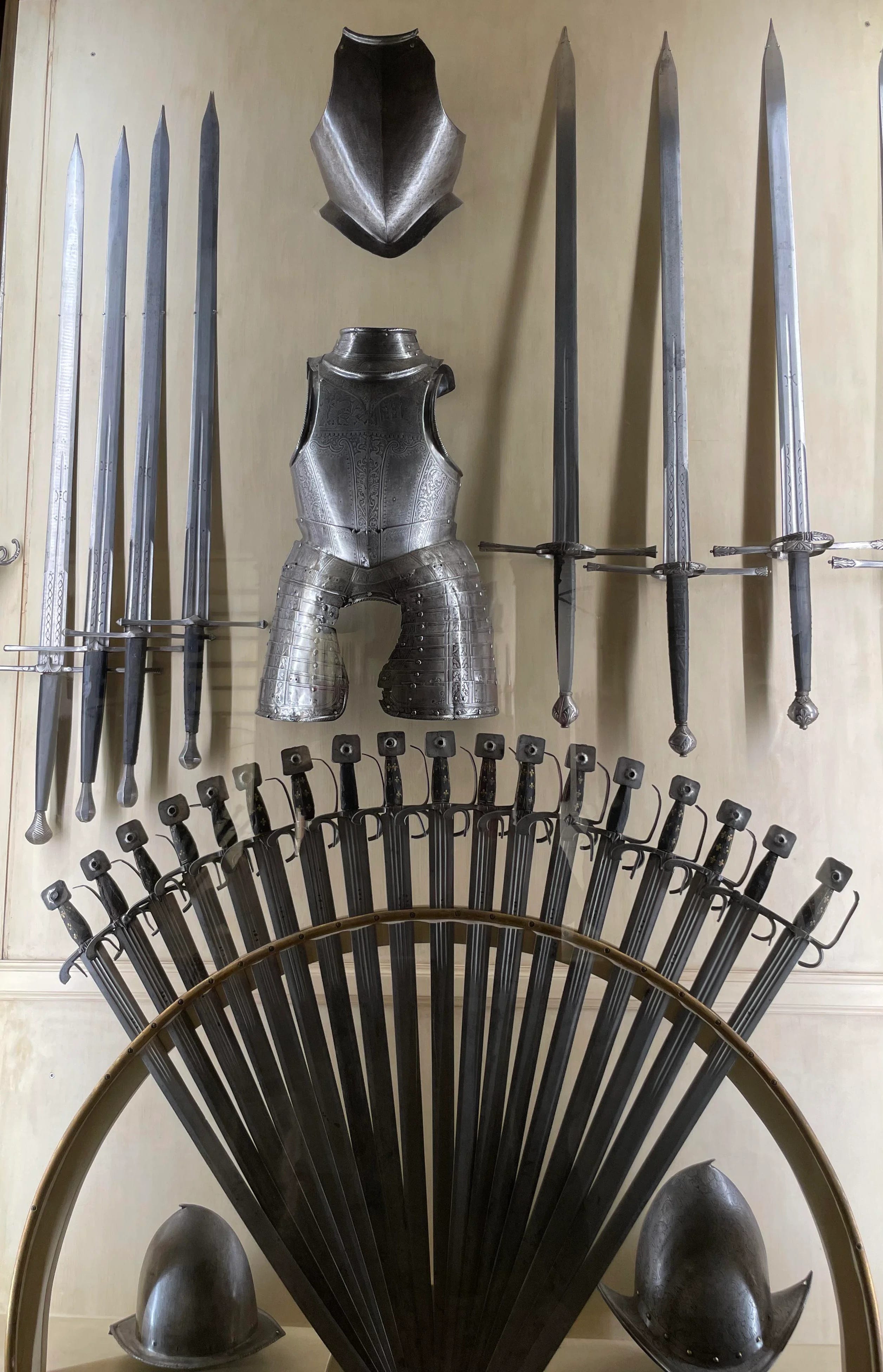
This is a good opportunity to describe the style. We see square-shaped pommels with a central bulge, having a ridge cut towards the pinning side, sometimes resembling more a stylised cat’s head. The quillons tend to be S-shaped, but this varies for different types, as we will see. The grip is a spiral cord covered in leather, but this may not be present at all times. And yet, with all these caveats, a Schiavonesca style sword cannot be missed once it’s seen. I dare say, it has a clear, noticeable character to it.
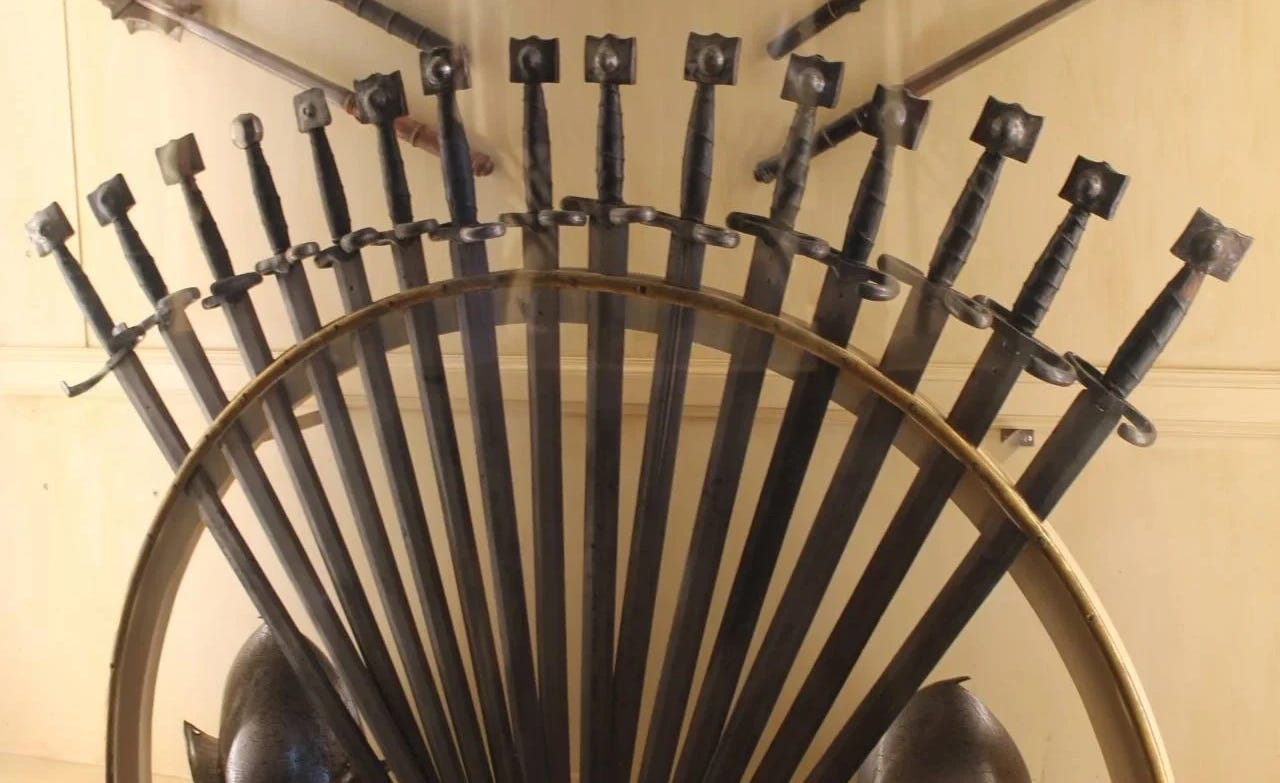
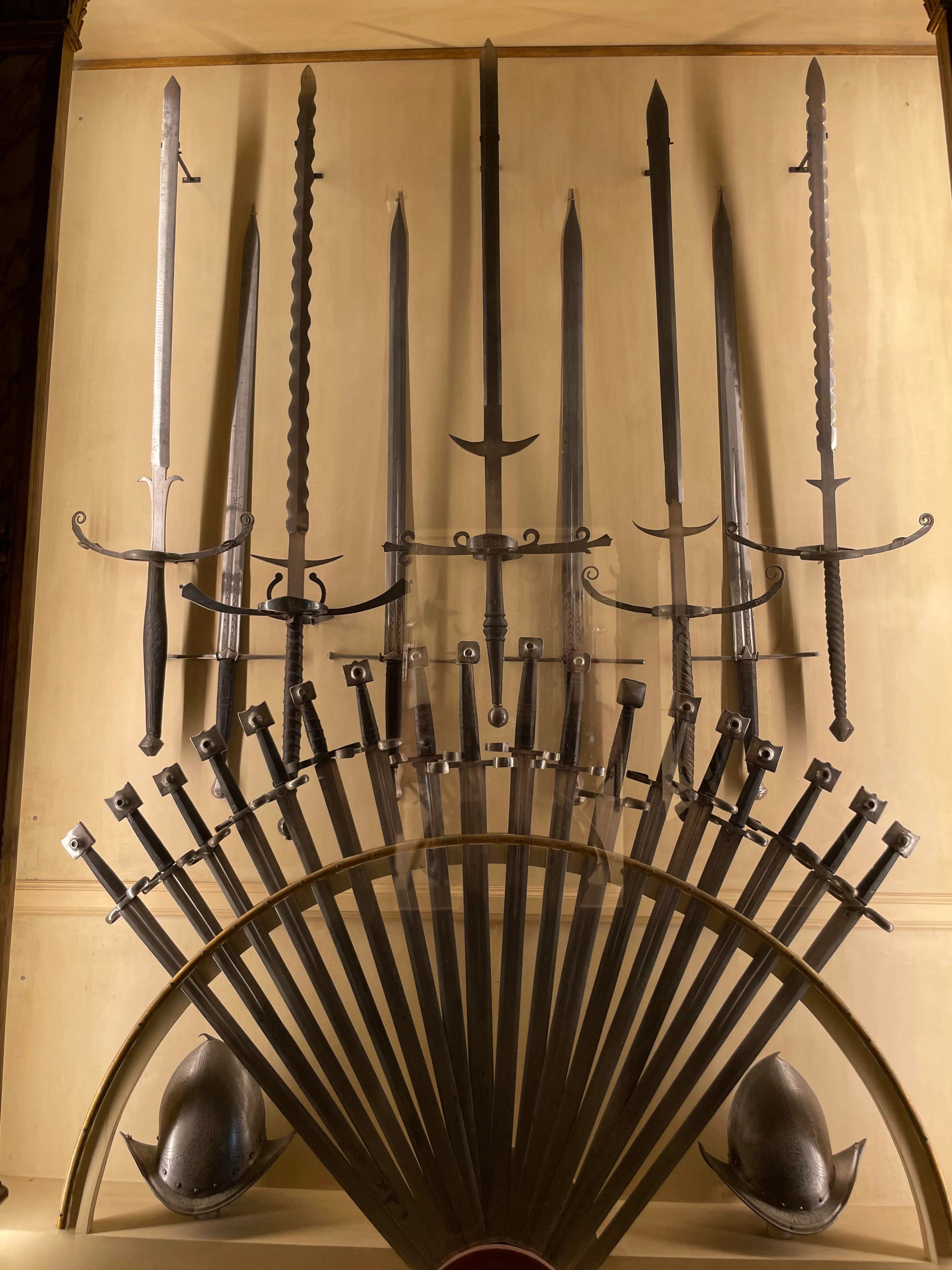
The longsword variety tends to have relatively smaller grips than other longswords from this time. They are also paired with broad cutting blades. They may have been used in a pallasch role.
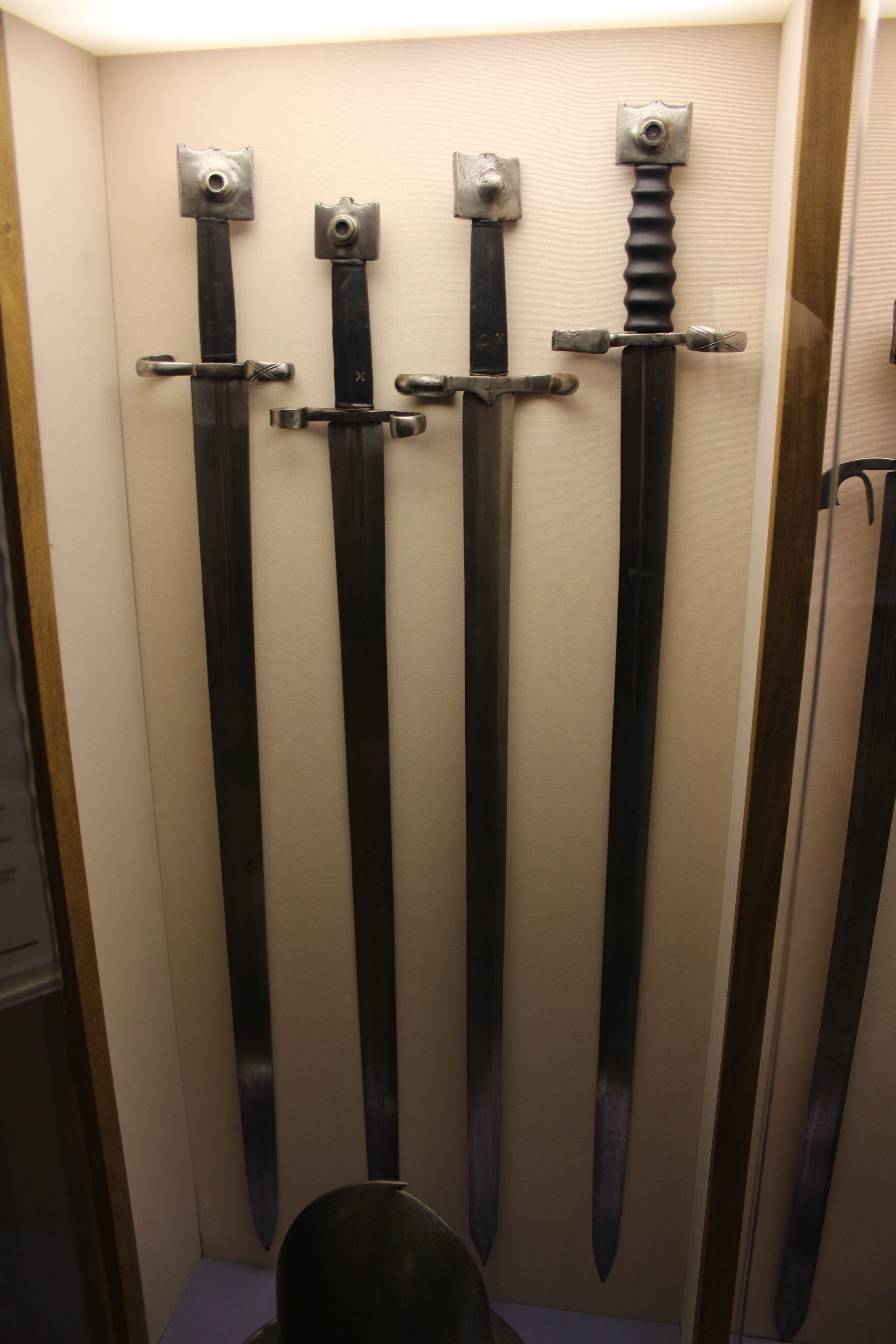
Arming Sword
Not all swords that look like this are longswords, some are smaller, arming sword-sized. We also see, at times, more accentuated S shapes for the quillons, almost as seen in proto-Katzbalgers.
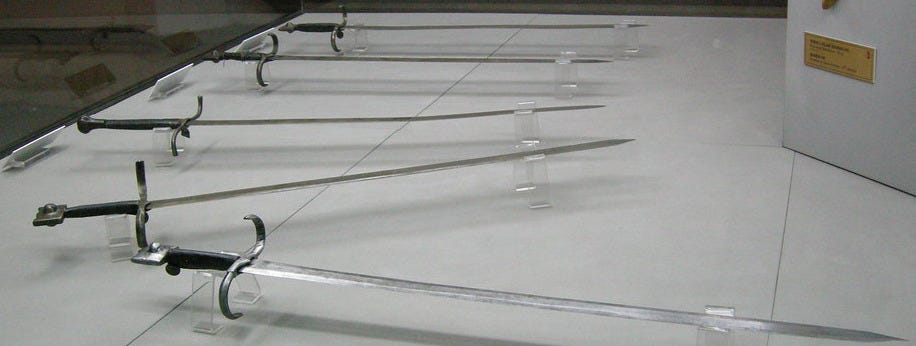




Sideswords
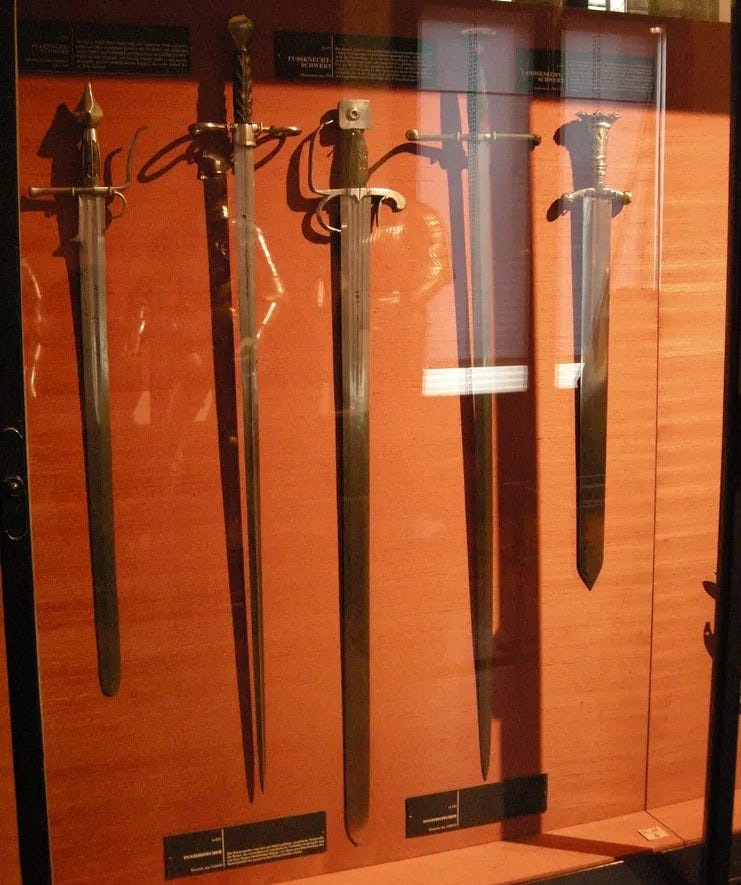
If we want to look at dedicated one-handed swords, we have a sidesword type that is well-known. These were swords made for the Palace Guards of the Doge of Venice.


Dussack and Cutlass
How about a few dussack and cutlass pieces? Now, these surprised me. By the cutlass next to it, this is a clear cutlass-sized piece, but one made in a clear Schiavonesca style.
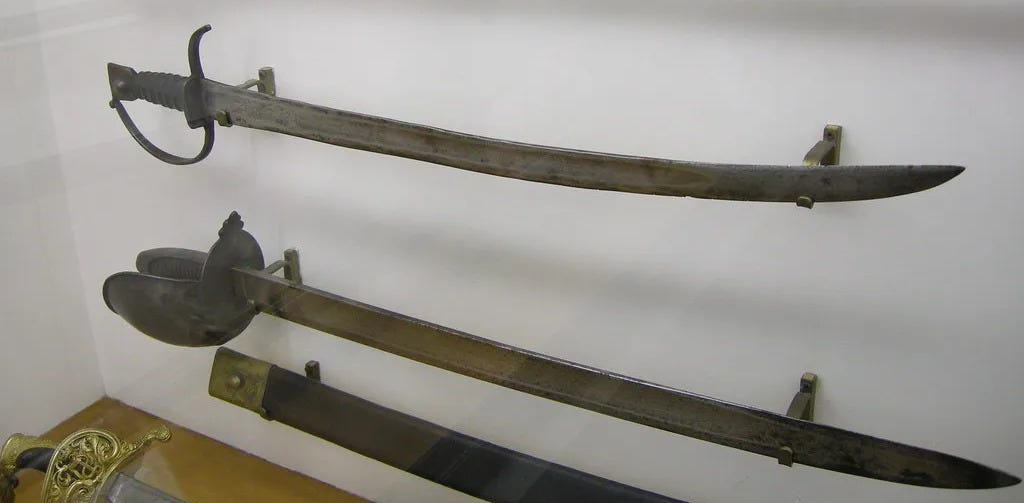


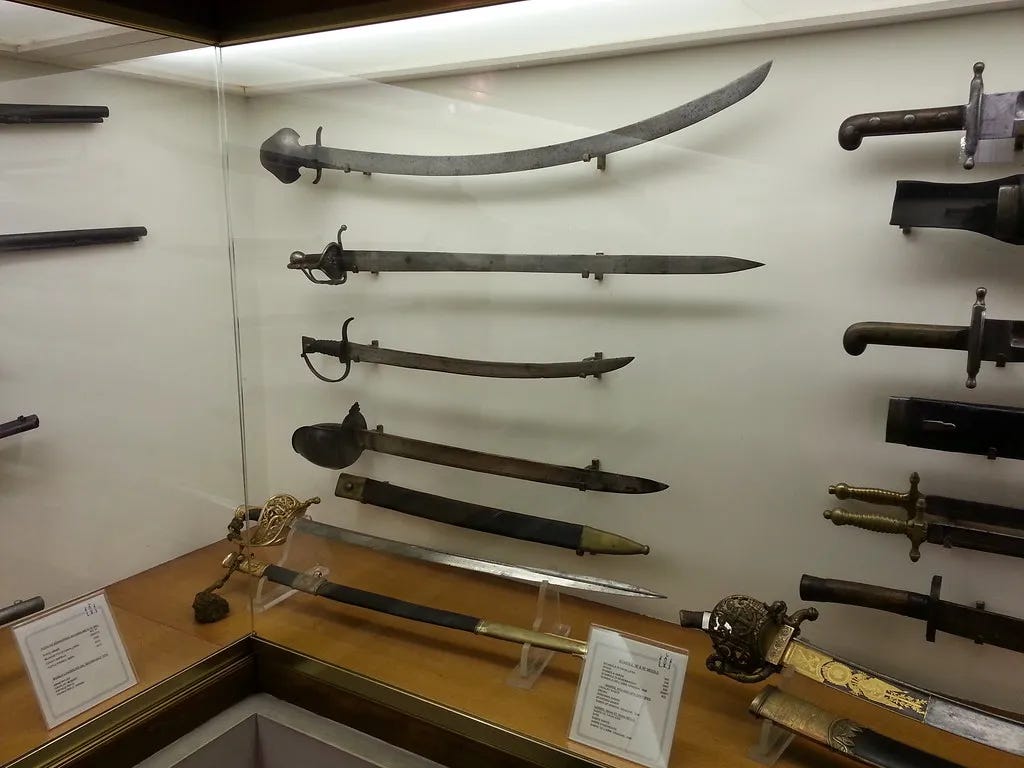
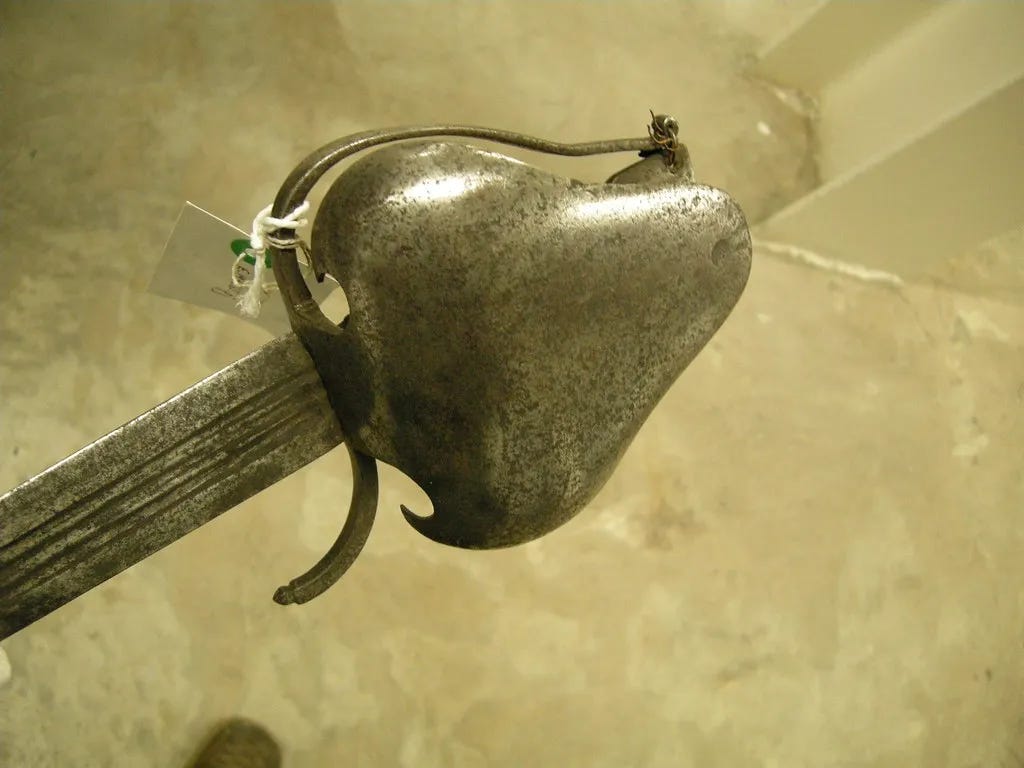
It’s not even as big as a 1600s period broadsword or dussack. And speaking of dussacks, have a look at the next piece with a shell to the side of the hand. These are not fooling anyone; they are done in a Schiavonesca style. Btw, since I don’t see the blade in full, if these are straight blades (so broadswords), it changes nothing, as we see dussack hilts with straight blades already.


Rapier
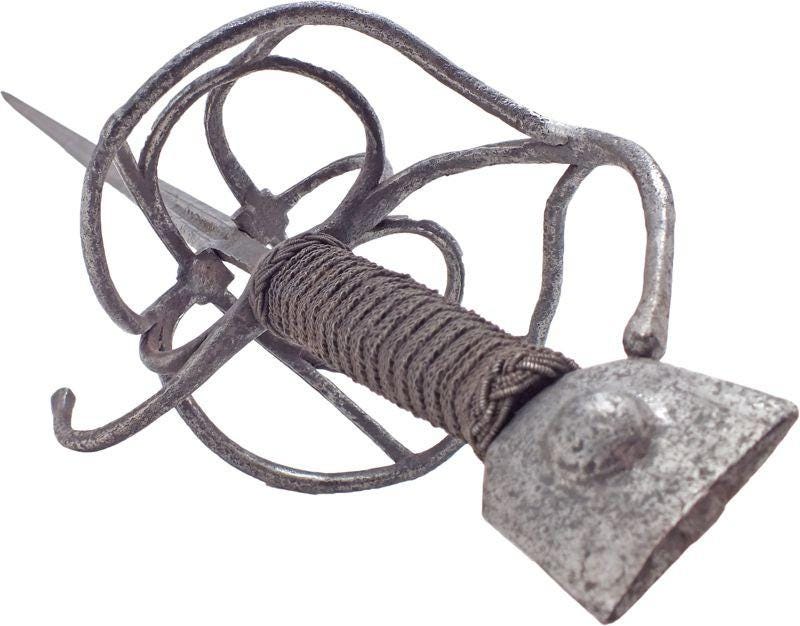
What about a rapier in this style? I know some Danelli Armouries have used such a piece for modern trainers. In the end, all you need to do is provide the iconic pommel. But I would say this still qualifies.


Schiavona
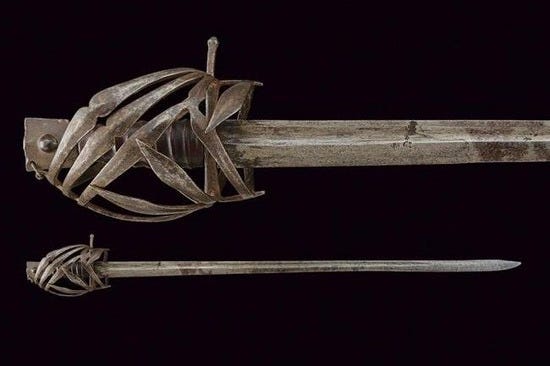
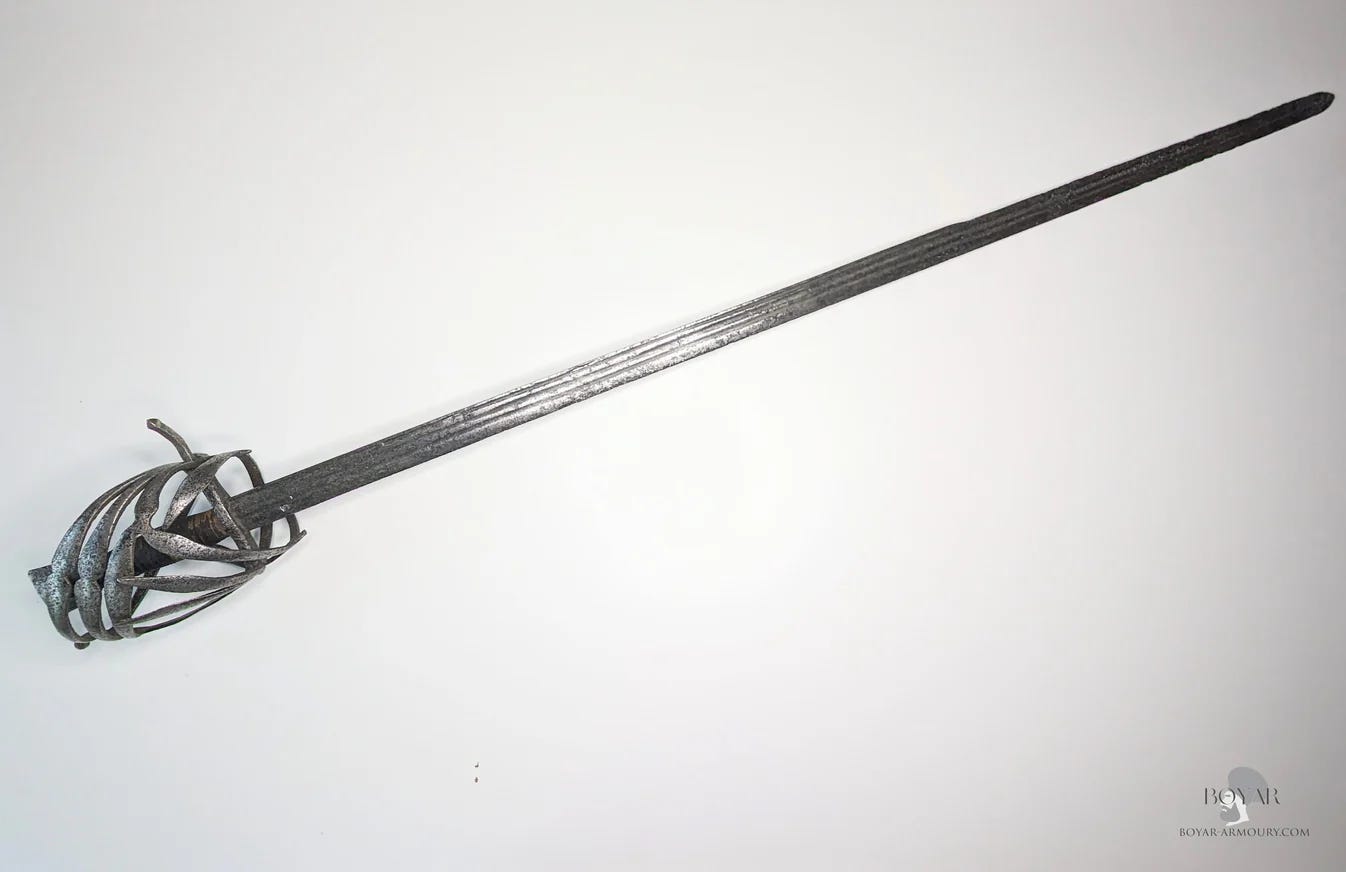
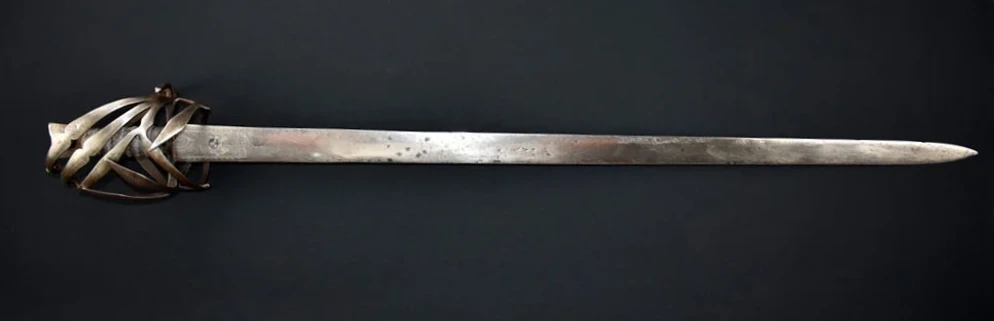
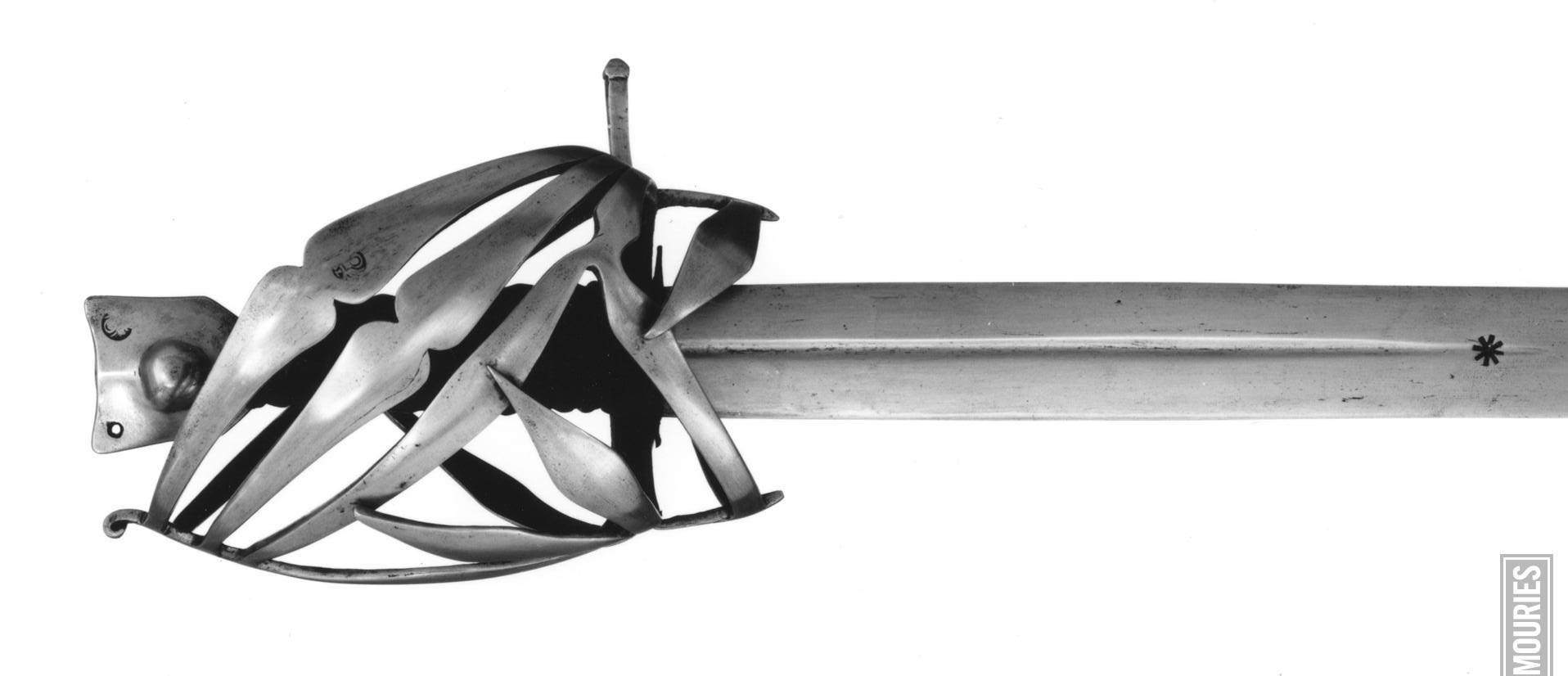
We cannot end this without going over the bask-hilt that people associate the most with the style, the schiavona sword. Here, I will only show the most similar type.






Not Much of a Conclusion
There is not so much to say. I just love how one style, embraced by the Venetians in the 1400s, got used by them on so many different types of swords. The cynic in me tells me that Venetians chose this basic style as a cost-saving measure. But even if this is the case, I cannot help but appreciate sticking with this basic martial style for so long. And while we do have better, it’s growing on me quite a lot.