
The Missing Links
single finger-ring hilts and the swords from the Arsenal of Alexandria
After looking at art depicting the use of the index finger over the crossguard and single finger-ring hilts, I want to look at material evidence. Leaving talking about what I call the arming sword problem for the next post, I want to look here at the emergence of finger-ring hilts and the superb examples of this type from the Arsenal of Alexandria. I’m not going to deep dive, and more details on the specification of some pieces may become available from the people who actively research these pieces. But it would be nice at this point to have an overview.
If we want to date the existence of single finger-ring hilt swords, the Arsenal of Alexandria is invaluable. We are lucky that some of the nicest examples of this type passed through there and had the date inscribed into the blade. But if we want to look at the emergence of single finger-ring hilts, we should try to look elsewhere, a bit earlier, and maybe in a different region than Italy.
Single Finger-Ring Hilts
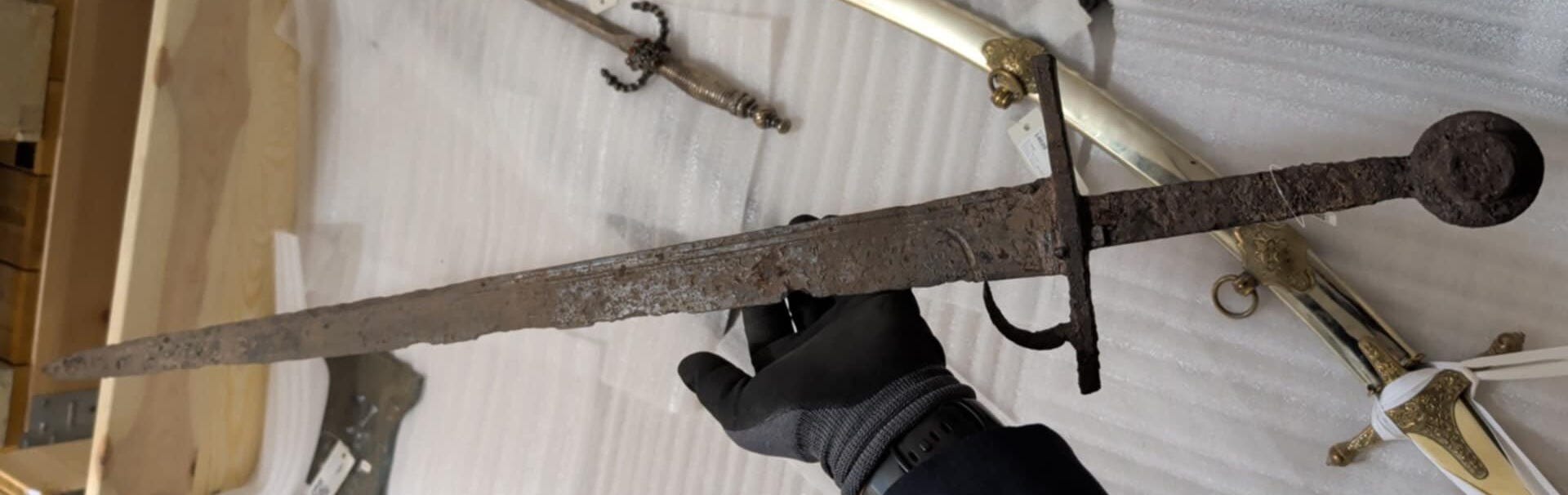
People have wondered for a long time why single finger-ring hilts emerged on double-edged swords. My belief (with a caveat left for later) is that they started on single-edged swords in the early 1300s, such as on the piece below. A lot of these early pieces are in the SKKG collection, and the images shown were taken by The Spadone Project.
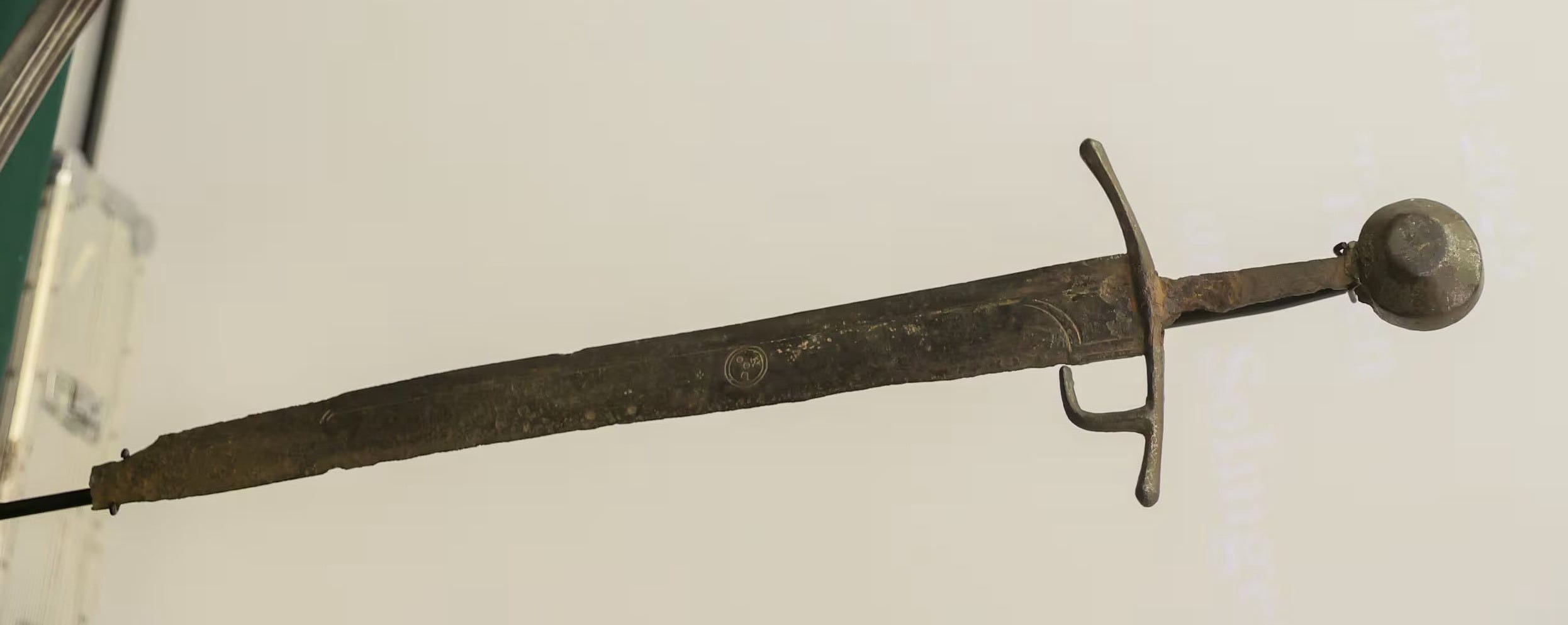
We are not talking about falchions with clip points, or exaggerated proportions as we see in art, but more of a backsword-type blade. We know these types of single-edge blades have been around since the Viking age and probably before, such as on the seax. Add a small ricasso and a square-like ring, and we see the earliest form of these hilts. Since the blade was not symmetric, no reason for the hilt to be either. Later, it may have been adopted on double-edged blades, and not just single-handed swords either. But this may be the first time we see finger-ring hilts being used, and the design makes perfect sense in its context.


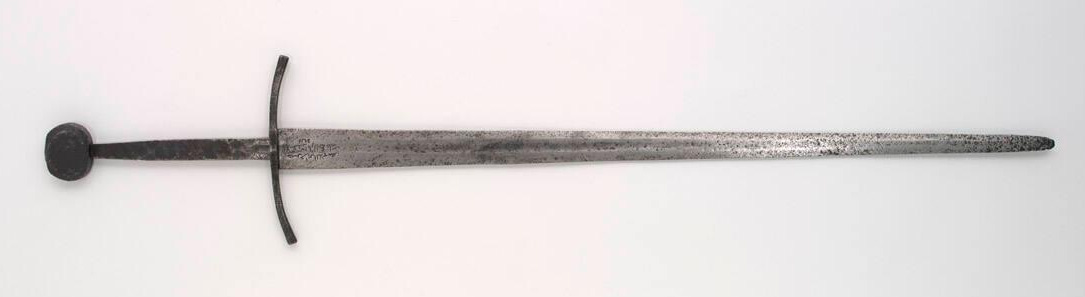
This is not the only piece that looks like this. Via X, this next piece from the 1300s, photographed by the guys at The Spadone Project, is in the SKKG collection. Notice the same backsword-type design. Also, see that the decorative lines (shallow, narrow fullers) are only on one side. This is such a seax type of choice to do on a blade.
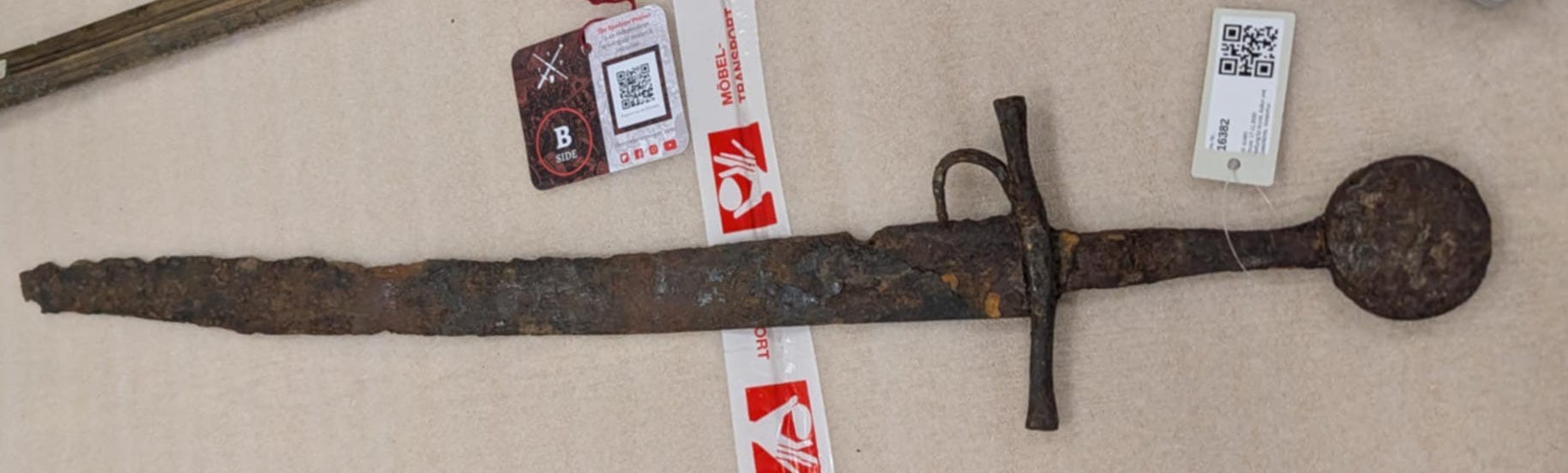


These swords have a broken tip, and they probably had a sharp back-edge towards the tip. I expect it to be similar to the next 1400s piece, sold at auction. It is 121cm in total length, has a width span of 17.5cm, and it is stated to be from Spain (not sure if true).
Single-edged blade with a back edge towards the tip, slightly widening at the third quarter, fuller along the back on both sides. Fragment of an inscription on one side of the blade consisting of five illegible stamped letters and symbols. Flat straight quillons widening at the ends, with a small ring.
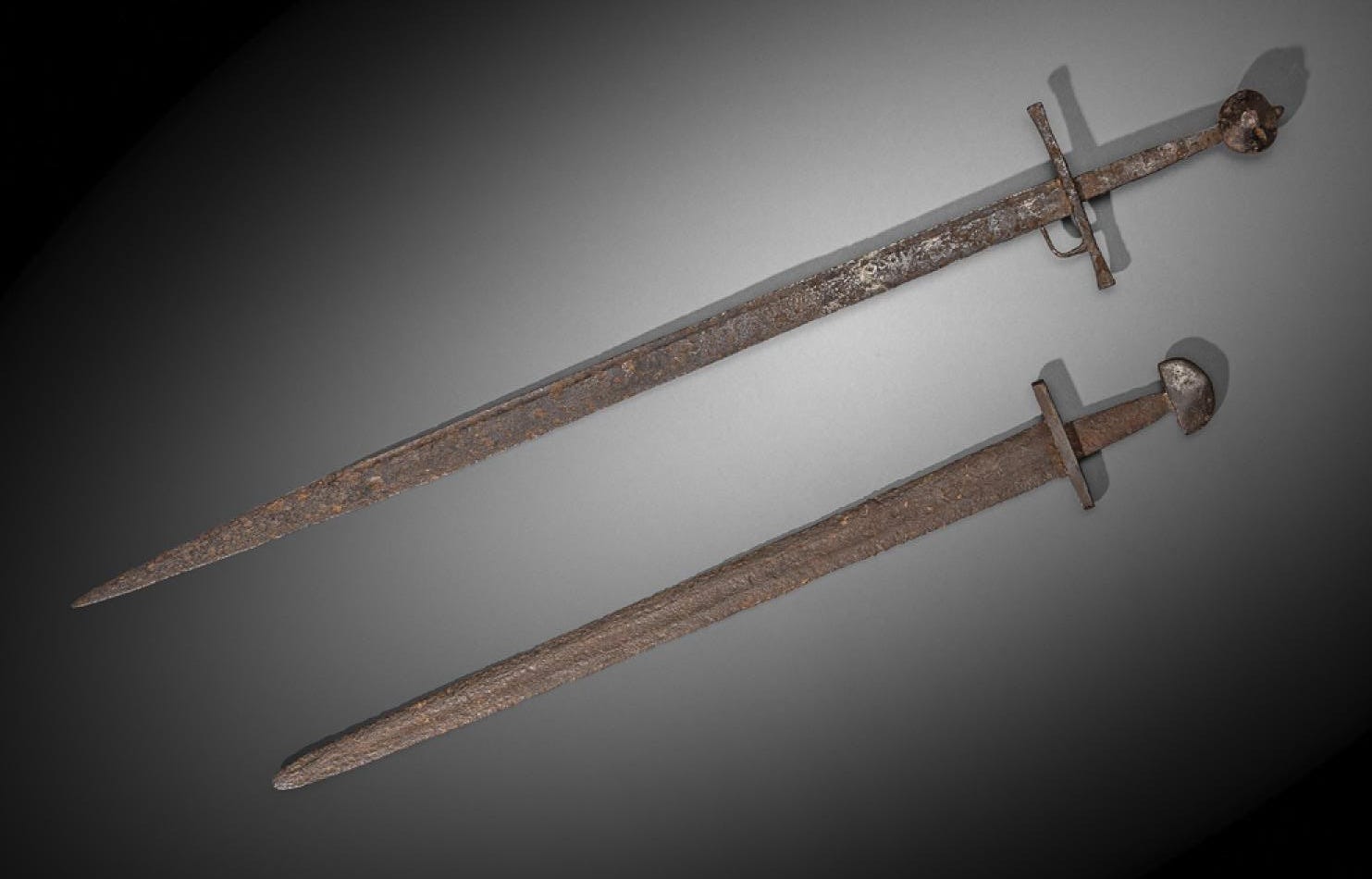
Another longsword with a back-spine blade can be found in the SKKG Collection. All these examples look too similar not to have come from the same place.
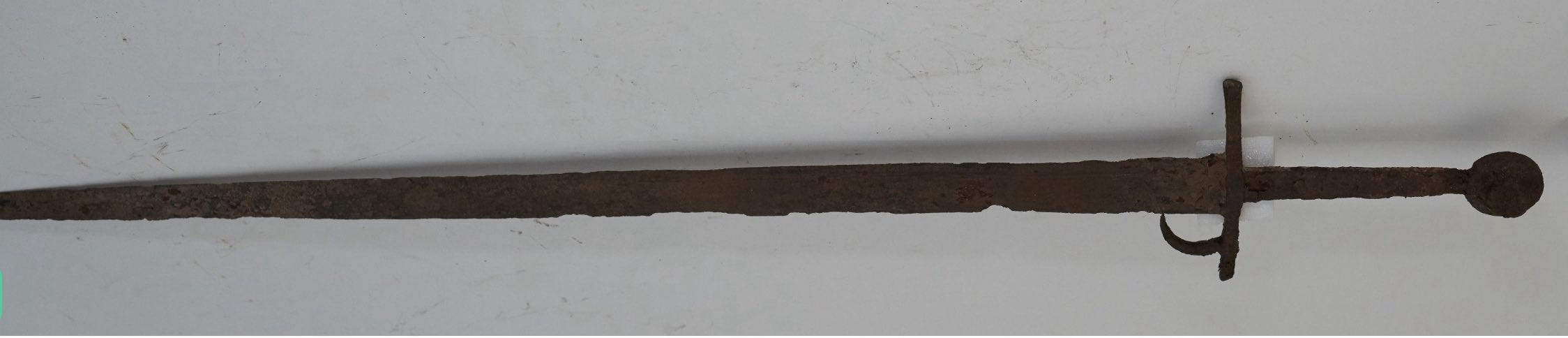


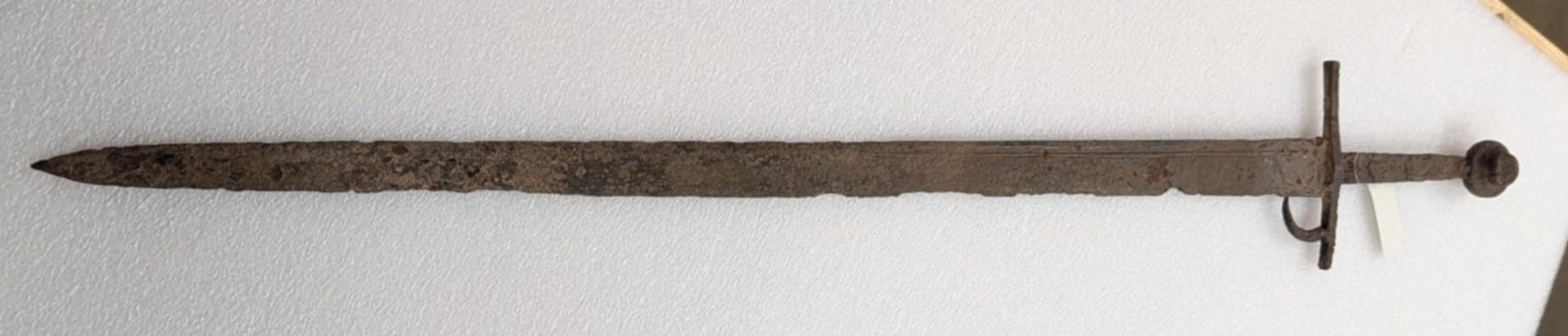
On a longsword with a back-spine blade, if the finger-ring is used, there is no distinction in use compared to a double-edged sword, like this c.1350 or so piece held in the Royal Armoury in Turin.
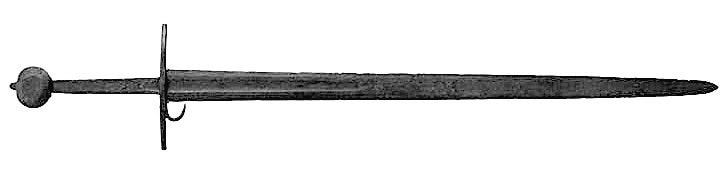


If we look at the following 101cm long piece, we get an 80cm long blade and a 13cm long grip (no pommel). The grip is not that long for this to be a longsword in that definitive sense. Probably, this is from the later period, when we see in art longer grips on swords, even when used with a buckler. Naturally, I am assuming that all these pieces are authentic to their periods and not made later.
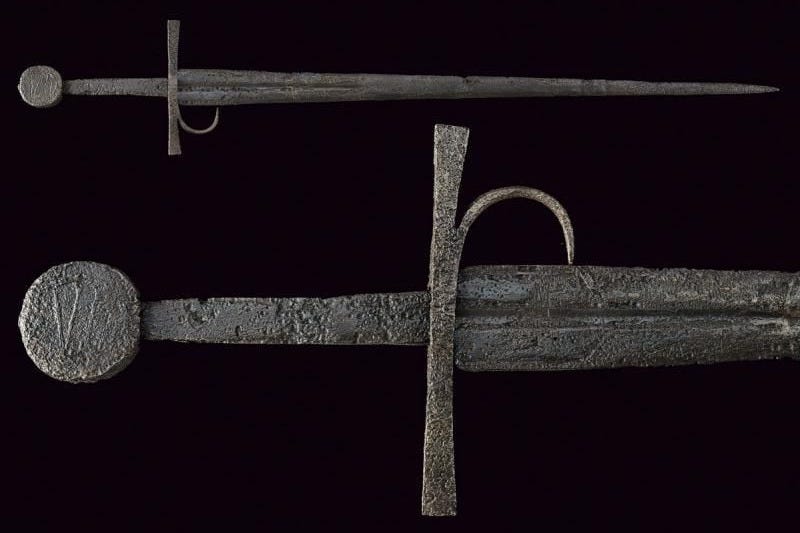
With so many backswords that are in the Swiss collection, Turin being in the North of Italy, just as Milan is (we’ll see famous examples), I wonder if this type of hilt is not an (Italian) Swiss development that was later brought into Italy proper (and elsewhere). The one-sided line decorations like on a seax, the backsword-type blades that make us think of later Swiss sabres, and even the idea of adding finger protections on a longsword hilts (again, the Swiss sabres), make my mind go towards that direction. The hilt even appears in connection with baselard-type swords.
Single Finger-Ring Baselard
I understand that the next pieces are from the late 1300s, early 1400s and are referred to as Italian baselards. The mixing of the name indicates a development from the border of the two lands, or just the merger of a baselard hilt with a more Italian broad double-edged blade, with twin small fullers at its base.
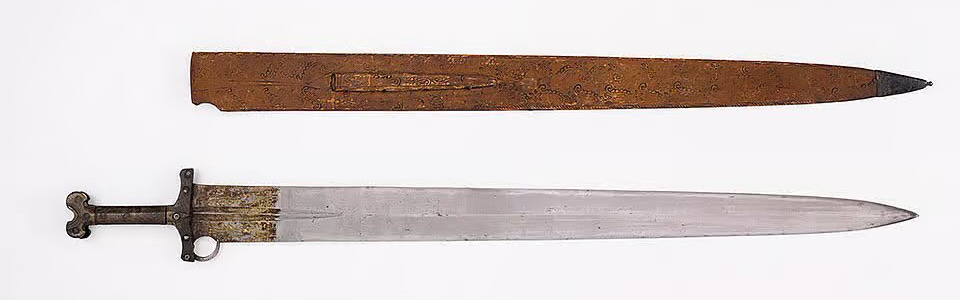
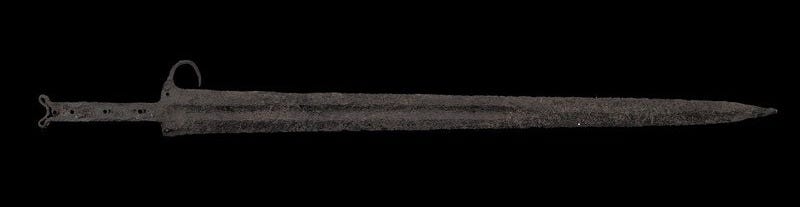
James Elmslie has used this antique as a basis for his late 14th century Swiss Baselard with side-ring creation. With an overall length of 89cm, a blade length of 76cm, this flattened diamond-section blade has a weight of 800g and a point of balance about 17cm from the crossguard.

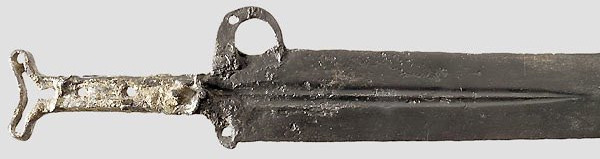
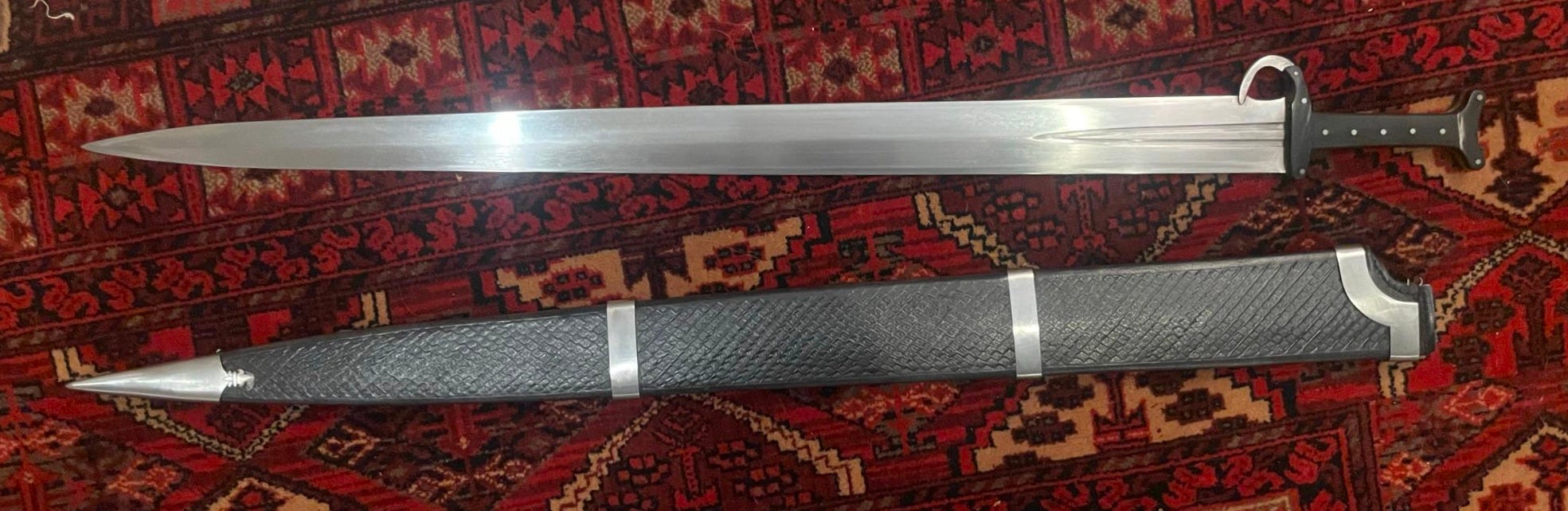


Interestingly, we see these light swords with a forward point of balance. This is a characteristic of the famous pieces from the Arsenal of Alexandria.
Examples from the Arsenal of Alexandria
A lot of the photos are via X, done by a new swordmaker (not my own). I appreciate the informative angles. People can find more examples there or on older forums.
From Royal Armoury, c.1432
TL: 104.1cm, BL: 86.4cm, BW: 3.5cm, Cross Width: 15cm, Grip Length: 11cm, PoB: 19cm, Weight765g
The most famous sword of this type out of all of them, which must have been made before 1432. The markings from the Arsenal of Alexandria are what allows us to date the sword quite precisely. They read:
Side 1: “Pious donation of King al-Ashrad Barsbây - may his victory be strengthened! In the storeroom in the Hall of Victories in the frontier city of Alexandria, well-guarded. Of what was acquired in the month”
Side 2: “Of August-September 1432”
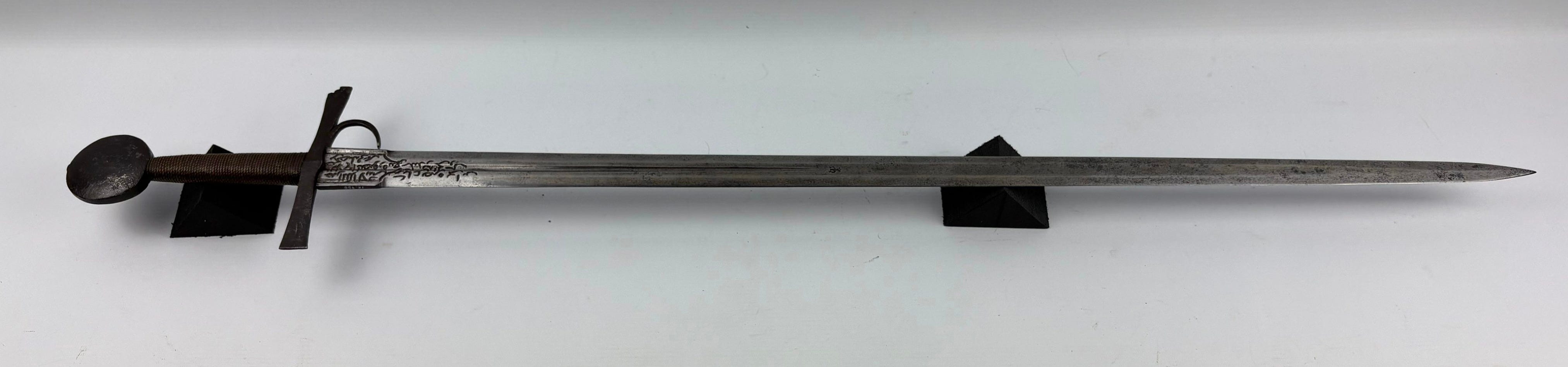
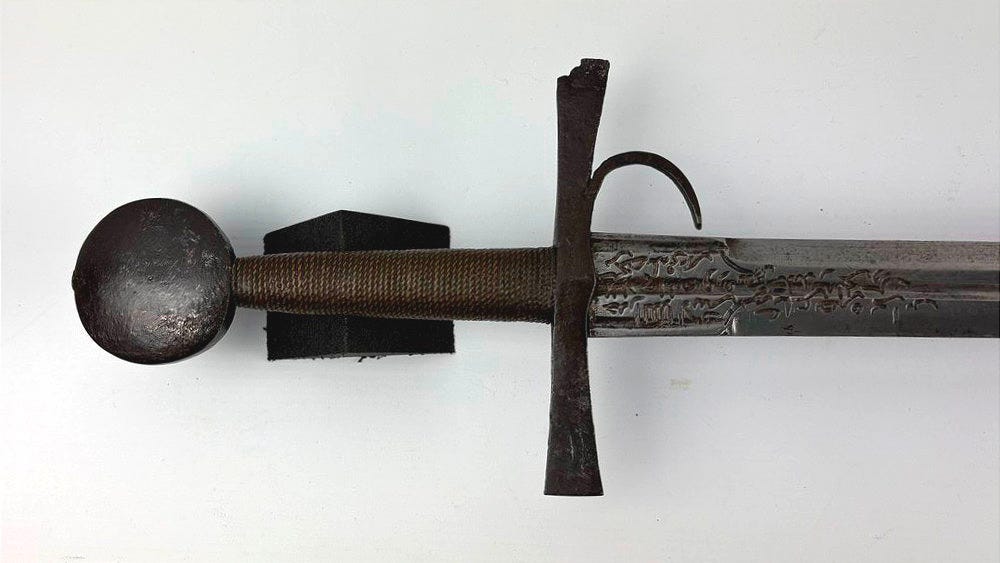
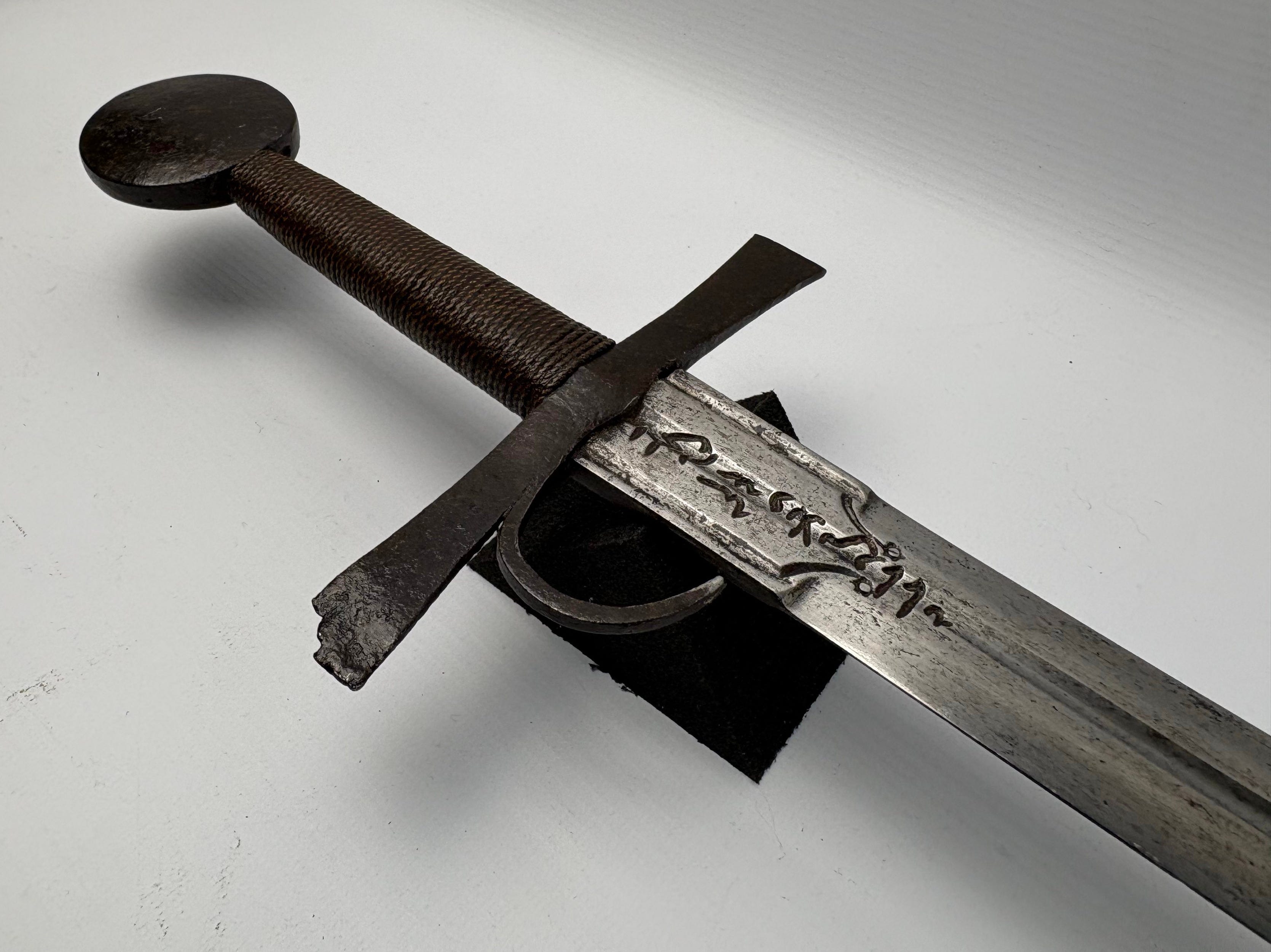


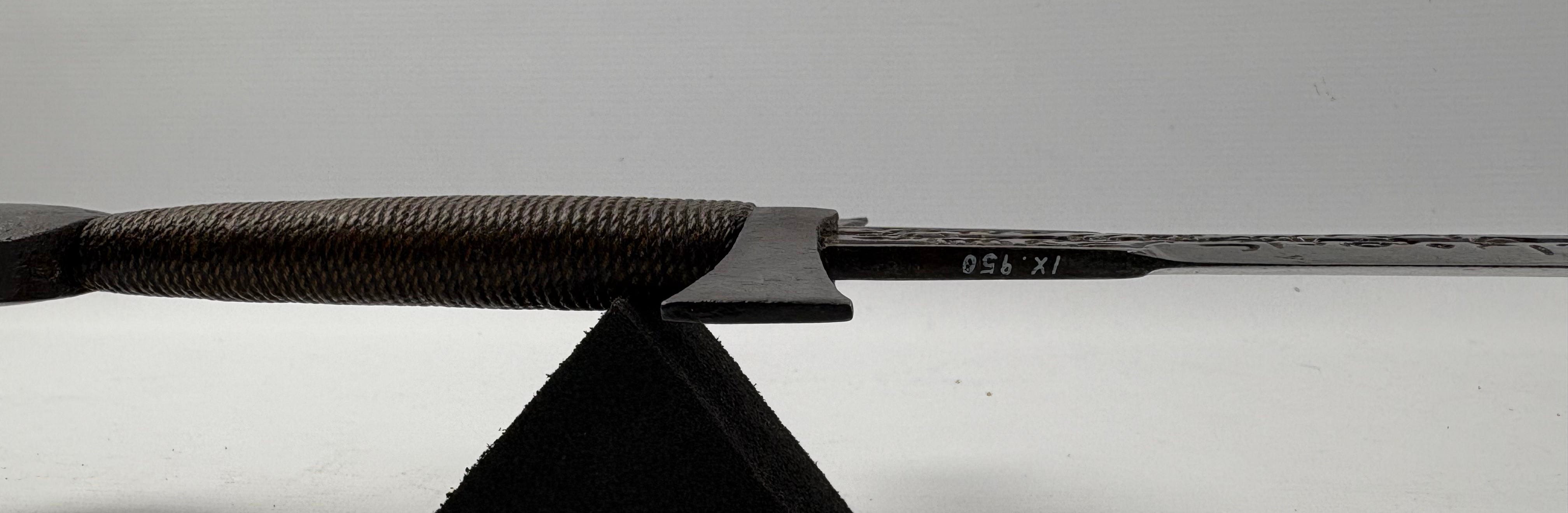


From Sotheby’s and LK Chen Reproduction
This piece, sold by Sotheby's Auction in 1979, is a piece on loan to The Met for exhibition since 2018. The inscription lists the date c.1432-1433. LK Chen made a good enough reproduction of it, the Ribaldo, following the measurements provided by Mat Easton. Those measurements can act as a rough guideline for the original ones (compare below the two). From my own experience handling my piece, it is an incredible light and nimble piece that is authoritative in the cut due to its PoB.
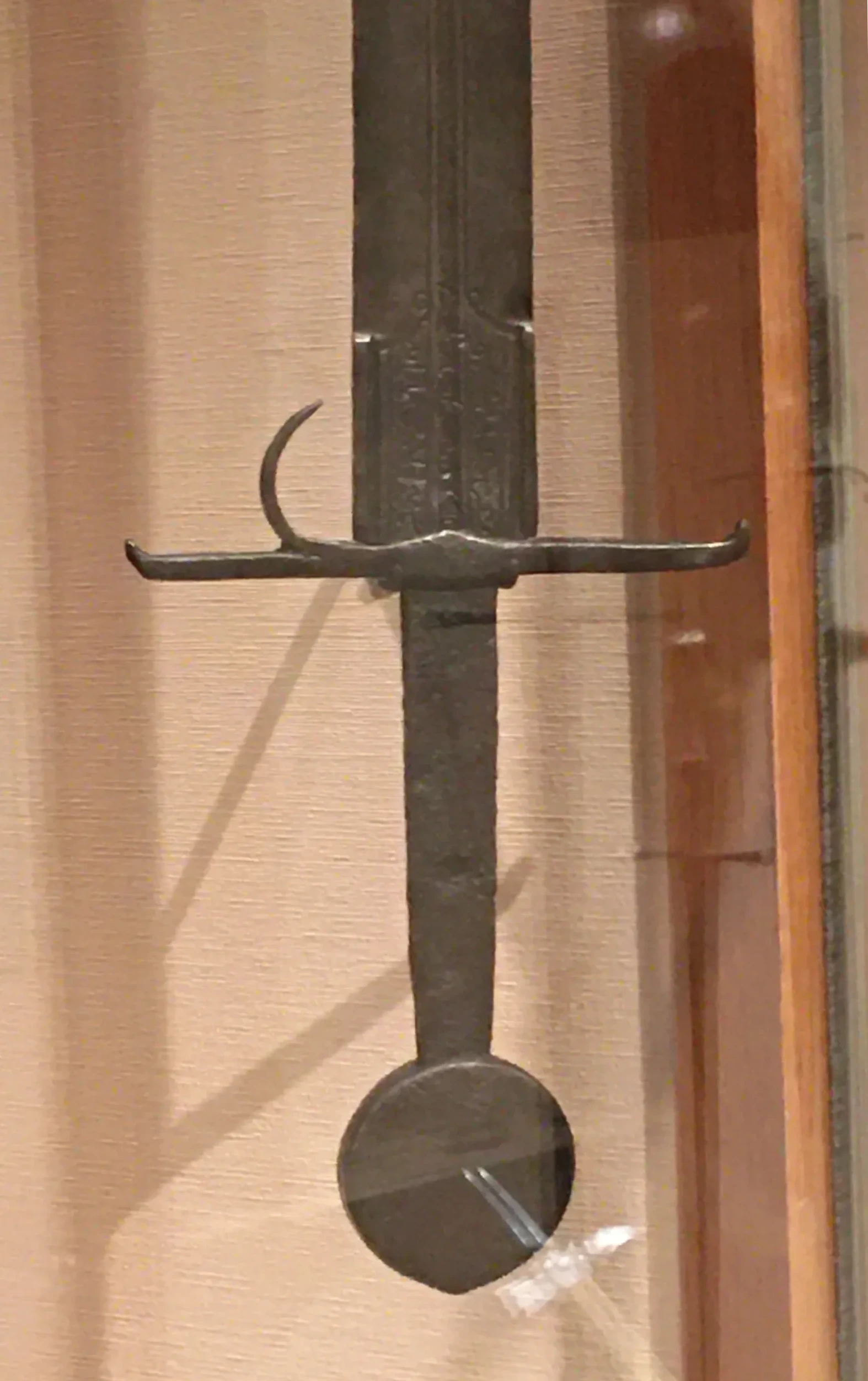
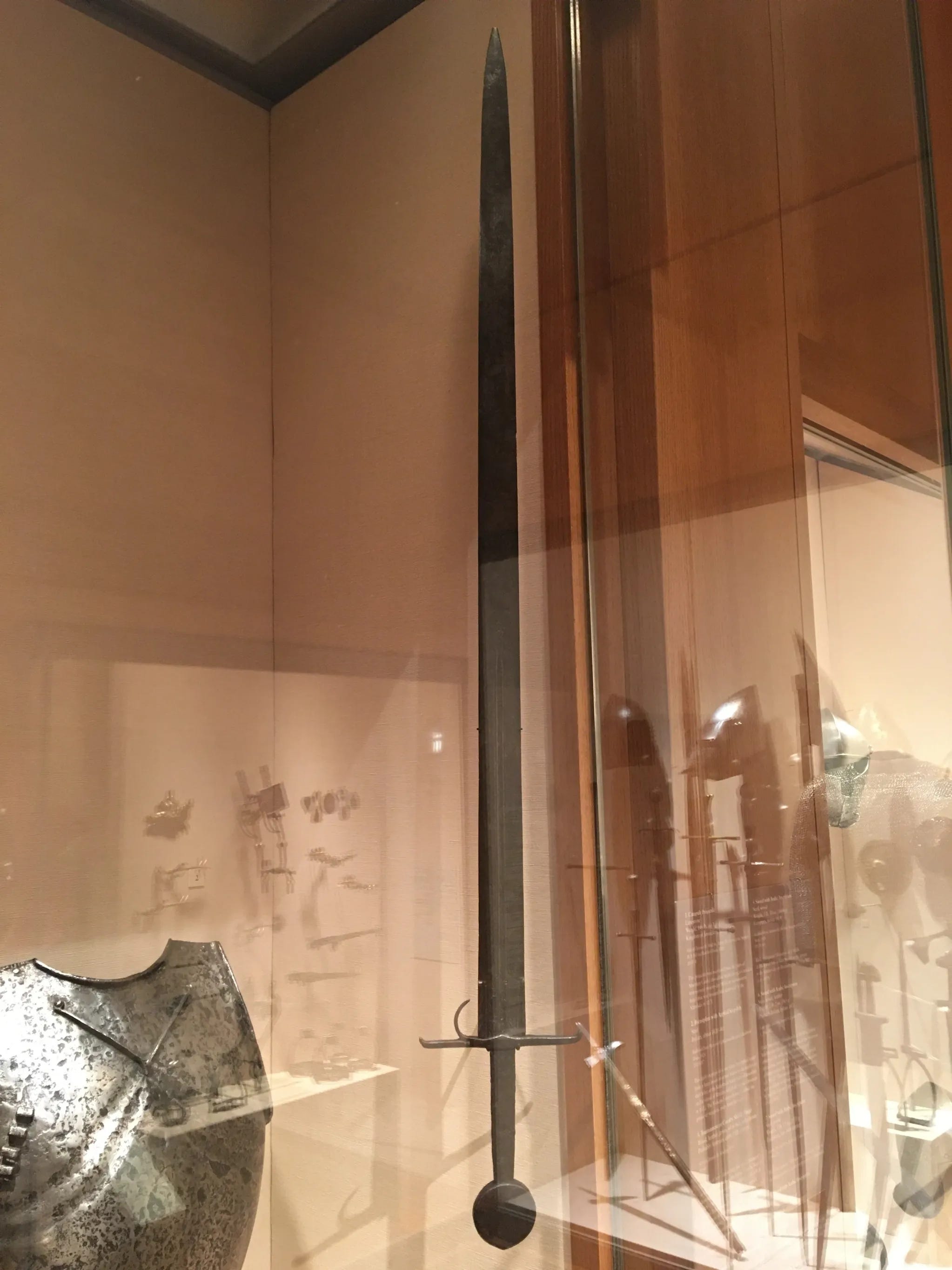
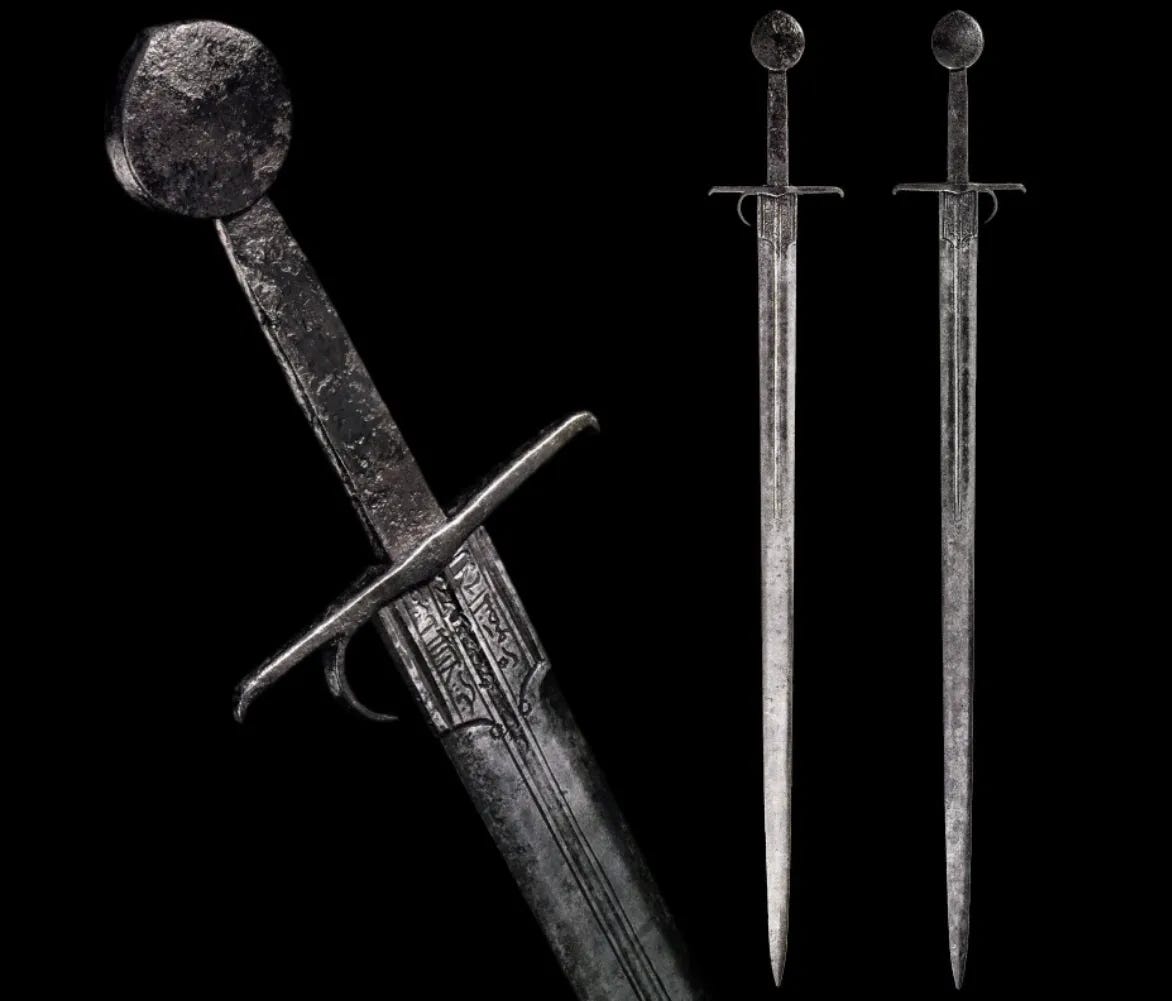
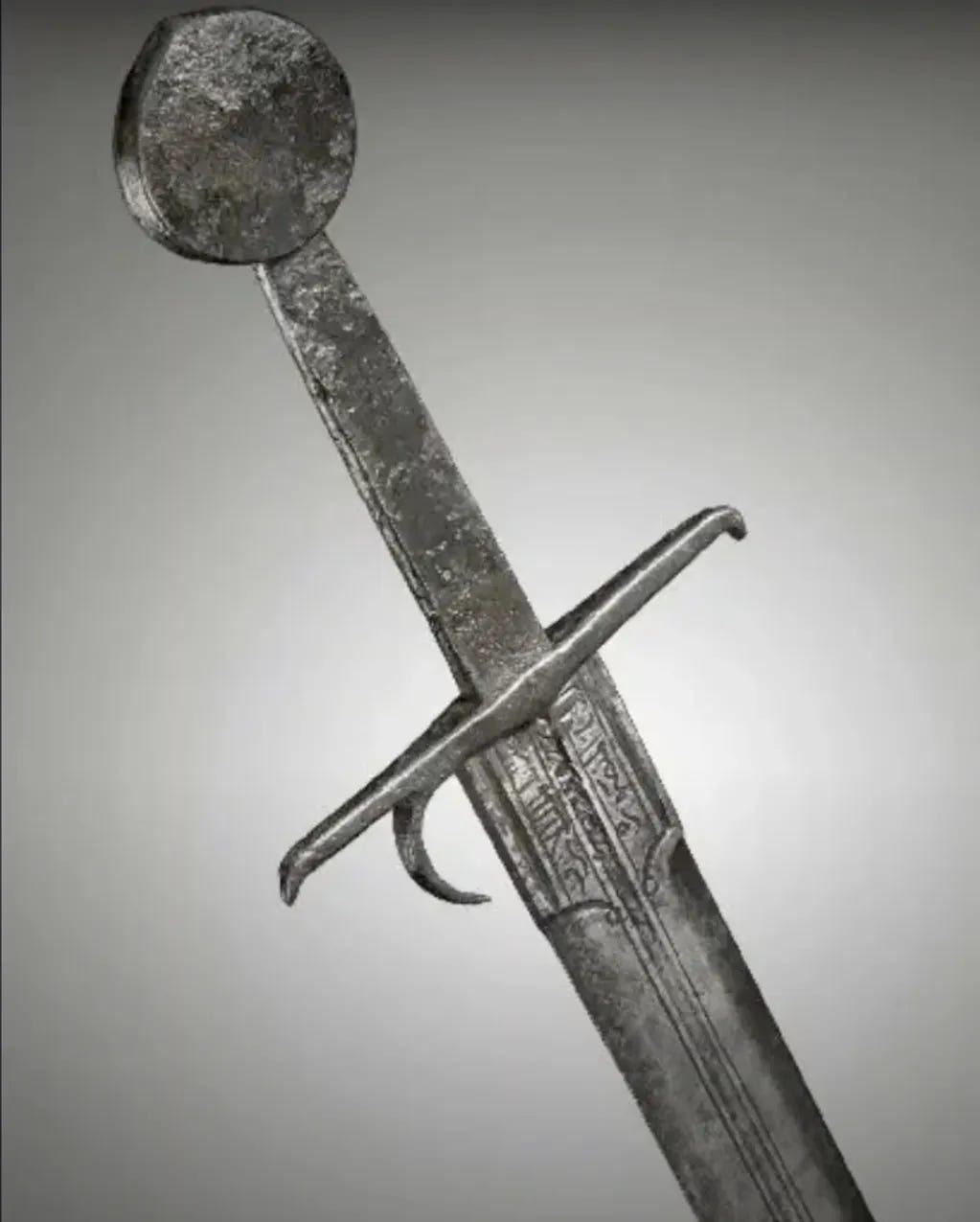
LK Chen Ribaldo, an affordable, modern sharp that feels great in the hand. I would say it matched well the original specifications (not that the original lacks the grip, which explains the small difference in weight and PoB).

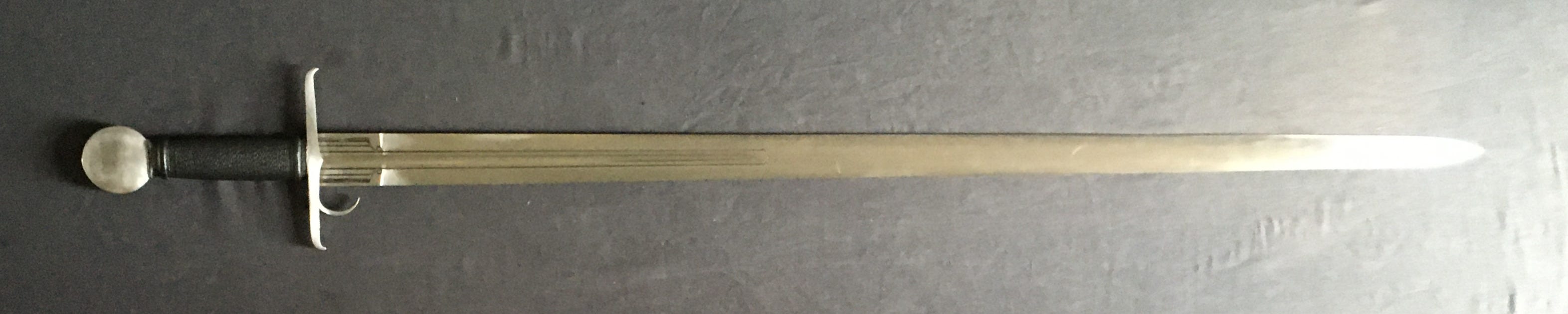
From the Istanbul Military Museum
The Istanbul Military Museum has a lot of single finger-ring hilt swords that have been in the Arsenal of Alexandria. I will list these here, together with any information I was able to find in the captions.
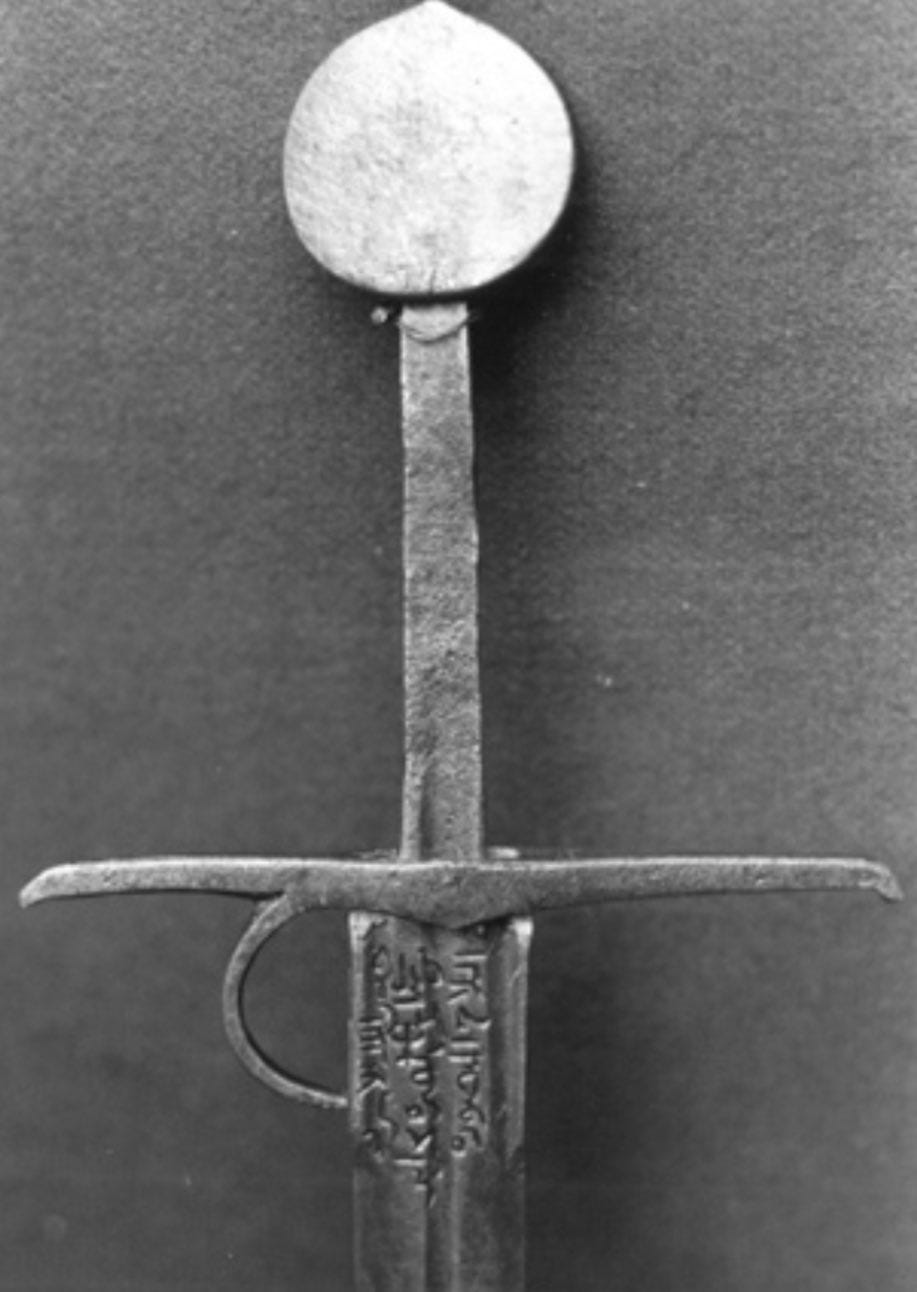
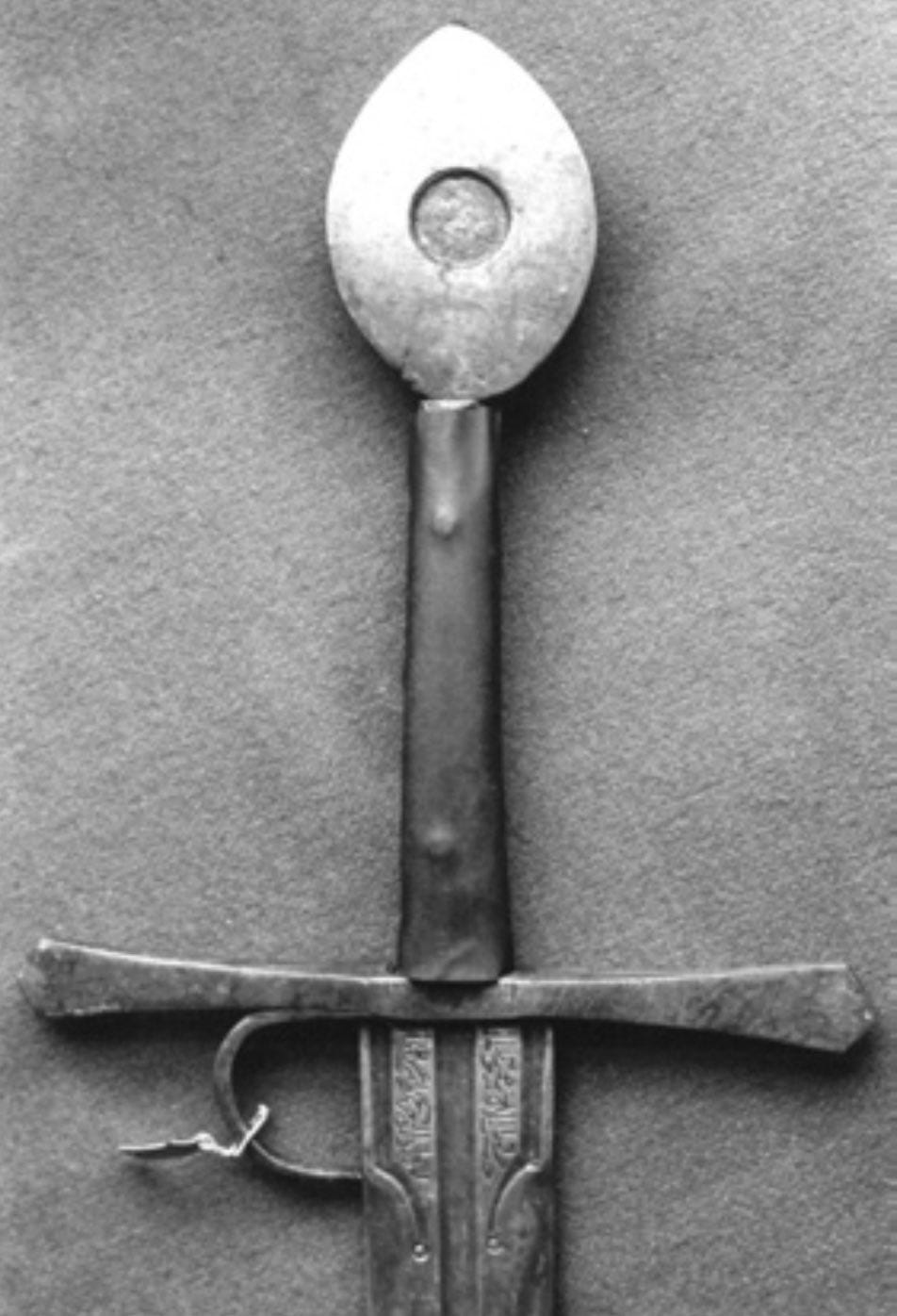
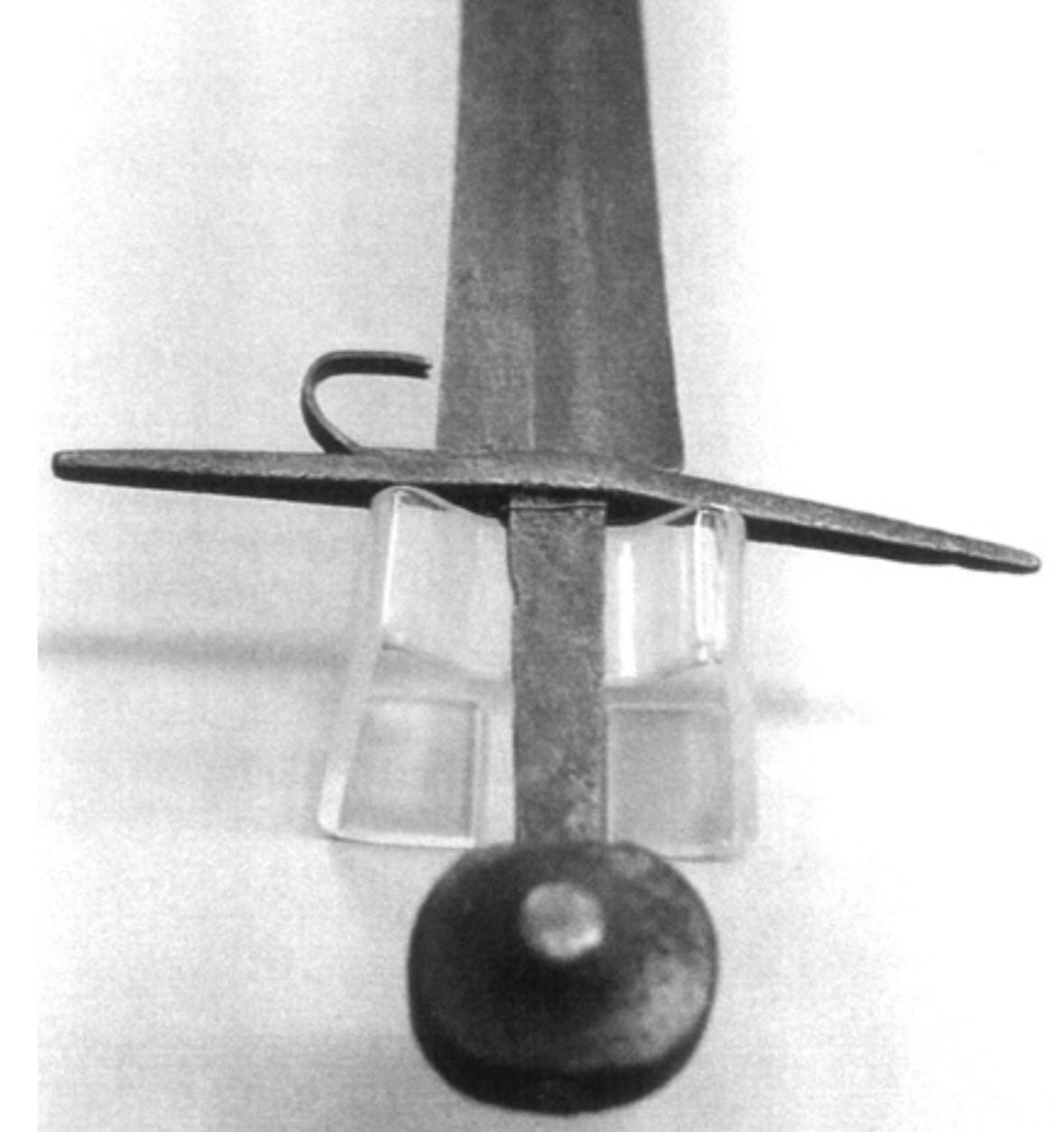


Another Piece and a Late Example
Via Hermann Historica, this Italian sword with a 112.5cm overall length is estimated to be c.1435. It might be, but it may be from later as the piece after.
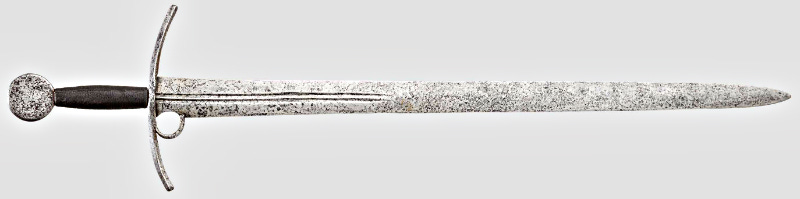
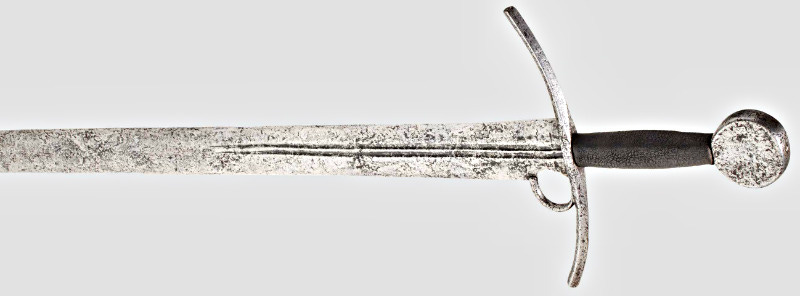
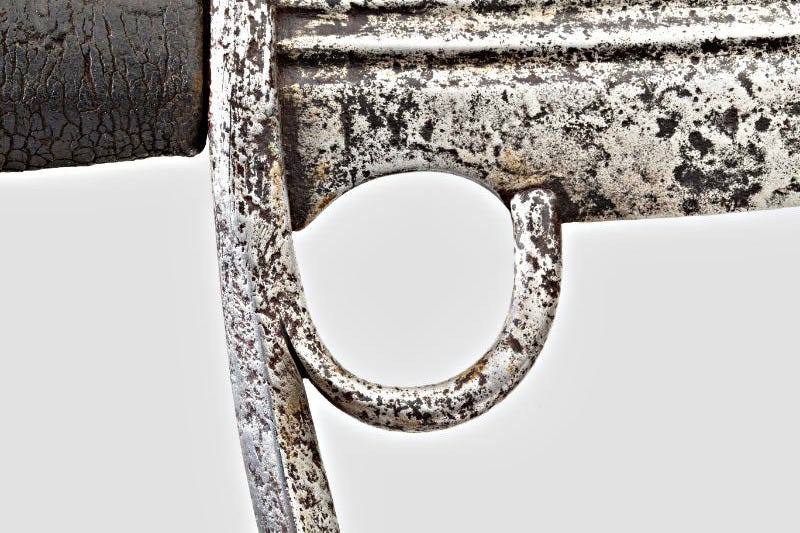
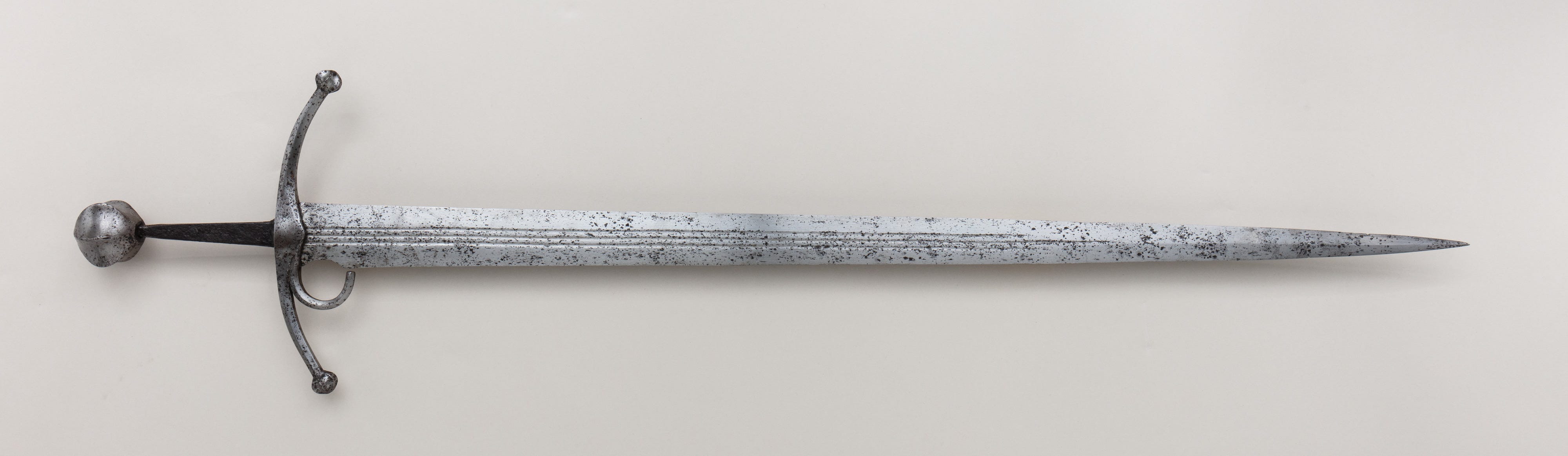
A French sword, c.1500, held in The Met. The style is quite late for a sword from the 1500s. I find it interesting that someone chose this style of hilt so late, when more and more complex hilts were emerging.
TL: 101cm, BL: 85.1cm, Weight: 1191g.
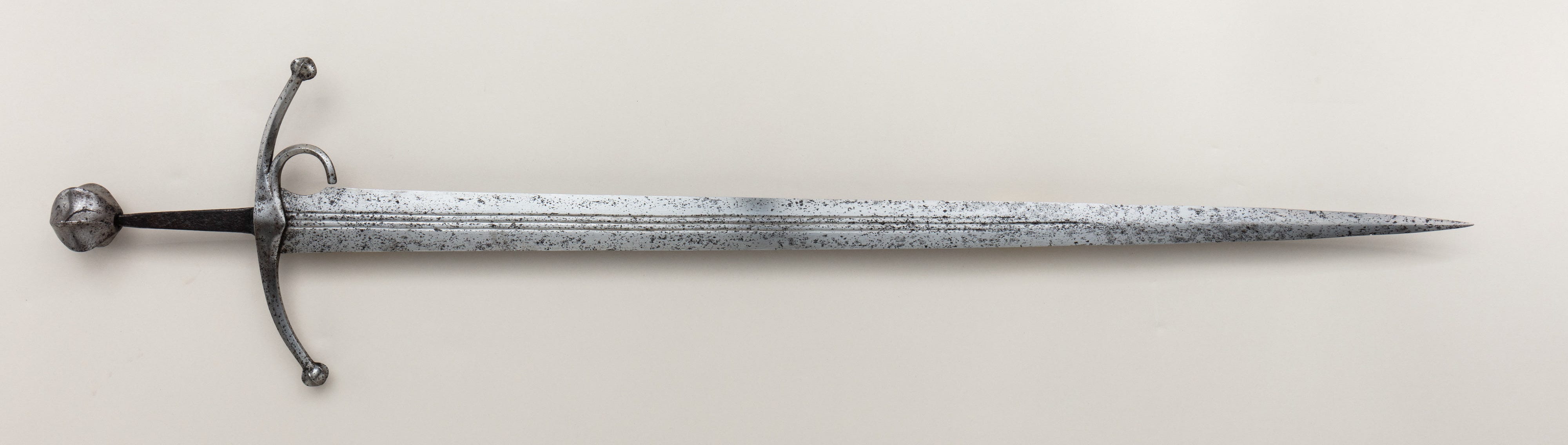
Other Swords from the Arsenal of Alexandria
Looking at how other swords from the period looked offers us important insight into the use of these pieces. Unlike the swords we see used in France at the start of the 1400s (i.e. Castillon Hoard anti-armour swords), the swords used in the Italian and Mediterranean theatre seem to prefer the cut.
The broad, thin, flat diamond blades are known to be excellent cutting blades. From the four known examples, apparently only three are still accounted for (one held in The Met). The thin wooden grips are later additions.
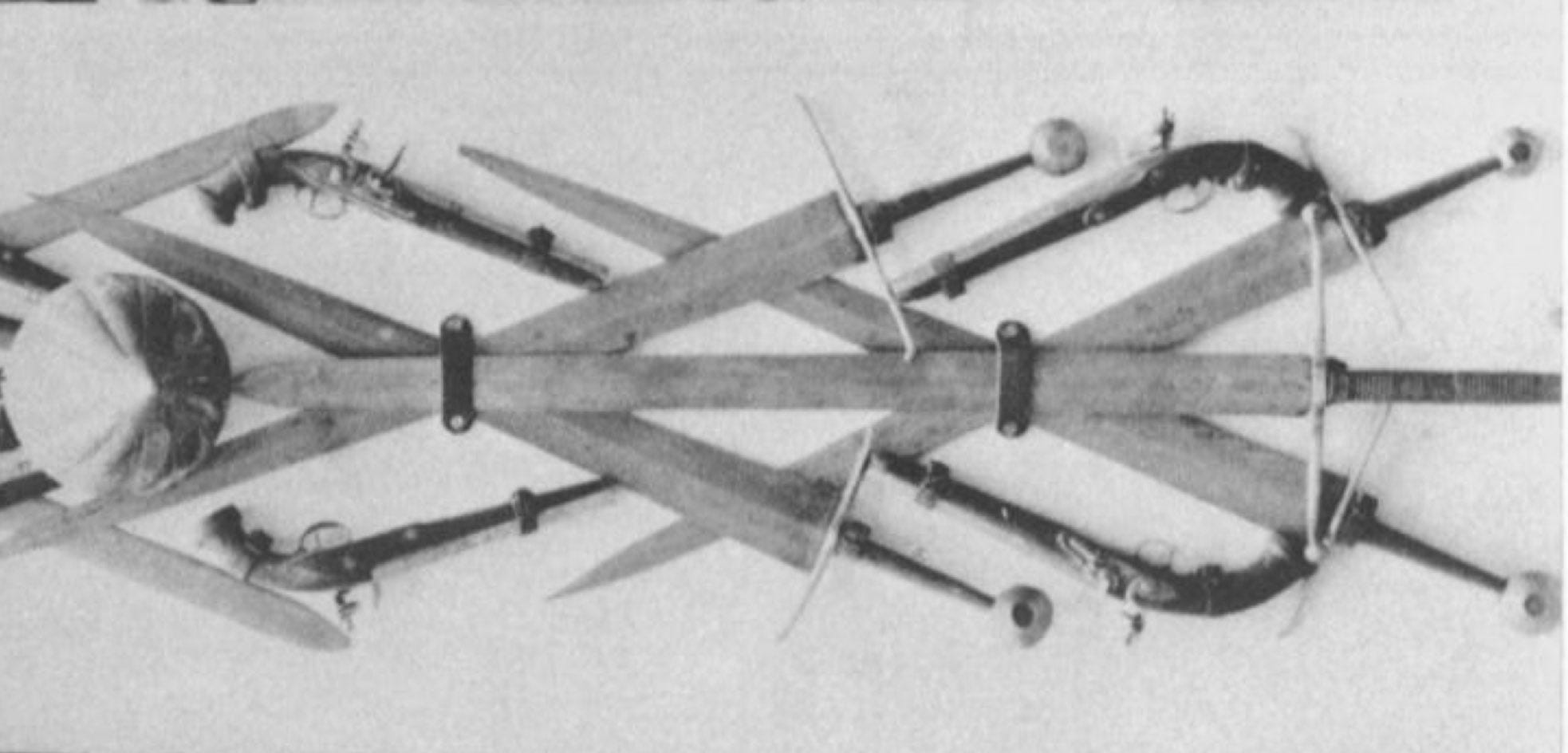
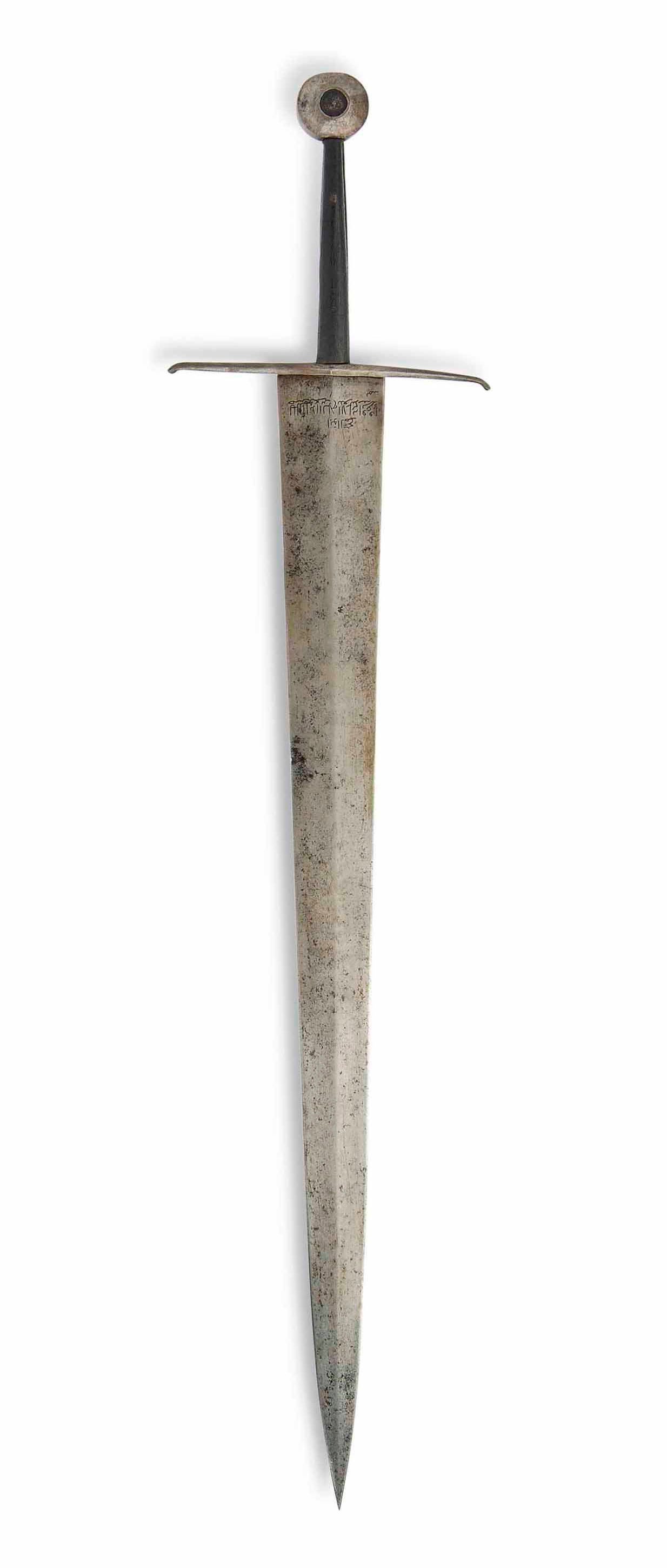
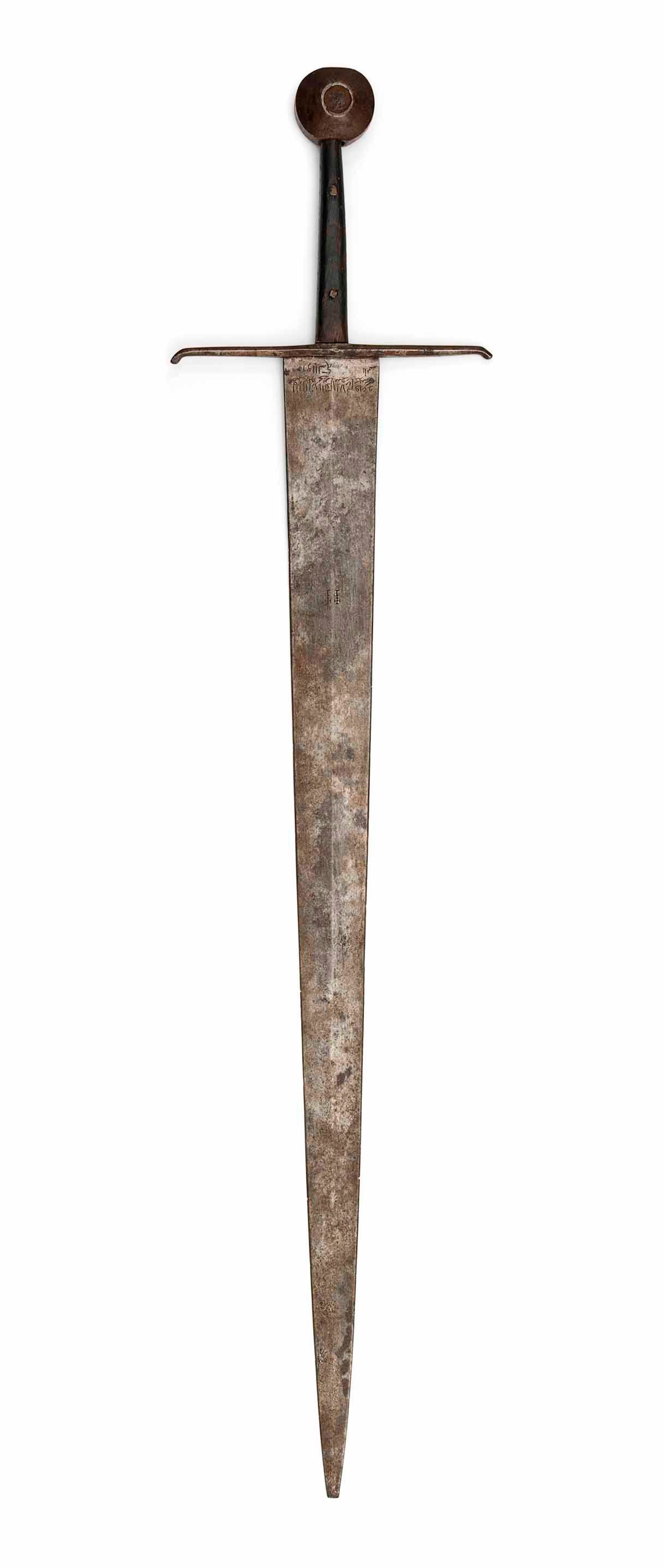
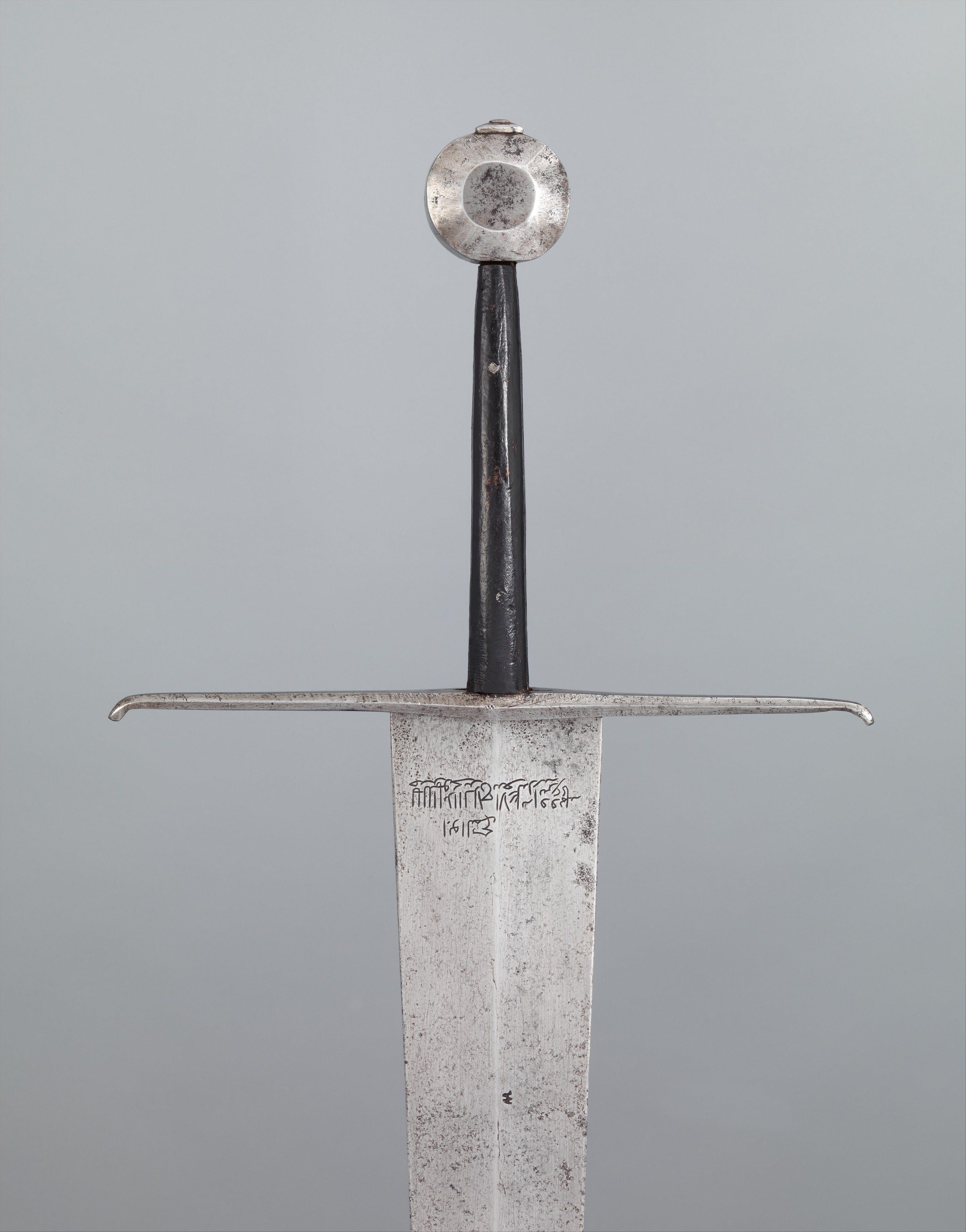
The famous one from The Met, next to a few other similar pieces over the years. Note that some were loans, and the collection changed its display in time.
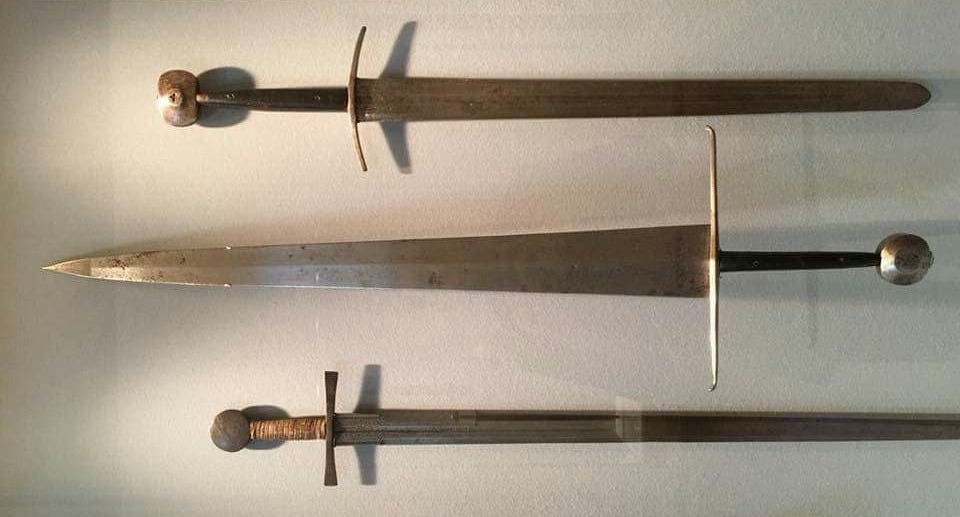
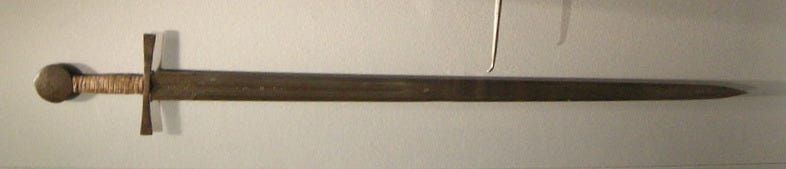
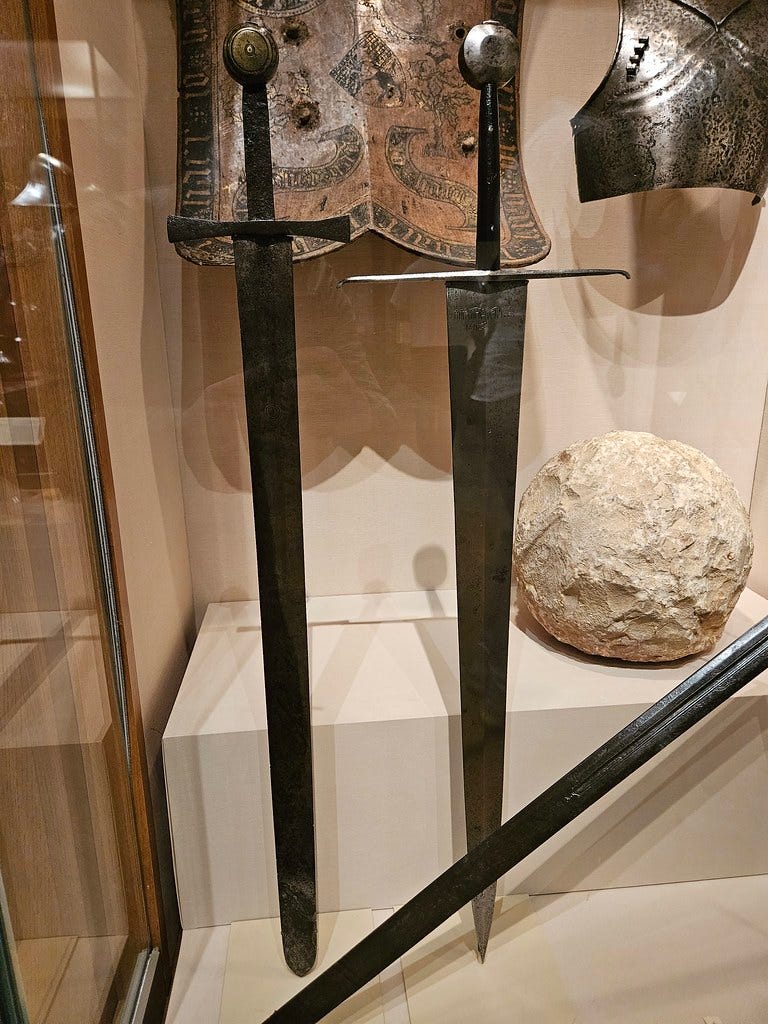
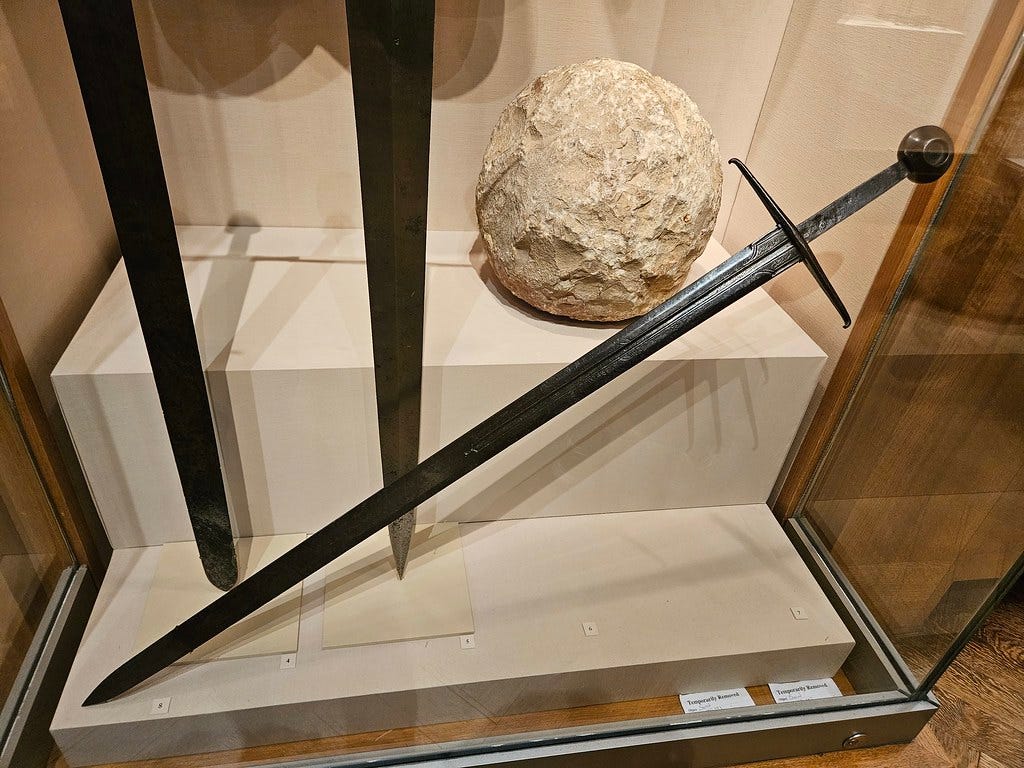
Another longsword that has received more attention in the last few years, with its shoddy pommel work, but with a blade that I am told still feels sharp, is held in the Royal Armoury. This 122.5cm long sword that weighs 1707g, with a 96.6cm long and 5.45cm wide blade, is clearly oriented towards cutting.
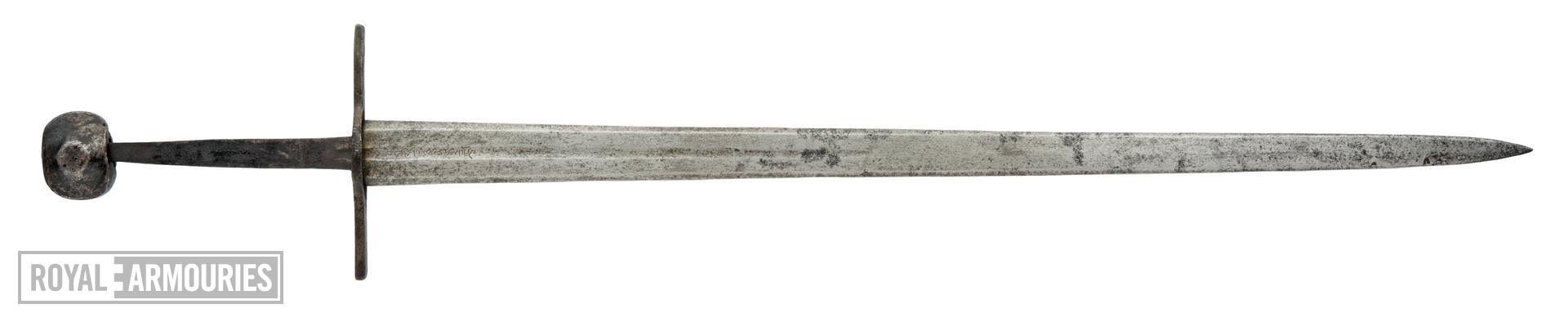
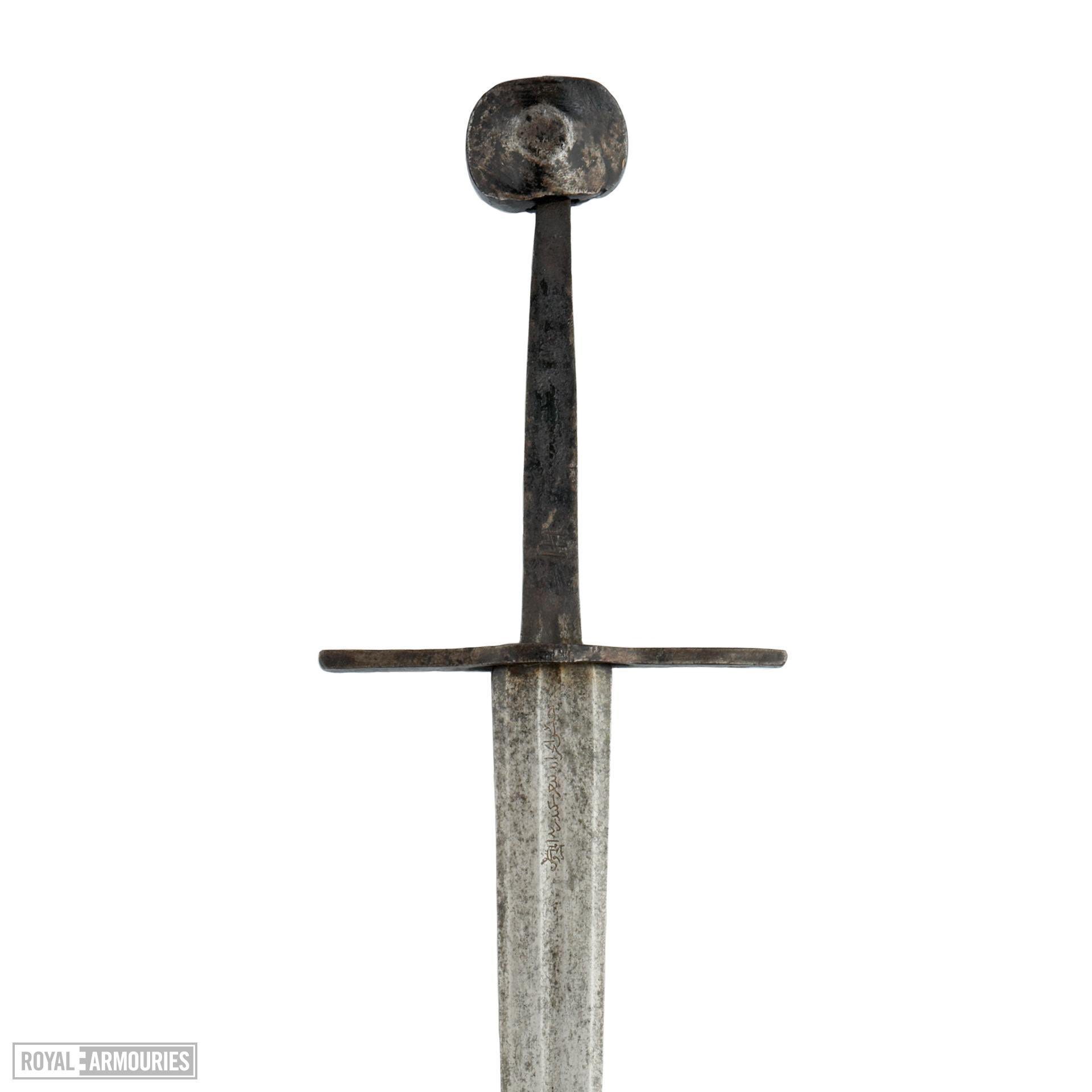


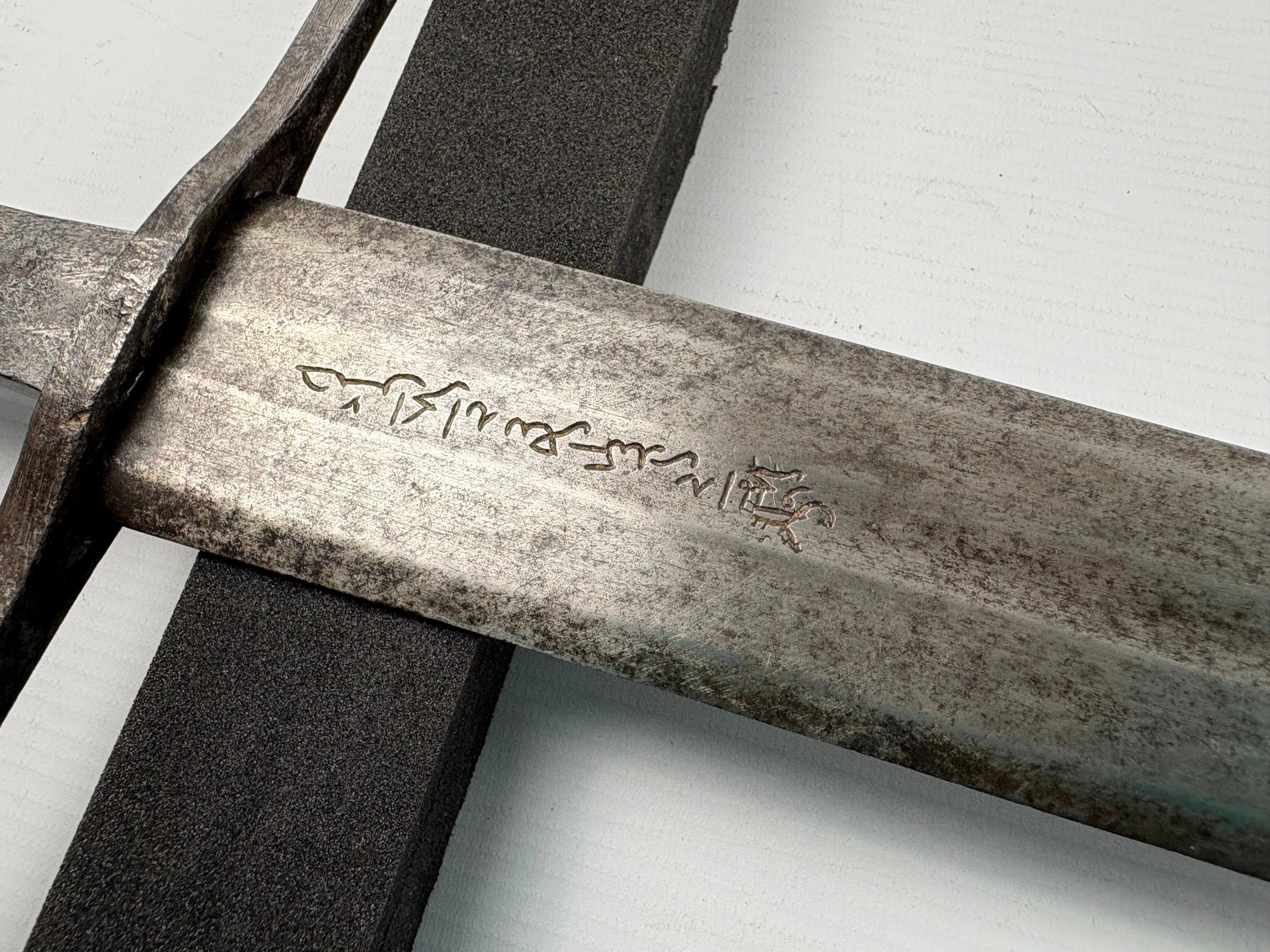
Other swords that we can find online show the same wide, cut-focused blades. While these are one-handed swords, the blades do look a bit too wide to allow for a comfortable fingering of the crossguard.


Other From Military Museum Istanbul
Via a Flickr photo album by Carl Koppeschaar (have a look at many more), we have some clear pictures of other swords from the Arsenal of Alexandria held in Istanbul. Some look like the single finger-ring hilt one-handed swords shown before.


ROM Examples
The Royal Ontario Museum (ROM) in Canada has four pieces from the Arsenal of Alexandria: one that looks like a one-handed sword similar to the single finger-ring hilts shown before; one that is more massive; a really large piece; and a longsword based on the grip, but with a shorter blade than expected.
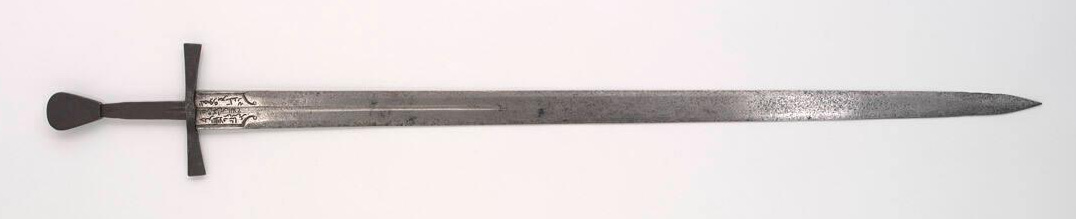
1st piece, c.1370-1399 (c.1432-1433 from inscription)
TL: 109cm, BL: 93.2cm, BW: 4.3cm, BT: 0.5cm, Grip Length: 9.3cm, Pommel Length: 5.8cm, Guard Span: 14.5cm, PoB: 21.5cm, Weight: 880g.



2nd piece, c.1367-1368, TL: 106.7cm, BL: 90.5cm, BW: 4.8cm, Weight: 1370g
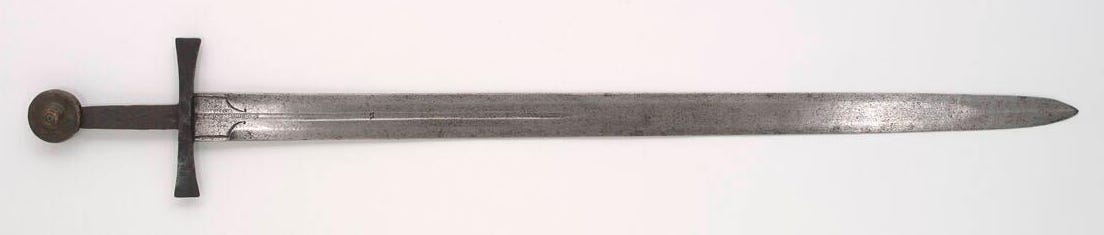
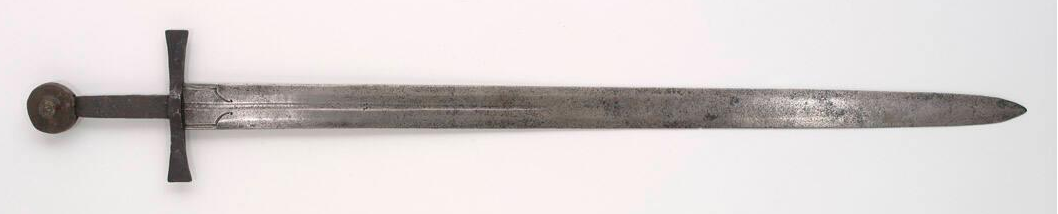


A large two-handed sword, and a longsword with a more acute blade profile that still looks like a decent cutter to me (i.e. not optimised for half-swording).
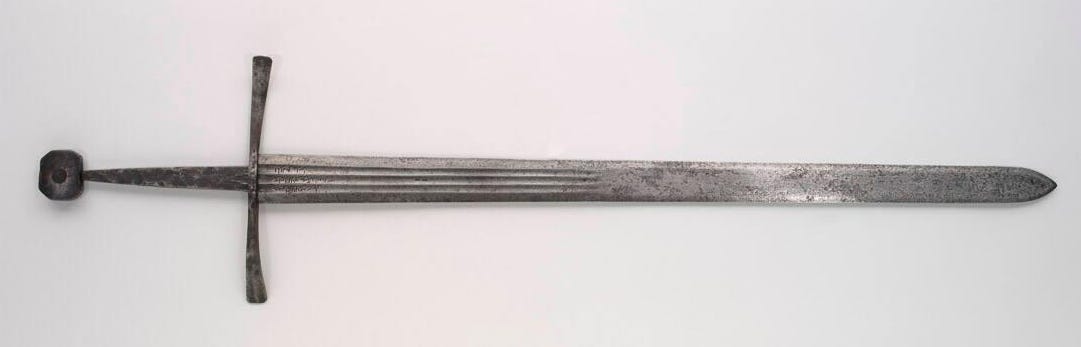
Bonhams, sold for £163,250
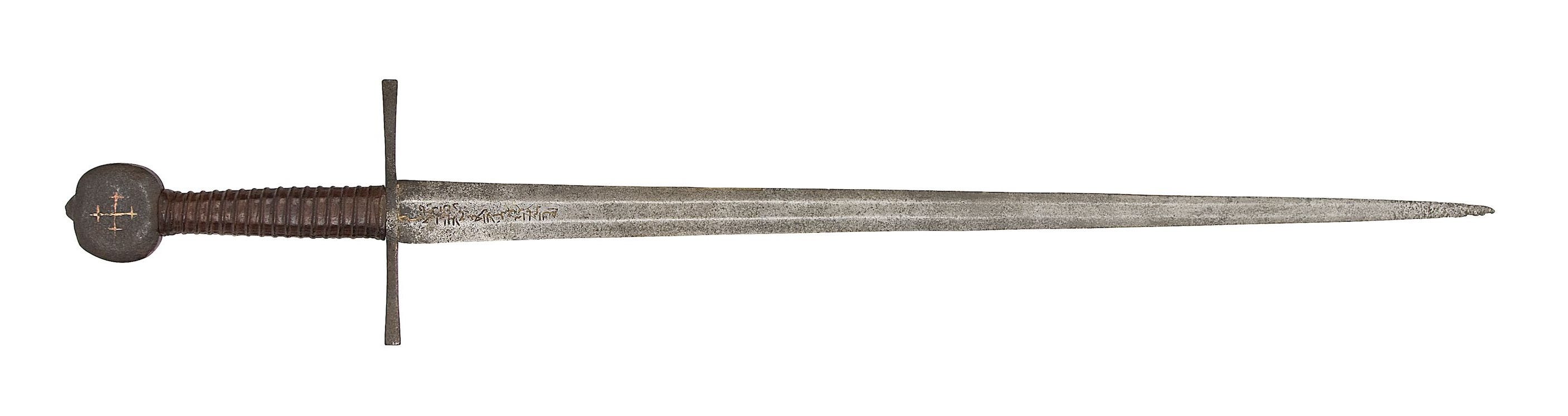
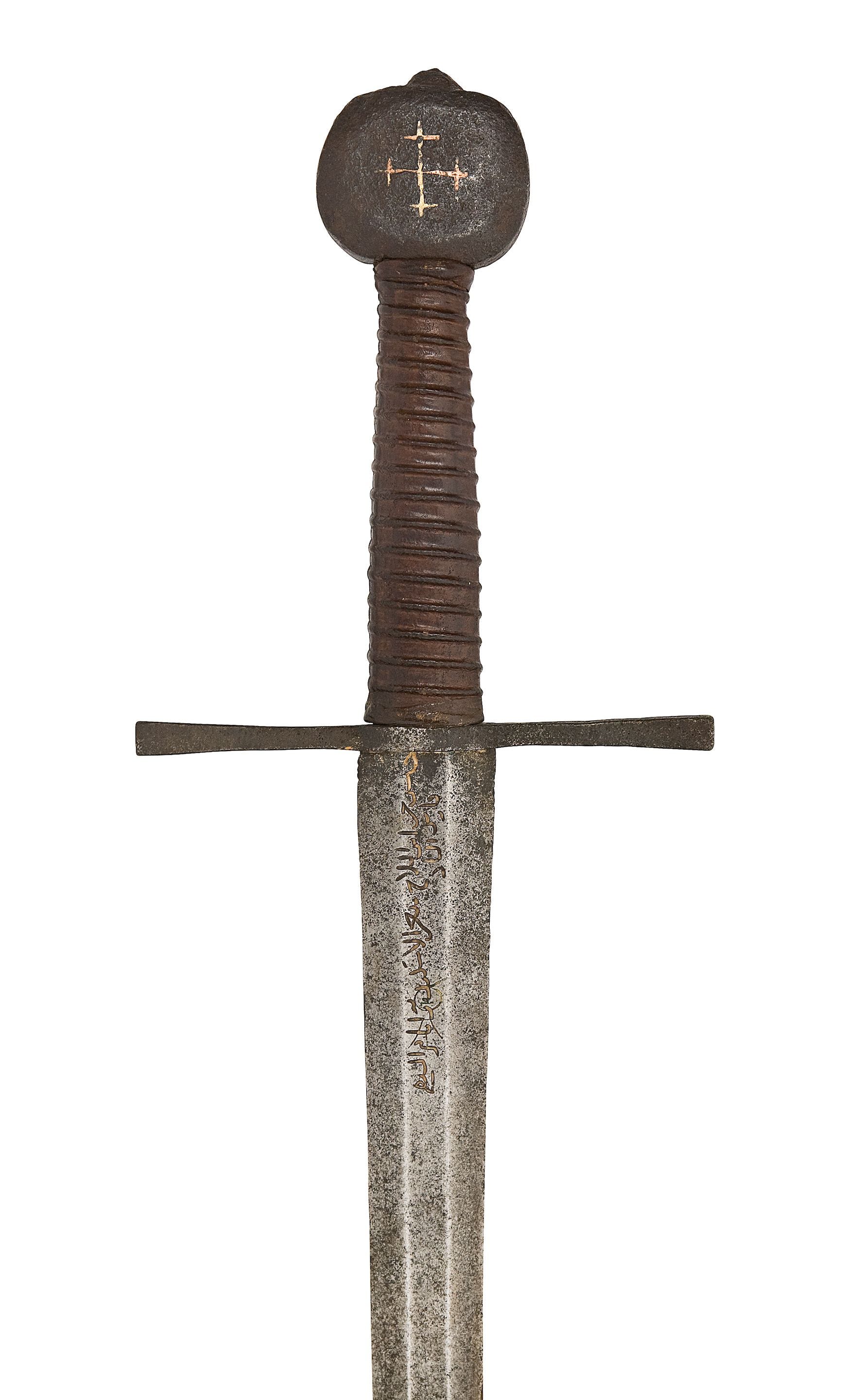
I’ll end with this Italian piece from the later part of the 1300s. With a 92.5cm long blade and at 115.7cm overall length, this is a longsword with an acute tip profile.
TL: 115.7cm, BL: 92.5cm, BW: 4.7cm, BT: 0.65cm (base), BT: 0.5cm (55.5cm), PoB: 11cm, Weight: 1688g.
Some Final Remarks
The Arsenal of Alexandria allows us, in some cases, to date relevant pieces to the month they were received. The manufacturing of these swords may still have been done earlier than that. Still, a reliable date helps us tremendously to anchor our expectations on the emergence of these single finger-ring hilts.
Looking also at other swords from the Arsenal of Alexandria, we see a pattern for cut-oriented swords. At the same time, we have knowledge of swords with thick, acute point profile blades with an anti-armour focus, being utilised in France as part of the Hundred Years’ War. Some swords from the Arsenal of Alexandria also show this tendency, but they are few compared to the cut-focused swords. We can extrapolate that armour was not the main concern for their use. This is an important observation, as we recognise a lot of the blades to be done in a Milanese style, with a ricasso decorated by black lines.
There is one more thing. Looking at the crossguard’s construction, we see a flat surface type. When we compare that to the first examples presented here, we see that those have a more of a bar-like construction. Even if we dismiss the finger-ring on baselard-like swords, the difference between the two may indicate two separate sources for the development of the finger-ring. It may be that we had an early type in the early 1300s, using backsword-type blades, and a resurfacing or a re-interpretation of the same idea in Italy during the late 1300s, early 1400s. Yet, the example we have from the 1500s shows that once a design has been developed, it can stick around.
Outstanding article and read, thank you for the research and amount of time you put into these. Been loving all of them. I was decoding some of the writing on the Italian sword, very cool. The steel calls on Bhavani. The hilt bears the cross. Two claims of divine authority, carried by one hand at different times.